Mexico’s SPEI has modernised payments, but wider adoption is proving a challenge.
Real-time payments have become a priority for countries around the world in recent years, with markets searching for alternatives to cards to protect payment sovereignty.
Markets looking for inspiration tend to discuss Pix in Brazil or Unified Payments Interface (UPI) in India as successful blueprints. However, Mexico’s Sistema de Pagos Electrónicos Interbancarios (SPEI) predates both.
Launched in August 2004 by the country’s central bank, Banco de México, SPEI makes it possible for consumers and businesses to transfer funds 24 hours a day, seven days a week, 365 days a year, with transactions processed in seconds.
The system has become a launchpad for Mexico’s financial infrastructure, processing billions of transactions annually and supporting the growth of digital banking and fintech.
One reason SPEI may receive less international attention than Pix and UPI, however, is that Mexico still has work to do to turn access to real-time payment infrastructure into adoption of digital payments.
What is SPEI and how does it work?
Developed and operated by Banco de México, SPEI is an electronic interbank payment system that enables institutions to send and receive funds.

Introduced on 13 August 2004, it replaced the Sistema de Pagos Electrónicos de Uso Ampliado (SPEUA), setting out to modernise the country’s payment infrastructure and enable real-time processing.
Users can access SPEI through their bank’s online banking platform, mobile application or another participating financial institution,
When a customer initiates a SPEI payment, their financial institution validates the instruction and then forwards it to the central bank’s system. SPEI processes the payment and sends the instruction to the recipient’s institution, which verifies the transaction and credits the beneficiary’s account.
To send a SPEI payment, users need the recipient’s 18-digit Clave Bancaria Estandarizada (CLABE), a standardised bank account identifier used in Mexico. The CLABE identifies the financial institution, the account number and a check digit used to validate the number.
This brings SPEI closer to systems such as Pix and UPI, which have made alternative payment identifiers a prominent part of their user experience.
Brazil uses Pix Keys, which allow users to link their bank accounts to their phone number, email address, tax identification number or a randomly generated key. In India, UPI uses Virtual Payment Addresses.
Despite slight differences, SPEI offers the same real-time payment advantages, allowing money to move between financial institutions without the delays of traditional bank transfers.
How SPEI changed payments in Mexico
Speed and convenience are two reasons why markets invest in real-time payment systems. However, reducing SPEI’s impact on Mexico’s payments landscape to these benefits would overlook its role in modernising the country’s financial infrastructure.
According to Banco de México, SPEI processed more than 7.3 billion electronic transfers in 2025, an increase from the 5.42 billion transfers recorded in 2024.
It has become an important part of Mexico’s digital financial ecosystem, supporting everything from everyday personal transfers to business payments and financial services delivered through digital platforms.
SPEI lets consumers move money between bank accounts without cash withdrawals or visits to physical branches and it allows companies to pay suppliers, receive customer payments and transfer funds between accounts.
Banco de México has developed initiatives to encourage digital payment adoption.
Launched in 2019, Cobro Digital introduced QR-code and other digital payment capabilities to make electronic payments more accessible to consumers and merchants.
In September 2023, the central bank introduced DiMo, which allows users to make transfers using a mobile phone number linked to their bank account.
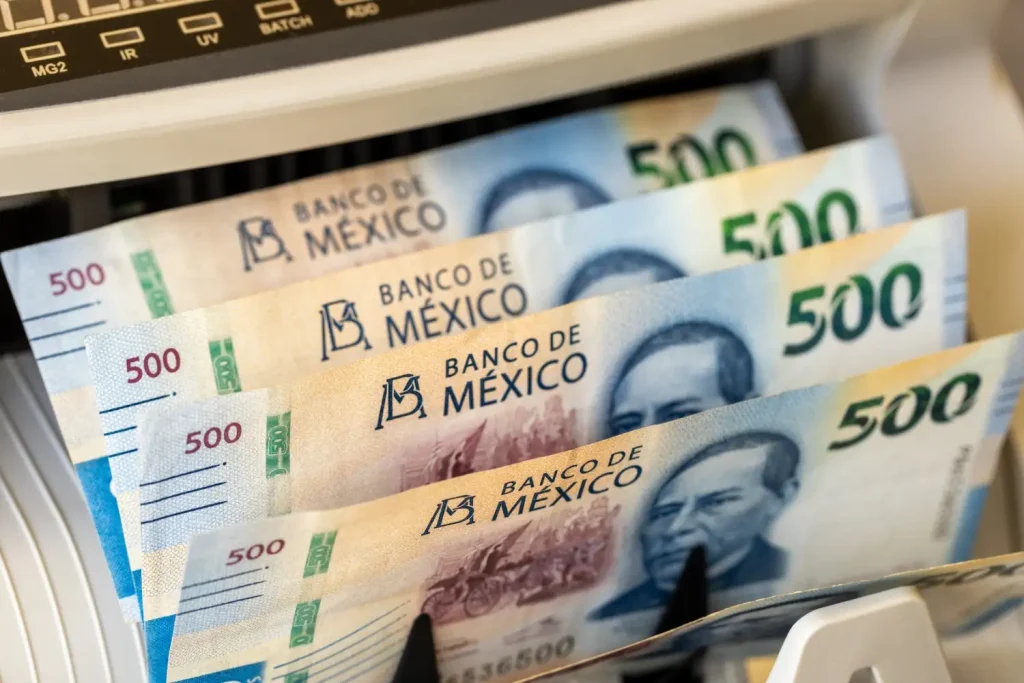
However, Mexico has struggled to close the gap between modern payment infrastructure and adoption. Cash is still heavily used, especially at smaller merchants andby consumers who face barriers to accessing or using digital financial services.
Limited acceptance, uneven financial inclusion, connectivity constraints and familiarity with cash are all reasons the country has struggled to reach the same adoption levels as Brazil and India.
/ Shutterstock.com
What’s next for Mexico’s digital payments market?
The next step for Mexico is closing the gap between technical readiness and adoption by building on what it already has.
In October 2026, Mexico’s Senate approved the Digital Economy Law and sent it to the federal executive for the next stage of the legislative process.
The law seeks to accelerate the adoption of electronic payments, encourage acceptance of digital payments and facilitate remote access to financial services.
The proposed framework would require businesses and public authorities to build the infrastructure needed to accept digital payments, as well as introduce digital ID measures to make it easier for people to access financial services online.
Petrol stations and tollbooths are reportedly the first sectors the government plans to target to reduce cash payments.
The push comes as cash refuses to take a back seat, despite gradual progress down the road of digital alternatives.
According to Mexico’s 2024 National Financial Inclusion Survey, the proportion of adults who primarily used cash for purchases of MXN500 ($26.69) or less fell from 90.1% in 2021 to 85.2% in 2024.
Merchants will play an important role in these next steps, with fintech companies such as Mercado Pago and Clip expanding access to card acceptance through mobile payment terminals and helping smaller businesses accept electronic payments without investing in point-of-sale infrastructure.
Finally, integrating the Clave Única de Registro de Población, Mexico’s personal identification code, into remote financial onboarding aims to make it easier for consumers to access financial products.
The government believes that reducing these barriers could help more people access digital banking, payments and credit services.