Payment Expert explores the challenges the European Central Bank (ECB) faces to incentivise the private sector, and merchants, in accepting the digital euro as Europe’s digital currency for sovereignty freedom.
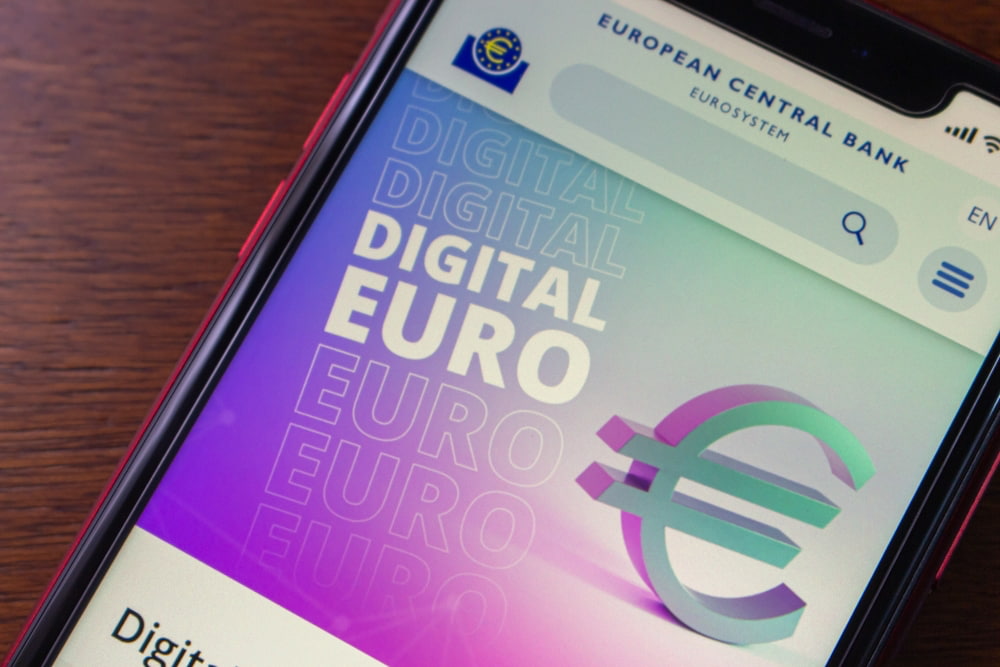
The European Central Bank’s (ECB) digital euro has grown leaps and bounds from its origins born out of a world affected by COVID, with 2029 being earmarked as its arrival.
While the digital euro has had to overcome several policy and legal boundaries, a landmark vote in June 2026 passed in the European Parliament has enabled policymakers to start on a legal framework.
The digital euro will also be tested by more than 30 financial institutions and payment service providers – including Stripe, Revolut and Adyen – as part of a pilot that will look to explore the digital currency’s payment technical readiness next year.
Yet despite the ECB’s bullish plans for a central bank digital currency (CBDC) to be the answer to reduce its reliability on US payment services and usher in new sovereignty freedom for its native currency, how receptive will merchants and the private sector be towards the digital euro?
Isadora Arredondo, VP of Global Policy at Hedera, has been working closely on European digital asset policy in recent years. She believes in order for merchants to get on board with the digital euro, it must first address a key issue; processing fees.
Digital Euro – merchant acceptance matters

Under the European Union’s (EU) Interchange Fee caps, processing fees for debit card transactions are capped at 0.2% per transaction, whilst credit cards are capped at 0.3% per transaction.
The digital euro however is offering zero processing fees attached to transactions using the digital currency, seeking to become a true digitised representation of cash.
Arredondo is calling on policymakers to not only uphold this, but also to find harmony in how digital euro transactions are processed into the systems merchants are already using.
“In the case of merchants processing a high volume of smaller transactions, low fees are certainly quite attractive,” says Arredondo.
“For cafés, a few cents on each coffee sold can make a meaningful difference to margins. If digital euros cost less than traditional payments, there’s a clear commercial advantage to adoption. Though, this alone isn’t enough to drive adoption.
“The digital euro needs to work with systems merchants are already using. If it adds another complicated payment system to their operations, the trade-off is minor financial savings for additional complexity, which makes it less attractive. It also needs to be reliable and convenient enough for customers to want to use it.”
How the digital euro will also complement and work alongside existing infrastructure is another factor Arredondo has raised.
The ECB and Eurosystem are proposing for the digital currency to be processed on a dedicated pan-European public payment system to be compatible across the region, for every merchant and consumer.
This does not take into account the increasingly fragmented digital payment landscape of Europe.
In today’s market, domestic payment rails, such as BLIK in Poland, Bizum in Spain and now Wero across multiple jurisdictions, are finding success as instant, peer-to-peer payment methods that offer seamless experiences for merchant customers.
Arredondo believes while these localised payment methods work well domestically, they have yet to expand and work in a similar vein across other nations across the EU bloc; something in which the digital euro has an opportunity to achieve.
“Europe already has plenty of ways to pay and the majority of options work well within individual countries,” she says.
“The problem is that these options don’t always work seamlessly across the bloc. Consumers will have a much clearer reason to adopt the digital euro if it makes paying across borders or during travel feel as straightforward as a domestic payment.”

Why the private sector matters too
If the ECB is promising zero processing fees for digital euro transactions, how does this incentivise banks and other financial institutions to offer the digital currency?
While Arredondo is supporting lowering the transaction costs for merchants, she believes Europe’s private sector should be a “major priority” and commercial incentives to issue the digital euro should be at the forefront of the ECB’s agenda.
Several banks are already apprehensive about the digital euro’s arrival. 14 banks, including Deutsche Bank and BNP Paribas, penned a letter to the European Parliament regarding concerns the digital euro is being pushed with use cases that overlap with its efforts to get Wero off the ground as the Visa/Mastercard alternative.
Arredondo believes the digital euro and Wero “fundamentally do different things” as Wero is public money issued by banks, whereas Wero is a private payment service focused on how consumers and merchants send and receive payments.
However, she tells Payment Expert for the digital euro to break new ground, “policy makers need to be conscious of commercial viability for the firms that adopt it”, which requires the banks to open its access to its citizens.
Furthermore, having the digital euro and other private sector initiatives like Wero working in tandem, and not as competing payment methods, serves to better protect Europe’s sovereignty.
“The sovereignty point is important,” she says. “Europe is making sure its payments system is resilient, competitive and seamless across the single market. A key part of that is removing dependence on individual providers or infrastructures, while offering businesses and consumers meaningful choices.
“These two developments should ideally work best in tandem, rather than as competing technologies.”

Competing in an increasingly digital field
The ECB believes a CBDC should be leading Europe’s digital financial future, but there are other digital alternatives and initiatives that beg to differ.
Qivalis, a consortium made up of more than 30 European banks, is steadfast on launching a euro-denominated stablecoin in late 2026/early 2027 to mitigate digital dollarisation growth of US dollar stablecoin adoption with a euro-pegged alternative.
This is alongside several European banks working with the Bank of International Settlements’ (BIS) Project Agorá to test tokenised deposit settlement through various blockchain networks.
In a recent episode of the Payment Expert Podcast, Vikram Bharwani, CTO Banking at NTT DATA, told Payment Expert that due to digital euro being mandated by law, this “sets the floor everyone else has to beat”, when it pertains to adoption amongst other digital currencies.
Due to CBDCs, stablecoins and tokenised deposits being all new concepts, there is no singular standard to incorporate all three within a single system or regulatory framework.
This is a concern for Arredondo as all three are being developed separately despite offering new capabilities to send money instantly across borders.
“Perhaps the issue is that these systems are being developed separately,” says Arredondo.
“Real time has been invested into the development of individual forms of digital money, but we need to spend more time looking at how they can connect. If CBDCs, stablecoins and tokenised deposits operate within closed blockchain environments, moving money or assets between them becomes more complicated, rather than less.”
What the digital euro needs to achieve
Beyond merchant adoption, incentives for banks and blockchain-based competitors, the digital euro needs to demonstrate one fundamental aspect before it can even be considered to be launched… payment acceptance.
The ECB is already testing how the digital euro can be processed on its new blockchain-ledger, Pontes, to test how wholesale digital euro transactions can be settled through the issuance of central bank money.
One of the digital euro’s biggest supporters, Piero Cipollone, Executive Board Member of the ECB, recently said it is needed in order to maintain the “singleness of money”, acting as a bank deposit, payment instrument and digital reserve, but not to replace private or public money.
The simplicity of just creating a digital copy of a fiat currency should be enough to engage consumers and merchants straight away, right? But as Arredondo quite rightly points out, there will be more questions than answers until the digital euro arrives in three years time.
“If cross-border payments within the EU become more simple, that’s a sign of success,” concludes Arredondo.
“Will small merchants be able to accept digital euros without having to overhaul its checkout system? Will the tech be as reliable in-store as it is online? Will consumers have a positive enough initial experience that they’ll use it again? These are basic questions, but they determine scalability.
“It’ll take more than one pilot to prove that Europe’s monetary sovereignty has been established. But, it will give insight into whether the digital euro presents a fully functioning, pan-EU payment option for consumers, businesses and banks.”