Specialist BNPL lenders are moving the payment terms businesses have always extended to one another into the online checkout, taking on the credit risk suppliers once carried themselves.
For centuries, businesses have been selling to one another on deferred payment terms, with suppliers giving buyers 30, 60 or 90 days to pay an invoice.
B2B ‘buy now, pay later’ (B2B BNPL) providers engage a third party, which decides at the time of purchase whether a buyer is eligible for these terms, pays the supplier in advance and collects the amount from the buyer when the invoice becomes due.
According to a market data report published by ResearchAndMarkets in 2026, global B2B BNPL payments are projected to grow by 25.4% to $204.2bn by 2025; a compound annual growth rate of 17.1% is forecast for the period 2026–2030.
How the BNPL in B2B model works
With traditional trade credit, the supplier carries out credit checks themselves, records the receivable on their balance sheet and pursues defaulting payers through their own debt collection team.
A B2B BNPL provider takes over all these functions by assesses the buyer’s creditworthiness in real time, paying the merchant as soon as the order is dispatched, and then bearing the risks of default and fraud, in exchange for a fee charged to the merchant.
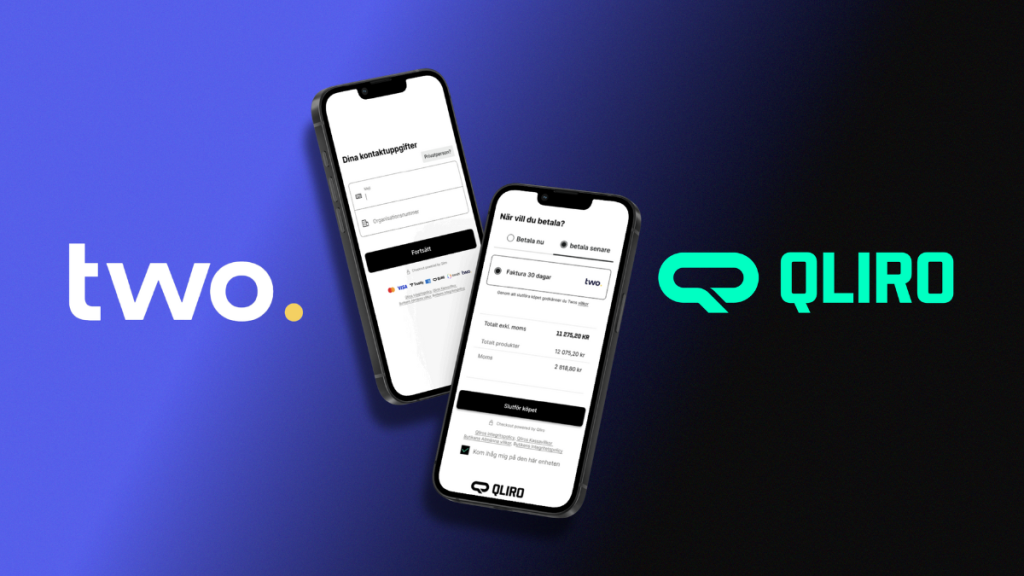
In April 2025, the Swedish payments company Qliro integrated the B2B BNPL provider Two into its e-commerce checkout process, enabling sellers to offer business customers payment terms of 30, 60 or 90 days without incurring any credit or fraud risk.
Two handles the credit decision, verification and credit assessment, whilst Qliro manages the front-end.
Andreas Mjelde, CEO and co-founder of Two, said at the time as reported by Payment Expert, the aim was “to provide Scandinavian merchants with a powerful tool to seamlessly serve both consumers and businesses”.
Christoffer Rutgersson, CEO of Qliro,added: “We enable seamless access to enterprise-level B2B payments, without the need for additional intervention.”
Berlin-based Billie reaches merchants via payment service providers. Its partnership with Adyen launched in February 2024 for business buyers in Germany, Austria, Sweden and the Netherlands, and in July 2024, Billie became the first B2B BNPL provider to be available via Stripe in Europe.
Thanks to the Stripe integration, business customers can defer payment for up to 30 days, while merchants are paid as soon as the goods are dispatched. Billie’s total funding exceeded $150m following a $100m funding round in 2021, in which Klarna and Tencent invested.
The credit assessment relies on transaction data and behavioural signals from small and medium-sized enterprises rather than financial statements, as the credit decision must be made at the point of payment.
Consumer BNPL companies have also become active in the field of business lending. In 2019, Affirm spun off Resolve as a dedicated B2B finance division and, in November 2023, became the first instalment payment option at checkout on Amazon Business, offering eligible US sole traders repayment terms ranging from three to 48 months.
With the fintech Splitit, sellers can split a purchase across the buyer’s existing credit card, meaning the credit risk remains with the card issuer and no new credit check is required.
In the United Kingdom, consumer BNPL has been regulated by the Financial Conduct Authority (FCA) since July 2026, and Klarna has expanded its activities to include digital wallets and banking services.
BNPL: late payments and reforms in the United Kingdom
On 24 March 2026, in its response to a consultation on late payments, the UK Government confirmed a maximum payment period of 60 days applies to payments made by large companies to smaller suppliers.
The package of measures also stipulates that commercial contracts must include statutory interest on late payments at a rate of 8% above the Bank of England’s base rate, and empowers the Small Business Commissioner to fine persistent defaulters and settle disputes out of court.
The measures are set out in the Commercial Payments Bill, which was announced in the Speech from the Throne on 13 May 2026 and introduced in the House of Lords on 19 May 2026.
According to research by the Department for Business and Trade and the Small Business Commissioner, late payments cost the UK economy nearly £11bn a year and result in 38 businesses having to close their doors every day. The same research found business owners spend an average of 86 hours chasing up debts.
“I have set myself the goal of making life easier for small businesses by getting money to flow through the economy more quickly and tackling late payments,” said Emma Jones, the Small Business Commissioner, when the measures were announced.
A supplier using a B2B BNPL provider is paid by the provider rather than by the buyer, and the provider takes responsibility for collection when the invoice becomes due. The buyer retains their deferred payment term.
Balance sheets and banking support
B2B BNPL providers hold the receivables they purchase on their own balance sheet or that of their financiers, so access to debt capital determines how much credit they can extend. Mondu, which was founded in Germany in 2021, secured a €100m ($116m) credit facility from J.P. Morgan Payments in December 2025 and joined the bank’s partner network, thereby gaining access to J.P. Morgan Payments’ European corporate clients.
Mondu offers invoice payments with terms of 30 to 90 days, SEPA direct debits and repayment plans ranging from three to 12 months, and holds an electronic money licence granted by De Nederlandsche Bank in August 2024.
“This credit facility and strategic partnership are a significant endorsement of our business model and our vision to simplify the financial lives of businesses,” said Philipp Povel, co-CEO of Mondu, when the agreement was announced.
Banks and insurers have entered the market through partnerships with specialist providers also. Two, Santander Corporate & Investment Banking and Allianz Trade launched a product for large multinational companies in January 2023, whereby Santander finances the advance payment to sellers and the credit terms for buyers, Two provides the payment technology, and Allianz Trade provides insurance against default.