Unified Payments Interface (UPI) is India’s most popular payment method; but how did it become a payment goliath to the envy of the rest of the world?
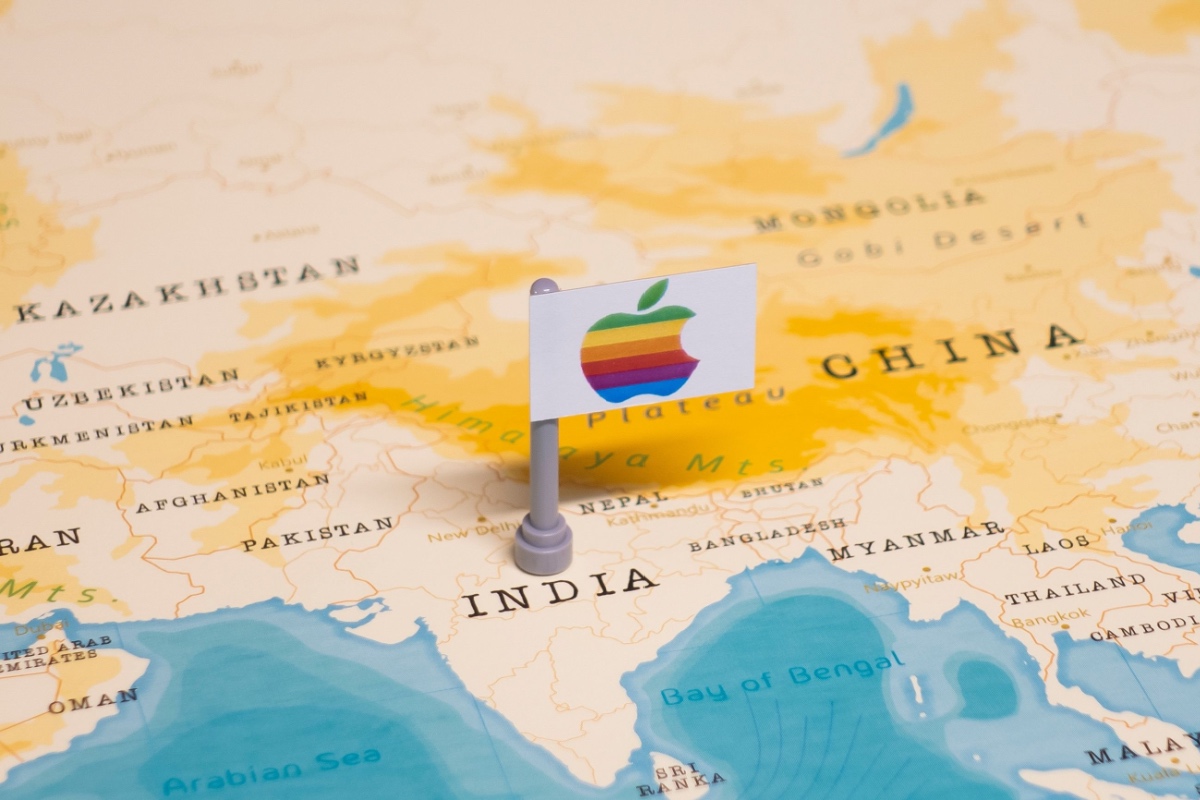
India’s Unified Payments Interface (UPI) is one of payments’ biggest success stories of the last decade.
It has become not just India’s largest payment processor, but one of the world’s leading means of payment, reaching its peak in 2025 when, for the first time, it processed more daily transactions in June 2025 than Visa.
Prior to launching in April 2016, digital payments were fragmented across India as cash still remained the payment method of choice among consumers.
Digital payment schemes such as National Electronic Funds Transfer (NEFT) and Real Time Gross Settlement (RTGS) were restricted as solely electronic transfer methods, limited to banking hour settlements and requiring stringent authentication through the use of codes and bank account numbers.
The National Payments Corporation of India (NPCI) looked to address this with the Immediate Payment Service promising 24/7 real-time payments in 2011. This ultimately failed due to a poor user experience and frequent transaction failures.
So the NPCI and Reserve Bank of India (RBI) turned their intentions to building an open-architecture, single API real-time payment rail that supported 24/7 settlement, a frictionless authentication experience and an instant transfer method to send to recipients.
This is how UPI became India’s most popular payment method and model: a blueprint for many countries to follow.
How UPI works
UPI works via a four-party system:
- A mobile app (Google Pay, Paytm, etc.) handles the consumer prompt to route the payment to a RBI regulated bank
- The bank then processes the payment via its acquiring gateway to connect the mobile app to the NPCI network
- The NCPI’s routing and clearing house orchestrates the payment message and handles interbank settlement
- Core banking solutions then process the settlement to ensure balances, debits and credits are maintained between the remitter and beneficiaries’ banks.
While this is happening on the backend, the consumer must adhere to a two-factor authentication process. This can be done by sending a four-to-six code to the paying smartphone’s SIM, which is entered into the NPCI common library.
Know-Your-Customer (KYC) checks are handled by the acquiring banks’ standards. The payee must adhere to KYC checks also issued by the RBI. For those without a debit card performing a UPI payment, they can use a one-time password (OTP) when paying with their mobile number, which is linked to their bank account.
Daily peer-to-peer (P2P) transactions are capped at ₹1m ($10,300) per transaction, with a maximum allowance of 20 transactions per day per bank account.
Transactions for subscriptions, tax, healthcare and capital markets are capped at ₹5m ($51,600) per day.
UPI supports P2P payments, person-to-merchant payments, account-to-account (A2A) transfers, credit card payments, QR code payments, recurring payments, digital vouchers, and cross-border payments – via UPI International.
Some of the most prominent payment service providers and methods that carry UPI include: Google Pay, Paytm, Amazon Pay, CRED, and WhatsApp Pay.
It is available to over 590 banks and more than 40 third-party providers due to its open architecture being able to be embedded into many infrastructures.
The key regulations for operating UPI
The RBI operates UPI under the Payments and Settlement Systems Act 2007, while the NPCI oversees its guidelines.
Sustainability
The NPCI mandates that third-party operators, such as Google Pay or Paytm, do not process more than 30% of total UPI transactions over a three-month time period.
Third-party providers and incumbents are bound to comply with the RBI and NPCI’s guidelines until 31 December, 2026. This in order to avoid sudden disruptions affecting millions of customers. This does not apply to banks.
Data localisation
All payment services and third-party providers must adhere to the data localisation laws when processing UPI transactions.
These transaction data laws have been set-up to hold all end-to-end payment data exclusively in India and cannot be transferred to other jurisdictions without the necessary clearances.
For cross-border transactions, the data must be removed from overseas systems helping to process the payment. It must be returned to India servers within 24 hours/one business day.
Consumer protection
UPI consumer protection rules, such as resetting PINs for mobile number payments within 24 hours, are in place to prevent account takeover fraud.
When performing a payment, the UPI supporting app will display the beneficiary bank account holder’s name in order to prevent mistakes, such as accidental transfers.
How Merchant and Consumer UPI adoption grew
Another key regulation which has enabled the RBI and NPCI to grow UPI from the outset was its lenient pricing and merchant discount rate (MDR) mandates.
India’s Ministry of Finance mandates that UPI comes with zero fees attached to MDR for bank-to-bank transfers, as merchants are also not charged with processing fees for acceptance.
However, the Indian government introduced a change for the first time regarding the zero fees attached to merchant payments.
In September 2026, the government introduced a 0.4% merchant discount rate on UPI payments to merchants above ₹2,000 ($20), ending more than six years of fee-free processing on the country’s main digital payment rail.
The charge takes effect on 15 October 2026.
P2P transfers remain free regardless of value, as do person-to-merchant payments of ₹2,000 ($20) or less. Small vendors classified as P2PM, and those receiving up to ₹1 lakh a month through UPI, are also exempt.
UPI: the global leader and the envy of the world
To put UPI’s scale into perspective: it handled 50% of global real-time digital payments across 2025, processing 228 to 240 billion annual transactions with total volume reaching $3.5trn.
Since UPI’s launch in 2016, there have been many different versions that can be traced back to it.
The closest to UPI’s scale is arguably Pix in Brazil. Pix launched in 2020 and has been used by 148 million people in Brazil, 16 million companies, 79.8 billion transactions processed, and $6.87 trillion in transaction value, in 2025 alone.
The US began to modernise its real-time payment rails by introducing FedNow, a 24/7 settlement that sits alongside ACH. It has since been revealed Federal Reserve officials had consulted UPI operators for the infrastructure for FedNow.
In Europe, the European Payments Council operates the SEPA Instant rail, as well as Request-to-Pay. This is built on push-and-pull systems which has been popularised by UPI.
The UK is the latest to draw inspiration from UPI. The UK Payments Initiative has been working on building an A2A payment rail powered by open banking to reduce the dependency of Visa and Mastercard.