Elon Musk’s super app vision is underway, launching X Money for selected US users. But while the world’s richest man is not shy to voice his opinion, it could have an adverse impact in the long-term trajectory of X.

X Money’s launch in late July 2026 was the breakthrough in owner Elon Musk’s grand vision for the social media app… sorry; super app.
While the world’s richest man is known for his roles at Tesla, SpaceX and being a divisive figure across the world, Musk’s early business career started in payments as the founder of PayPal and X.com.
Musk is clearly fond of the letter ‘X’ as he rebranded what was once called Twitter into X and established X Corp. as its parent company, which is where the first rumblings of his ‘everything app’ vision came to light.
Since then, X began laying the foundations for X Money’s launch: registering with the Financial Crimes Enforcement Network (FinCEN), securing money transmitter licence in 40 US states, working with Visa Direct to perform peer-to-peer payments, and now introducing in-app crypto and stock trading data.
X Money was launched, and, at present, is only available to US users of X Premium and X Premium+. Its initial offerings include instant peer-to-peer in-app transfers, up to 6% APY on balances, 3% cashback for eligible purchases with the X-branded debit card, early direct deposits two days before payday – alongside free ATM withdrawals, wires and checks.
However, Musk could not launch X Money using in-house infrastructure alone, it needed the support of regulated, traditional entities that have licences which support deposits, and a banking infrastructure to secure early users’ trust. This is where Cross River Bank comes in.
A trusted banking source
Shortly prior to X Money’s launch, Cross River Bank announced it had struck a partnership with X to lend its banking infrastructure so users can access US payment rails, such as the Automated Clearing House (ACH) and FedNow for 365/24/7 real-time settlement.
X Money users benefit from these backend functions to perform direct deposits from one X Money account to another, and schedule bill payments. Cross River leverages its Federal Deposit Insurance Corporation (FDIC) licence to help perform bank-like capabilities on the social media app.
The US bank is able to hold up to $250,000 in reserves for X Money users, helping power one of its primary offerings; interest-bearing accounts. Musk wants to turn idle funds into a balance sheet that can offer yield of up to 6% APY, incentivising existing and new users.
“X’s Super App plans could make platforms people already use every day a bigger entry point for payments and investing.”
Anthony Denier, WeBull Group President
Cross River CEO, Gilles Gade, spoke during the announcement of the X Money partnership and believes the new social media payment service is a “game changer”.
“This is a game changer for consumers and the market at large from a technological, banking, and lifestyle perspective,” said Gade at the time.
“When fully available, X Money will deliver to hundreds of millions of X users intuitive and elegant payments and account functionalities with the full consumer protection and trust of a regulated entity.”
This is not Cross River’s first foray in helping social media platforms perform bank-like services with its embedded finance support.
The bank has increased its focus on supporting social media apps with payments, including multi-rail, programmable money options and transparent controls. With X handling the user interface, Cross River can deploy its payment and banking services in the backend to support Musk’s payments vision for X.
The talk of the crypto/stock trading town
The introduction of in-app crypto and stock trading adds a new element to X with no existing parallel to other social media entities.
X users can now track live crypto and stock trading prices via the Cashtag Partner Program, which features an assets ticker, enabling users to search for like token price charts, related posts and trading options.
Companies like Coinbase and Interactive Brokers serve as a gateway for X users to trade with cryptocurrencies and stocks in partnership with the X Money brand.
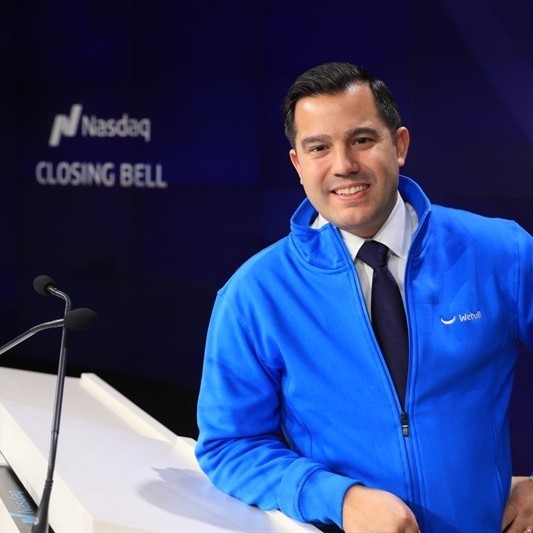
US financial services and trading platform WeBull became the latest X Cashtag Partner program partner, redirecting X users engaging with their favourite assets onto WeBull for genuine trading.
Speaking to Payment Expert, WeBull Group President and US CEO, Anthony Denier, believes that cashtags put conversations into practice by enabling users to click on the “Trade on WeBull” prompt.
“X already brings together investors, company leaders and market commentators discussing stocks and crypto in real time,” says Denier.
“Cashtags put those conversations alongside live market information, and our partnership adds a direct route to Webull’s research and trading tools. Together, they strengthen X’s role as a place where investors can follow markets, exchange ideas and explore investment opportunities.”
X has been a breeding ground for crypto trading talk for years, with HODL (holding on) and FUD (Fear, Uncertainty and Doubt) filling up the timeline in response to reports or commentary on the market, which in turn has a direct impact on prices.
Musk wants to take these conversations and put them into practice, all within the same platform. Denier and WeBull believe the cashtag feature can create more experienced traders by discussing market data on X.
“Looking ahead, we see opportunities to incorporate X sentiment, discussion trends and Cashtag activity into Webull’s research experience, giving investors another source of context to consider alongside market data and company fundamentals,” adds Denier.
Trust: the ultimate barometer for X Money’s success?
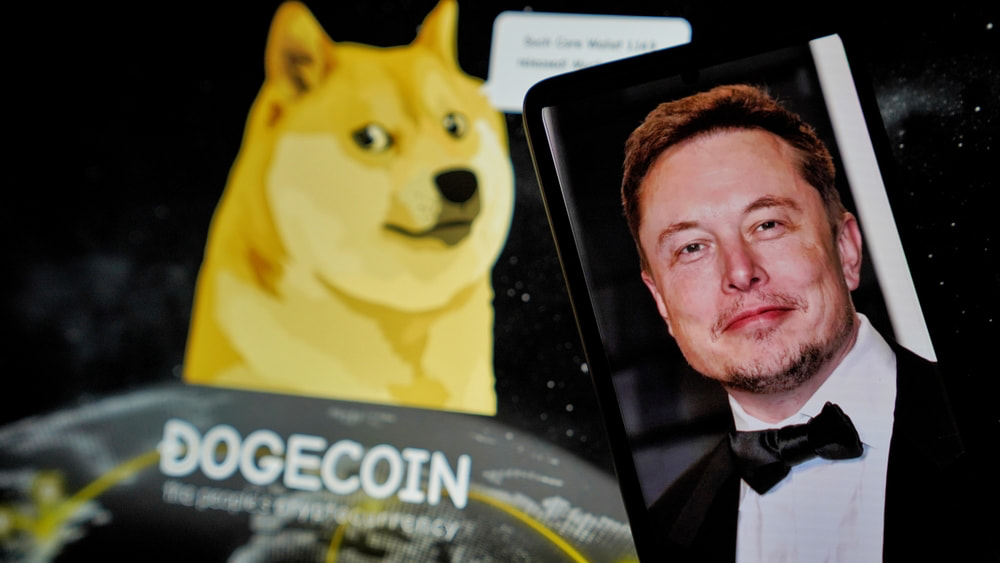
More broadly, it’s worth considering how X Money’s reputation and growth hinges on user trust, not just in relation to the brand’s new payments function, but the wider social media app itself.
Musk is a divisive figure, which is arguably putting it mildly. He has been a fervent supporter of President Donald Trump, his right-wing views have caused some to boycott X (news outlets, charities, public body organisations, etc.), and laid off up to 6,000 employees since 2022 which resulted in a $500m (£373m) severance package in 2025.
What cannot be ignored is how Musk’s cult of personality has a direct impact on user trust in the X platform. It’s a point of debate which has had a effect on advertisers too.
A Kantar Media Reactions 2025 study revealed last year X had a net-negative 31% drop in favourability with global marketers on the platform, declining from a net-positive 15% positive opinion in 2022.
This is reflected in X’s advertising revenue. In 2025, advertising revenue stood at $1.8bn, a marginal improvement from $1.7bn generated in 2024, but a sharp fall from the $4.7bn it earned from advertisers in 2022.
X Money could be the strategy for Musk to diversify its revenue streams away from advertiser dependency. But, as approval ratings continue to steer users away from the platform, will X Money fail before it even gets started?
This is also potentially damaging for Musk’s wider super app objectives. Other social media platforms are transforming into fully-functioning e-commerce and payments destinations, with TikTok’s TikTok Shop now becoming one of the most popular destinations for users to shop and pay for goods.
Potential gimmick, or genuinely transformative?
Sentiment may have waned amongst users, advertisers and companies about X since Musk took control, but its global user base and scale can not be denied.
With an estimated global user base of 561 million to 575 million monthly active users, X is still one of the most popular social media platforms in the world and Musk can leverage this to roll out X Money across the world.
The possibility of an X user in the US being able to send a P2P transaction to a user in India all within the same app has the potential to transform consumer behaviour in how they can send money to family and friends.
Exposure to crypto and stock trading data could also breed a new customer segment of investors, which WeBull President Denier is bullish on.
“X’s Super App plans could make platforms people already use every day a bigger entry point for payments and investing,” says Denier. “For financial firms, that would make partnerships and the ability to deliver services beyond their own apps increasingly important.”
An episode of the Payment Expert Podcast previously explored whether Musk’s X Money and super app vision is anything but a gimmick, or a genuine bid to create a new payment service that incentivises its users to send and hold money within the same app it receives news and sends messages.
Senior Business Journalist for Payment Expert, Kieran O’Connor, believes X Money will succeed within its own user base, rather than displacing existing payment apps, and expects other social media platforms to attempt similar products.
Musk may have no problem taking on advertisers and stating his beliefs on the platform, it has become his digital home for many years before he acquired the company from Jack Dorsey, after all.
But while he may have plans to scale X Money beyond the US and even payments, he must consider how his image may illicit an underlying anxiety in users unsure whether or not to trust in X’s latest offerings. Strong early performances for X Money may go some way to alleviate that pressure.