UPI is India’s most popular method to pay merchants, but its new merchant discount rate, which is set to take effect soon, has businesses and customers holding onto cash.
Cash handling could experience a resurgence in India as the country’s leading digital payment service is set to bring in a new merchant fee charge.
India’s Unified Payments Interface (UPI) will introduce its first merchant discount rate of 0.4% for purchases above $20 (₹2,000) after having zero merchant fees attached to transactions in the last six years.
Person-to-person (P2P) transactions will remain free with zero fees attached, while small vendors classified as P2P merchants, those receiving up to ₹1 lakh a month through UPI, are also exempt.
But according to a poll by Local Circles, 83% of the 32,000 respondents said they are not willing to take on the extra costs with the 0.4% surcharge.
The National Payments Corporation of India (NPCI) defended the merchant fee as a means to cover the $2.1bn (₹200bn) annual costs to maintain UPI.
With the merchant charges set to come into full effect in November 2026, both merchants and consumers are beginning to hold onto cash in parallel with UPI’s growth since it was launched in 2016.
This is in spite of Prime Minister Narendra Modi’s demonetisation efforts of the Indian Rupee in 2016 in a bid to curb tax evasion and other illicit financing. Chief Economist of the Bank of Baroda, Madan Sabnavis, believes “people have actually been accumulating more and more cash”.
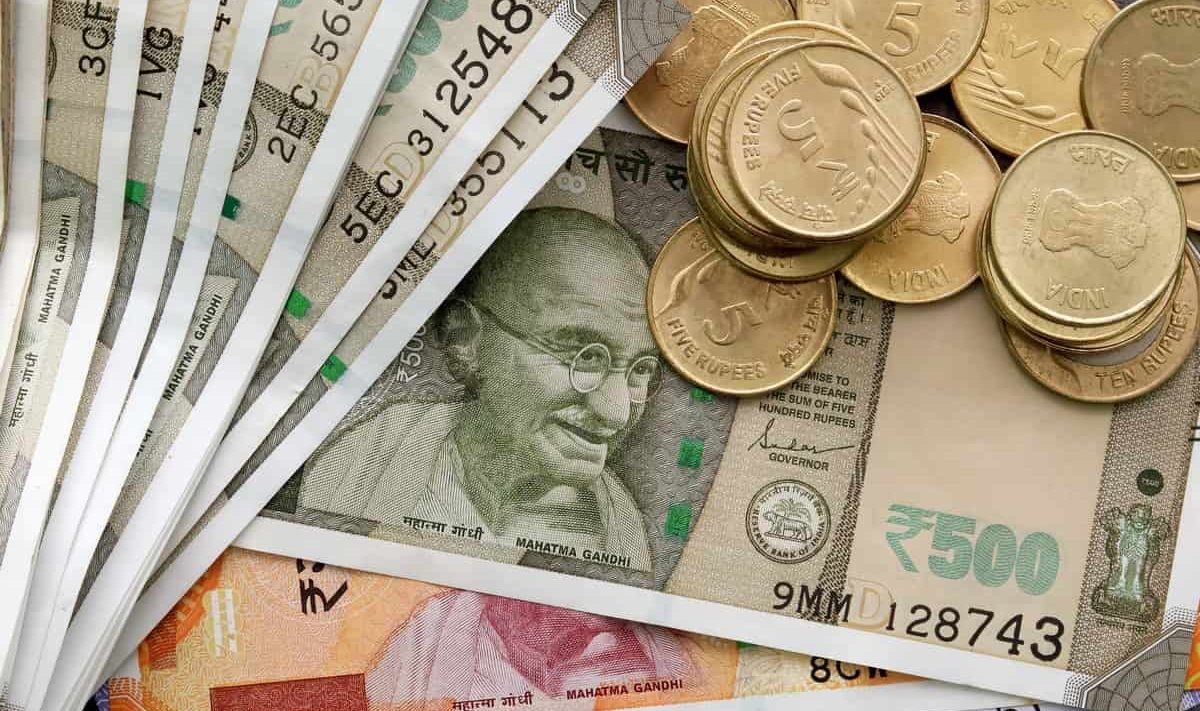
Findings from The Financial Times further backed this cash resurgence, with up to $448bn (₹42.7 trillion) of cash in circulation according to the Reserve Bank of India (RBI).
Chief Economist for Emkay Global Financial Services, Madhavi Arora, projects cash circulation will grow at 12% this year, with inflation playing a key role in this, which has risen to 5.5% in India this year.
Cash vs. UPI
UPI has become one of the leading digital payment services in the world, processing more than 242 billion transactions last year, becoming the new standard for digital P2P and A2A payments.
To put UPI’s scale into perspective: it handled 50% of global real-time digital payments across 2025, processing 228 to 240 billion annual transactions with total volume reaching $3.5trn.
One of the reasons why UPI has been a success in India is due to its seamless convenience for small payments, which is also why the 0.4% merchant discount rate starts at $20.
Despite UPI’s success, in late 2025 and in the present day, local cash usage saw an uptick from ATM withdrawals.
Total currency circulation has grown from 37.24 lakh crore in the financial year 2024-25 to 42.43 lakh crore in mid-to-late 2026, with an annual growth rate reaching 11.1%, down from 11.9% in 2025, but an increase from 5.3% in 2024.