Payments policy has changed through successive standards and regulations as central banks adapt to how consumers and businesses now pay.
Projects across Europe and Asia focus on cross-border collaboration, instant settlement and central bank digital currency pilots.
Payment Expert breaks down five of the most high-profile payments policy programmes.
Digital Euro
What is it?
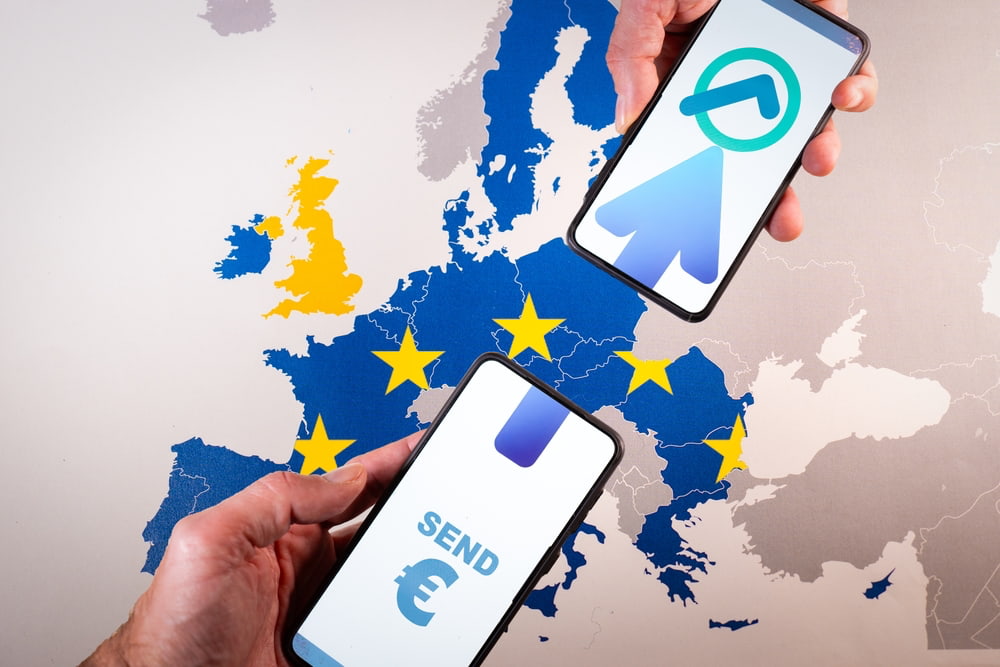
The Digital Euro project is being developed by the European Central Bank (ECB) to issue a Euro-backed central bank digital currency (CBDC) to support its sovereign currency in the new digital age.
A digital representation of the Euro, the Digital Euro is being proposed as a risk-free alternative to private payment schemes, moving away from a dependency on non-European card networks like Visa and Mastercard, and restoring currency sovereignty.
The ECB is proposing the Digital Euro as a mechanism to grow peer-to-peer transactions, working interoperably across borders of every European Union (EU) country. The Digital Euro will be able to perform payments offline, set various holding limits for individuals and businesses, and offer guaranteed access for every EU state citizen.
What is its current status?
The ECB has selected more than 36 payment service providers, fintech firms and central banks to test the payment capabilities of the Digital Euro as part of a pilot programme.
This follows a landmark European Parliament vote in June 2026. On 23 June, the Economic and Monetary Affairs Committee voted 43 in favour, 14 against, and one abstention, for the establishment of a digital euro.
Now, the EU and members of the European Parliament are working on a legal framework for a planned 2029 launch. After the 12 month pilot, the ECB will conduct a rollout period of at least 23 months to allow banks and other providers time to prepare and run awareness campaigns.
How is it changing payment policy?
The Digital Euro has been long touted by ECB President, Christine Lagarde, as Europe’s answer to restoring and protecting its sovereignty away from Visa/Mastercard, as well as protecting the Euro from potential digital dollarisation as the dominance of US dollar-denominated stablecoins grows.
The ECB, similar to China’s successful Digital Yuan, have prioritised CBDC’s over stablecoins.
The Digital Euro would also see changes in established EU frameworks, such as mandatory acceptance of the CBDC, making standards more open for proprietary European payment systems, capped charges for merchant fees, and holding limits designed to avoid runs on the bank and mitigate financial crises.

Pan-African Payment and Settlement System (PAPSS)
What is it?
The Pan-African Payment and Settlement System (PAPSS) is a continental cross-border payment infrastructure that supports instant local currency conversion, settlement and clearing.
Senders and receivers can use PAPSS to transfer funds in their local currencies, improving on a previous norn whereby intra-African cross-border payments would have been converted in US dollars, for example, from a non-African bank before being converted into the receivers local currency.
PAPPS also supports 24/7/365 ISO20022 messaging, and the settlement of interbank balance using pre-funded settlement accounts. It reduces costly foreign-exchange conversion rates and friction for small businesses by cutting multi-day clearing delays.
What is its current status?
In 2026, PAPPS integrated Kenya’s instant payment network, PesaLink, to support 24/7 cross-border payouts in Kenyan bank accounts, as well as mobile money wallets by eliminating intermediaries.
PAPPS is also conducting pilot programmes with the Central Bank of West African States, connecting the West African Economic and Monetary Union to other African payment systems for greater interoperability.
2026 has also seen PAPSS expand beyond its core instant settlement infrastructure by launching PASSCARD. This uses an open API to grant PAPSS access for non-bank fintechs and aggregators.
How is it changing payment policy?
PAPSS has redefined how cross-border payments are settled across Africa by reducing dependency on non-African currencies to facilitate payments, in turn boosting the sovereignty of local African currencies.
This has helped local currencies manoeuvre through costly FX rates. PAPSS has also consolidated payment regulations across Africa by mandating ISO20022 messaging, standardising know your customer (KYC) due diligence and refining anti-money laundering (AML) rules to support more instant cross-border payments across the continent.
The arrival of PASSCARD and its framework means central banks across Africa have become encouraged to adopt and incentivise local payment rails while lowering merchant fees and keeping transaction data within local jurisdictions.

Project Nexus
What is it?
Project Nexus is an Asian initiative connecting several central banks, linking domestic payment systems and schemes to serve as a single gateway for real-time, international transfers.
It was launched by the Bank of International Settlement’s (BIS) Innovation Hub, and links some of Asia’s domestic payment systems such as India’s Unified Payments Interface (UPI). The project has facilitated the settlement of account-to-account transactions across borders in under 60 seconds.
Other domestic payment systems involved include PromptPay in Thailand, PayNow in Singapore, and DuitNow in Malaysia.
What is its current status?
Project Nexus is planning a production launch of Nexus Global Payments in 2027. This would see Asian payment systems, supported by Amazon Web Services, build, host and maintain the central Nexus scheme.
Nexus Global Payments is based in Singapore and assumes operational responsibility and control. It will develop rulebooks and global policy standards for the expansion of Project Nexus.
One of its primary focuses will be to harmonise the central gateway that connects its Asian payment systems. Other focuses will involve installing real-time FX quote engines, automated despute resolution solutions, and guaranteeing the sub-60 second settlement cycle.
How is it changing payment policy?
Project Nexus seeks to simplify bilateral cross-border payment and settlement cycles by converging multiple rails and systems into one, consolidated model.
This is achieved by moulding several central bank policies and regulations into a single Project Nexus rulebook, emphasising AML/KYC/CFT symmetry and allowing incumbents to adapt to a single model that enables them to make account-to-account payments across several rails near instantly and compliantly.
The open market model Project Nexus incentivises also requires FX providers to bind 24/7 rate quotes by replacing outdated banking spreadsheets and presenting consumers and businesses with transparent FX rates before transactions can be approved.

TARGET Instant Payment Settlement (TIPS)
What is it?
TARGET Instant Payment Settlement (TIPS) launched in 2018 to allow payment service providers to offer instant real-time payments to consumers and businesses.
TIPS settles transactions on central bank balance sheets using Eurosystem’s T2 settlement clearing infrastructure. There are no maintenance fees, weekend or bank holidays interferences to support account-to-account payments to be settled in under 10 seconds.
Process fees are capped at €0.0005 per transaction, while TIPS also supports non-euro area central banks to settle domestic and cross-currency instant payments with local currencies.
What is its current status?
TIPS transaction volumes increased by 82.5% in 2025 after adopting the EU’s Instant Payments Regulation which mandates banks to offer TIPS at no extra cost.
The Eurosystem has also supported cross-currency clearing features with TIPS to enable cross-border transactions across several local currencies, without the need for passing through multiple intermediary banks.
The ECB is now exploring how to connect TIPS with other multilateral payment networks, such as Project Nexus, in a bid to reduce remittance fees and further support instant payments across multiple geographies and currencies.
How is it changing payment policy?
Not only has TIPS become embedded within the EU’s Instant Payment Regulation, it has become integrated across a range of non-bank payment service providers and opened dedicated cash accounts with central bank money.
The ECB and Eurosystem have expanded TIPS across Europe to support homegrown payment options such as Wero, which payment service providers, banks and fintech firms offer as alternatives to Visa and Mastercard.
Unified Payments Interface (UPI)
What is it?
Unified Payments Interface (UPI) is a real-time instant payment system developed by the National Payments Corporation of India (NPCI) and regulated by the Reserve Bank of India (RBI).
UPI has become one of, if not the biggest, success stories of government mandated digital payments systems that have replaced cash payments in favour of instant peer-to-peer payments through mobile and digital devices.
Payments performed via UPI use a four-to-six digital PIN for transactions to be authorised, while users can also link several bank accounts which connect to other payment methods, such as Google Pay or Paytm.
What is its current status?
UPI is undergoing a period of significant change when it pertains to merchant fees.
In August 2026, P2P transfers and the majority of everyday consumer-to-merchant payments will stay free under proposals from India’s Ministry of Finance. The one change coming to UPI is higher-value merchant transactions, where a Merchant Discount Rate of 0.25 to 0.5% has been proposed for payments above ₹2,000 (£15.53).
The government has said this threshold would touch only around 5% of UPI transactions by volume because it would exclude the low-value payments that make up most of the system’s daily use.
How is it changing payment policy?
UPI has revolutionised retail and consumer payments in India from costly merchant and consumer fees, to a digital-native alternative which is cost-effective and easy to use.
The RBI has evolved UPI to enable credit lines and RuPay credit cards which has changed how pre-approved credit is granted from plastic card issuance, to micro-credit loans being available to more consumers with account-to-account digital rails.
UPI is now available in 11 countries due to its involvement in Project Nexus. By linking UPI directly with international central bank payment networks, direct account-to-account payments can be performed using UPI in new countries.