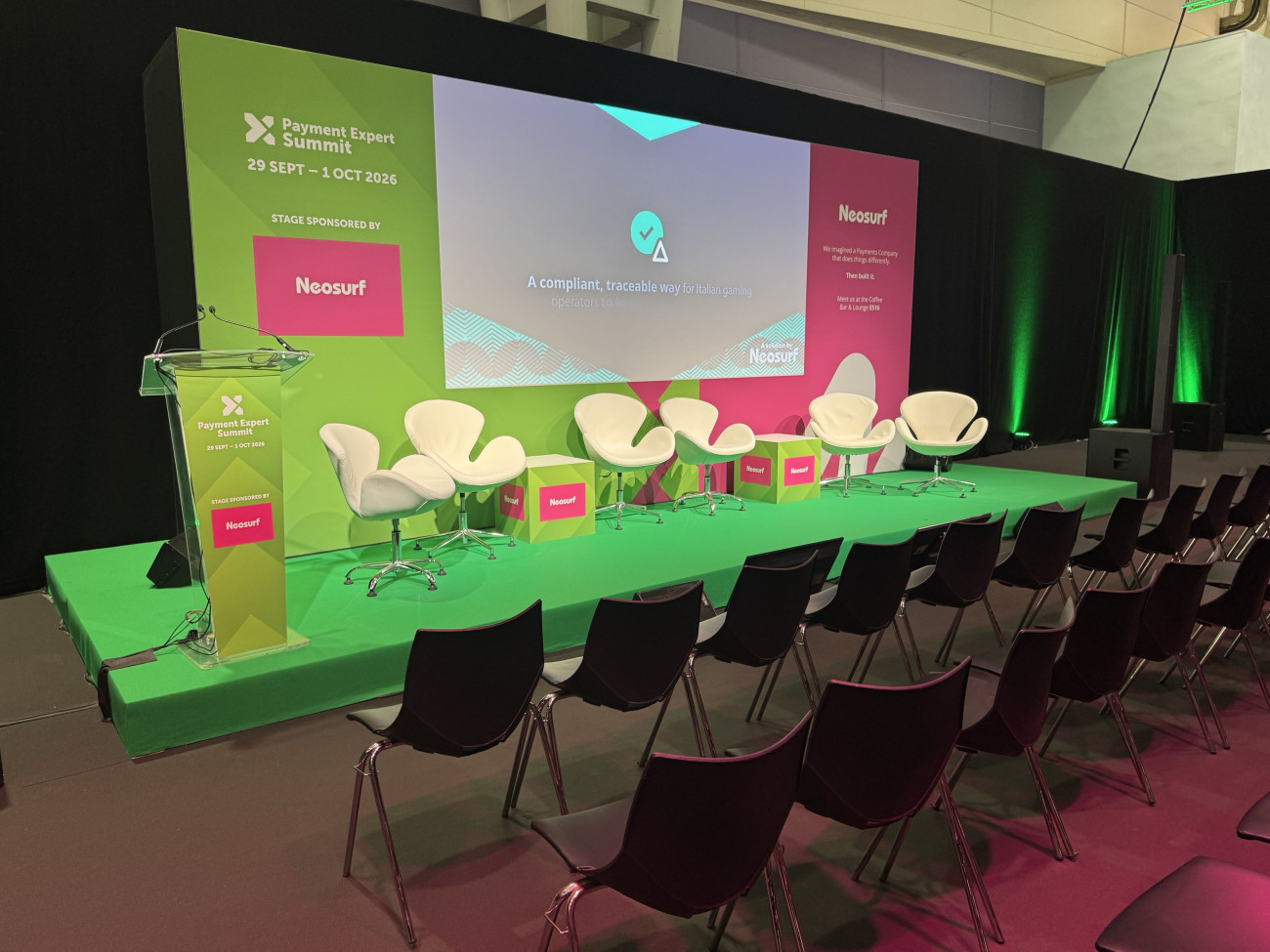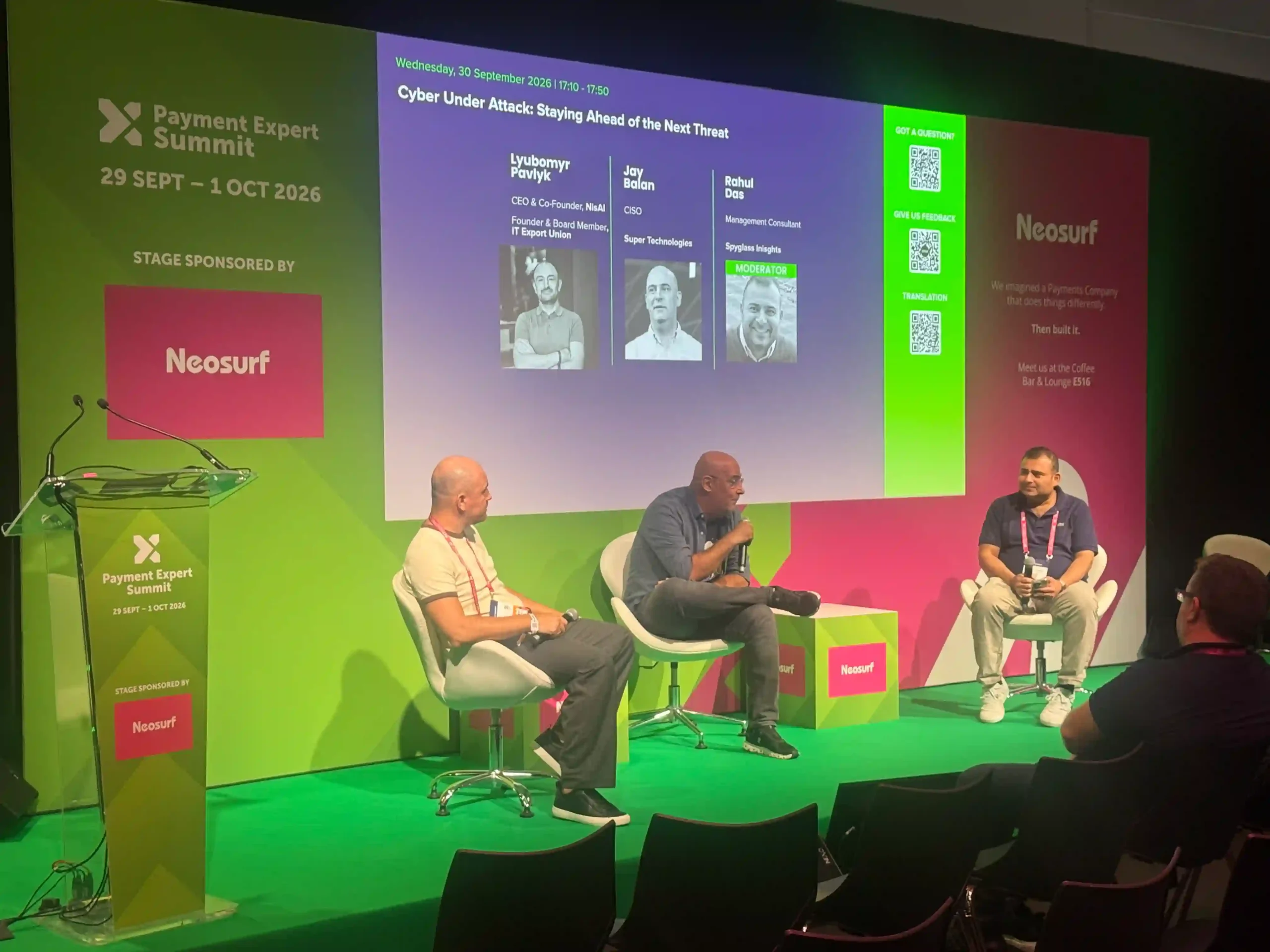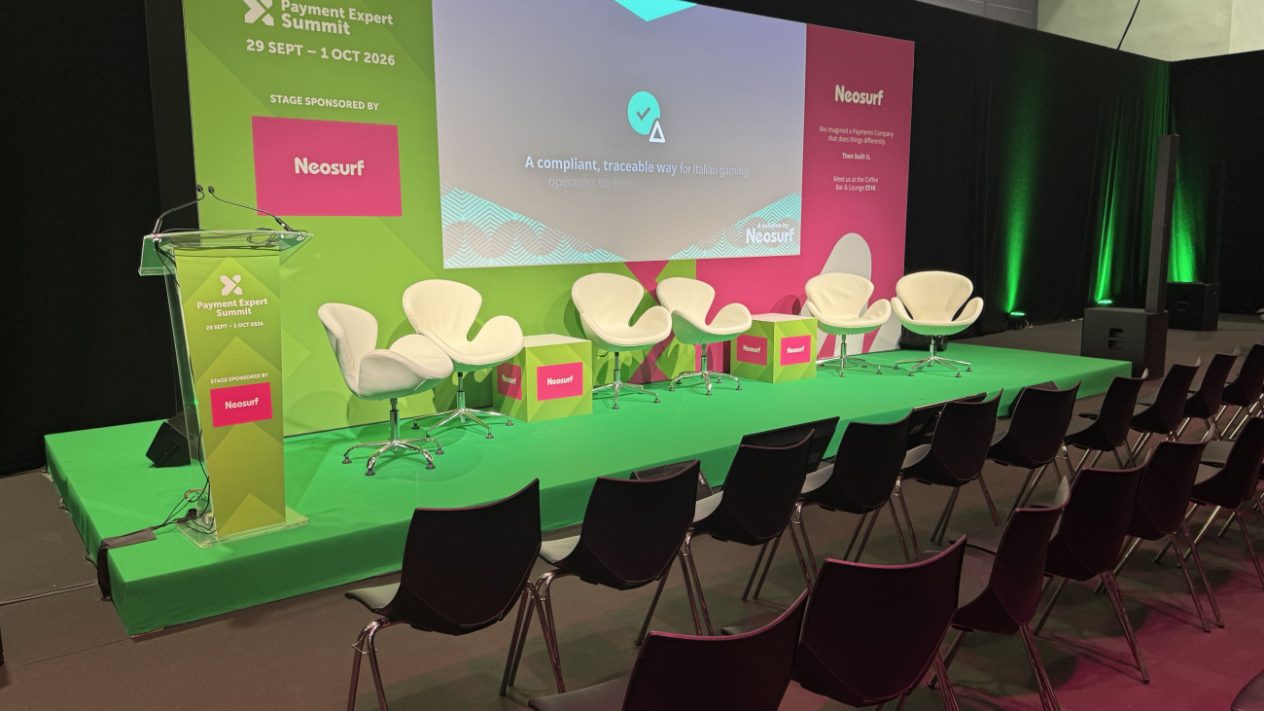
The Payment Expert Summit runs for three days at SBC Summit 2026 in Lisbon, with stage tracks on fintech, payment compliance and crypto and blockchain
The Payment Expert Summit stage opens at SBC Summit 2026 on Tuesday, 29 September, and runs to Thursday, 1 October at the Feira Internacional de Lisboa and the MEO Arena in Lisbon.
The stage carries three tracks. The Fintech track runs on the first day, examining how financial technology affects player payments, compliance and responsible gambling.
The Global Payment Compliance track follows on Wednesday, 30 September, covering payments, fraud, AML and regulatory change. The Crypto & Blockchain track closes the stage on Thursday, 1 October.
DAY 3 – 12:30PM – Nick Spanos, Founder of Bitcoin Center NYC takes to the Payment Expert Summit
Day 3 – 11:00AM – Blockchain Banking for Gambling Operators
“Blockchain Banking for Gambling Operators” brought together payment experts to discuss the growth of evolving payment methods in the iGaming space. Lissele Pratt, co-founder of Capitalixe, said banks label gambling transactions high-risk because old systems cannot check large volumes, so they classify the whole sector rather than review each payment.
She said banks run systems “from the dinosaur age,” and that EMIs and payment firms grew to fill this share of the market. UK EMIs now convert incoming USDT into virtual IBANs in the same account, a first-party route banks accept more easily. Ian Sherrington, CEO of Crownstar, praised the introduction of blockchain for removing chargebacks and effectively cutting costs.
There were also calls for more communication across regulation, from Julian Goffin, co-founder and CEO of Alunafi, who cited Malta as a good example of a region where there is strong regulatory collaboration.
Alunafi uses an OTC desk to convert crypto to fiat into merchant accounts within about 15 minutes, he said, and its main obstacle is finding correspondent banks. Martha Brincat, chief regulatory officer at the Malta Gaming Authority, said the regulator runs workshops with local banks to explain the risks and controls.
Malta routes crypto through licensed crypto asset service providers rather than letting operators take it directly, she said, and operators can now partner with any EU-licensed provider under MiCA.
Day 2 – 4:30PM – Prediction markets draw investors and lawsuits as the swap-or-bet fight nears the Supreme Court
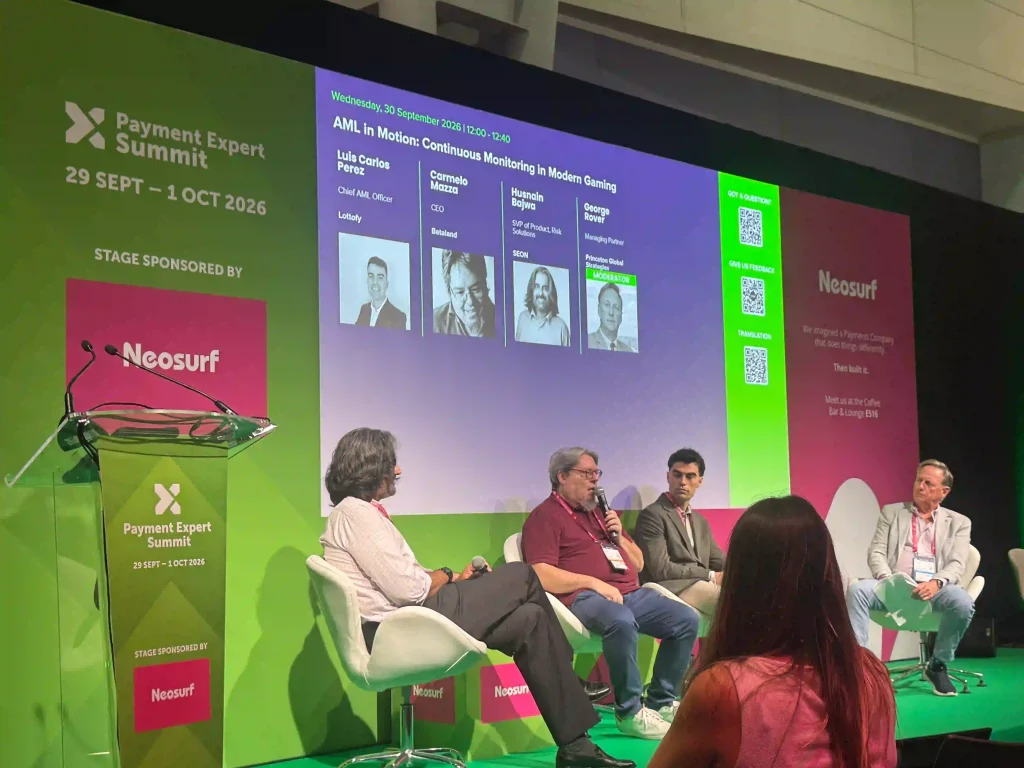
Prediction markets face more than two dozen active US lawsuits as federal courts split over whether sports event contracts are financial swaps or gambling, panellists said.
Johnny ElHachem, a gaming attorney at Holland & Knight, said a $1 contract on a game outcome carries prize, chance and consideration – the elements of gambling – yet Kalshi and Polymarket offer them as swaps regulated by the Commodity Futures Trading Commission, registering federally as designated contract markets to bypass state licensing, where states tax operators up to 20%.
ElHachem put the count at 25 to 30-plus active cases. The Third Circuit backed CFTC jurisdiction in New Jersey in April, but the Ninth Circuit ruled against Kalshi over Nevada in August and the Sixth Circuit did the same over Ohio and Tennessee on 25 September, holding the contracts are bets subject to state regulation; New Jersey has petitioned the Supreme Court.
Tom Waterhouse, chief investment officer of Waterhouse VC, said prediction markets are the sector drawing capital now and that the test is whether operators retain customers more cheaply than rivals; his fund has focused on the betting syndicates that supply liquidity and price sharper than bookmakers.
Klen-Kristofer Kaljulaid, a partner at Yolo Investments, said the firm passed on Polymarket from about $100m to $20bn – a roughly 200x miss – because through a gaming lens it was an unlicensed operator in the US, and named three problems: liquidity held by a few shops, standing regulatory risk, and no successful exchange precedent except Betfair.
Kaljulaid said he is now “super short,” buying DraftKings because it runs its own exchange, and that today’s valuations hold only if the market becomes mainstream hedging rather than sports betting.
Day 2 – 3:00PM – Gigadat announces advisory services for operators entering Canada
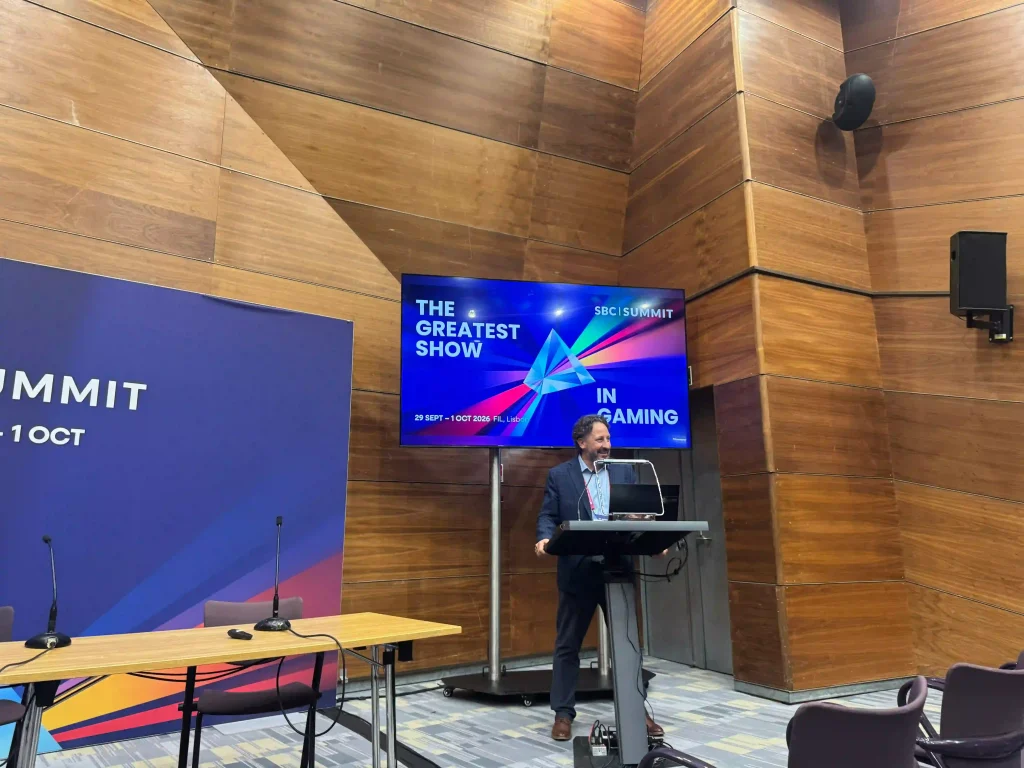
Gigadat will offer advisory and compliance guidance to social gaming and sweepstakes operators entering Canada, VP of Operations Quinn Zapach said at a press conference at SBC Summit 2026.
Zapach said the payment provider would draw on its Interac relationships and its know-your-customer (KYC) experience to help new entrants meet Canadian regulatory obligations. He said social and sweepstakes products were becoming more common in Canada and that operators arriving from outside the country often did not understand its requirements.
“We are uniquely poised and in a position to be able to add some infrastructure, some guidance, some experience, as we have been in the iGaming space since 2013,” Zapach said.
Gigadat processes Interac payments for regulated iGaming operators in Canada. Zapach described Interac as “the primary rail that connects all banks in the Canadian market space” and said that connection would let Gigadat return more verification data and speed up checks compared with separate third-party KYC tools.
Day 2 – 12:20PM – AML in Motion: Continuous Monitoring in Modern Gaming
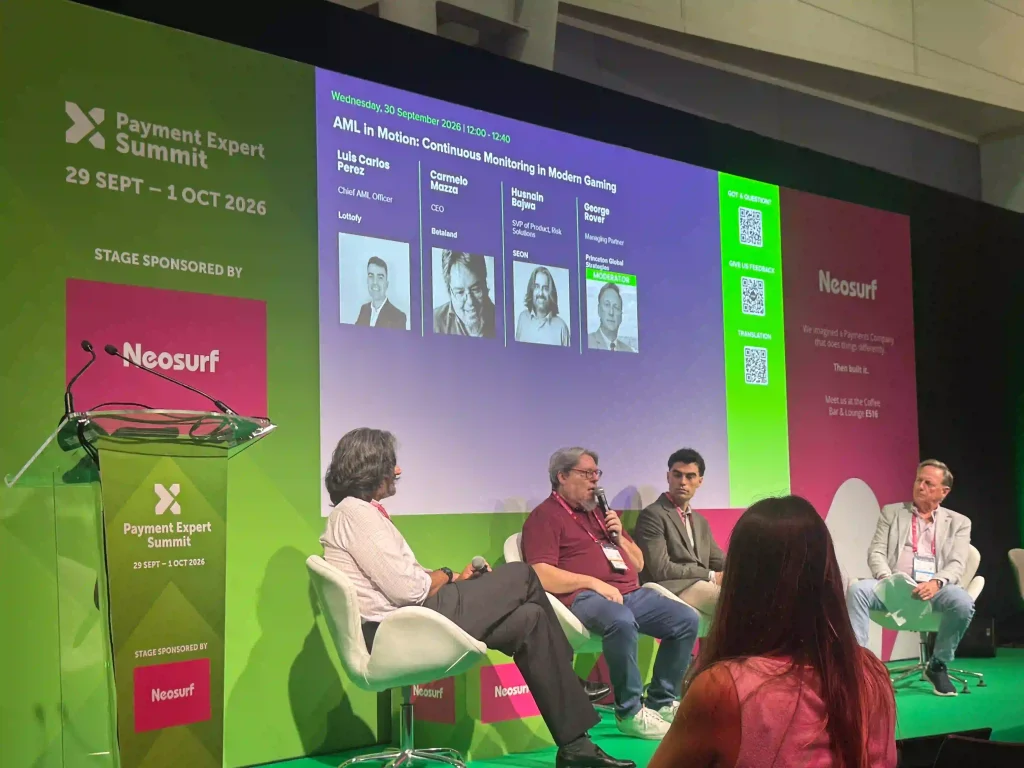
Gaming operators are moving from fixed thresholds and periodic customer reviews to continuous, behaviour-based AML monitoring, panellists said. George Rover, managing partner at Princeton Global Strategies and a former New Jersey gaming regulator, called it “low frequency, high risk.
“You can be right 10,000 times, but the one time you’re not,” a regulator such as FinCEN in the US “can come in and make you look bad.”
Husnain Bajwa, SVP of product for risk solutions at SEON, said AI now lets teams connect an evidence package earlier, pulling what a player account management system shows about transactions over the past hours or days.
Carmelo Mazza, CEO of Italian operator Betaland, said European and Italian rules push operators to improve the quality of risk indicators and to judge customers on the consistency of their history rather than on isolated events, adding that Italy already aligns its AML procedures with the banking system.
Luis Carlos Pérez, chief AML officer at Lottofy, said an operator building a framework should start by understanding its own payment methods, their risks and its customers, then build a customer risk assessment method rather than buy the most expensive tool.
“I would document every decision and why we took it, because the regulator prefers a documented call over a broad one,” he said. Bajwa said policy should come before products and warned against assembling a “chaotic mess of platforms”; over-indexing on tools such as Databricks or Snowflake harms no one but does not create the value claimed, he said.
He said AML need not be “the Department of No”; a customer depositing 120,000 euros and withdrawing 111,000 euros is not automatically laundering, and income verification tools can confirm the sum sits within that person’s wealth.
Day 2 – 11:30AM – The CAC Cure: How Cashier Optimisation Became a Growth Lever for a Leading Operator
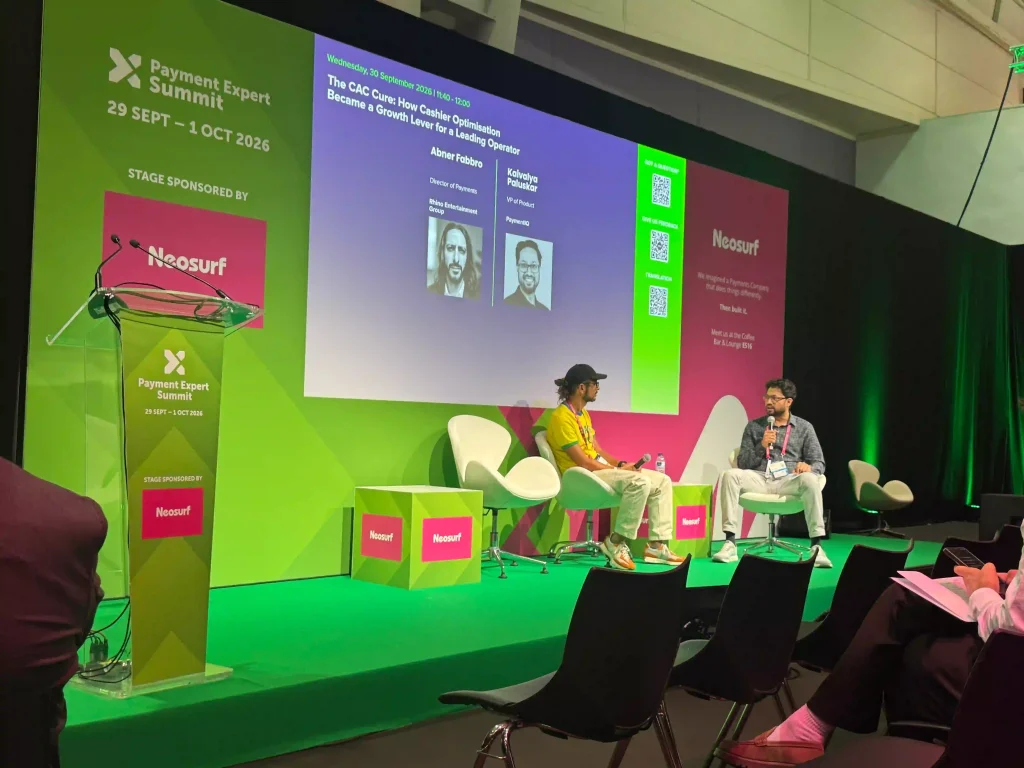
The cashier is the second point of friction after registration and where operators should look to cut customer acquisition cost, Abner Fabbro, director of payments at Rhino Entertainment Group, said on a panel at Payment Expert Summit.
Kaivalya Paluskar, Head of Product at PaymentIQ, who moderated, opened by calling the cashier “a black box you don’t get to open.”
Fabbro said he looks at registration first, because data captured at sign-up reduces friction at deposit.
“Shifting a problem does not solve the problem,” he said of markets that keep registration simple and load the burden onto the deposit. He cited Finland’s Pay N Play, which merges registration and deposit into one step, as the model Rhino works towards.
Fabbro said Rhino builds cashiers by segment, using data analysed “daily, if not hourly,” with predefined payment methods and amounts that change by region, payday timing and age group.
The work is manual – “hundreds of cashiers with hundreds of rules” that are static and changed by hand – and Fabbro said AI should take over those changes and run A/B testing on provider position and deposit amounts.
Paluskar said operators want cashier variants for different traffic, first-time depositors versus VIPs, and described a “live preview” feature that renders player personas so teams see what the player sees. He said the cashier acts as the “closer” on acquisition spend that starts with affiliates and marketing.
Day 2 – 11:00AM – Cross-Border Compliance: Navigating AML Across African Markets
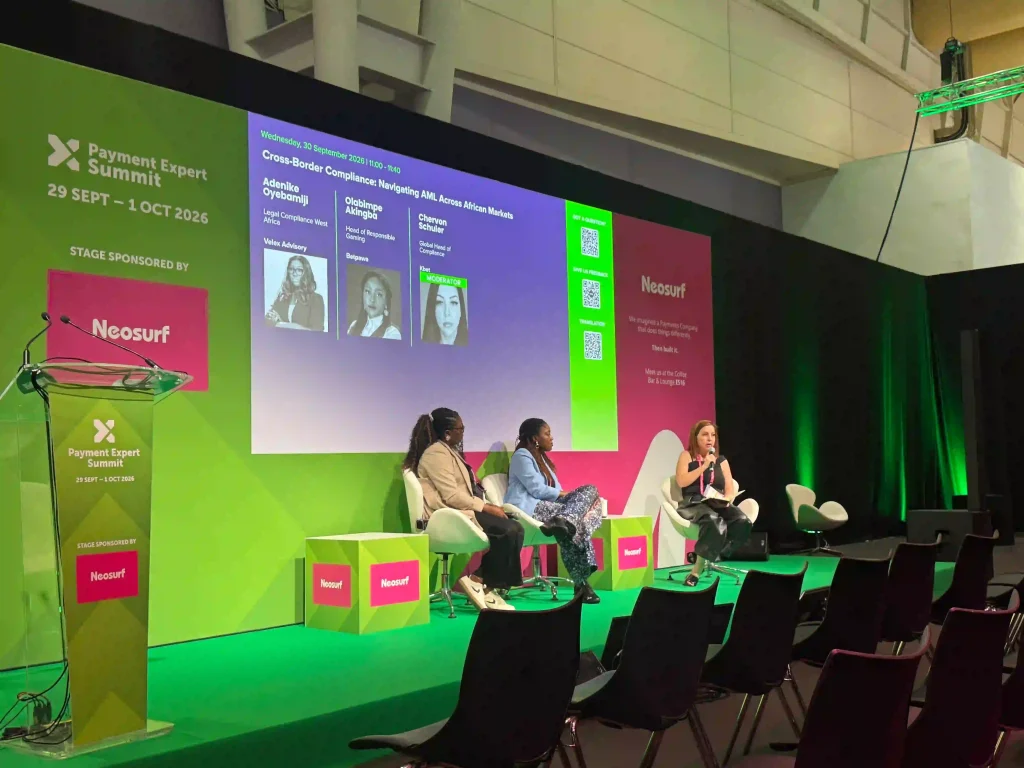
Operators working across Africa should run a single group AML standard and adapt it to each market rather than apply one policy everywhere, compliance specialists said on “Cross-Border Compliance: Navigating AML Across African Markets.”
Adenike Oyebamji, who handles West Africa legal compliance at Velex Advisory, said a single standard “will not necessarily fly” across a continent she put at more than 54 jurisdictions with different laws, thresholds and customer behaviour.
The Financial Action Task Force fundamentals stay constant – customer due diligence, the risk-based approach, reporting and sanctions screening – while each jurisdiction localises to its own risk appetite, she said.
Reporting timelines diverge: Oyebamji said Nigeria requires a suspicious transaction report within 24 hours, South Africa within 15 business days, Ghana within 24 hours and Kenya within two business days.
Olabimpe Akingba, head of responsible gaming at betPawa, said the same group-then-localise model governs responsible gaming, marketing and HR policy.
Payouts are instant unless a customer trips KYC thresholds or wins a sum the operator is legally required to check before releasing, she said, and at that point “you owe your customer an explanation.”
Chervon Schuler, global head of compliance at Kbet, who moderated, said self-exclusion is still handled manually in many markets, including parts of South Africa, which she said makes it easier for problem gamblers to keep betting. Nigeria’s Lagos State regulator launched SafePlay, a centralised self-exclusion register, in August 2025.
Akingba said third-party compliance vendors that pitch regulators directly run their business in “a lazy way” and layer extra cost on operators, “essentially that extra level of taxation.”
Operators need to be in the room when rules are written, she said, because regulators “don’t deal with these customers every day as we do.” Harmonising African regulators wholesale is unrealistic given how many defend their legal independence, she said, but “low-hanging fruit” such as responsible gaming allow collaboration.
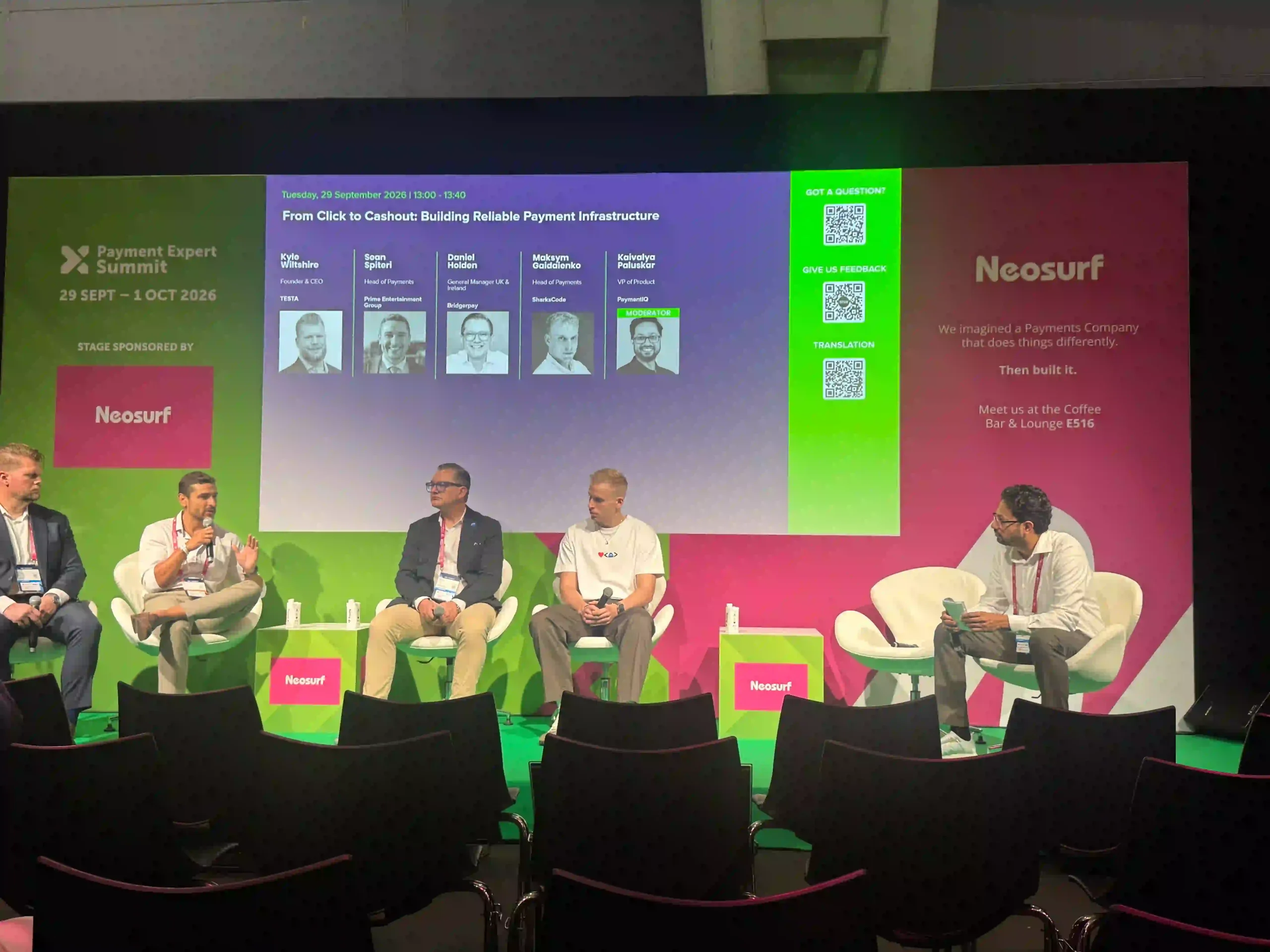
Day 1 – 1:00PM – Payment Expert Summit – From Click to Cashout: Building Reliable Payment Infrastructure
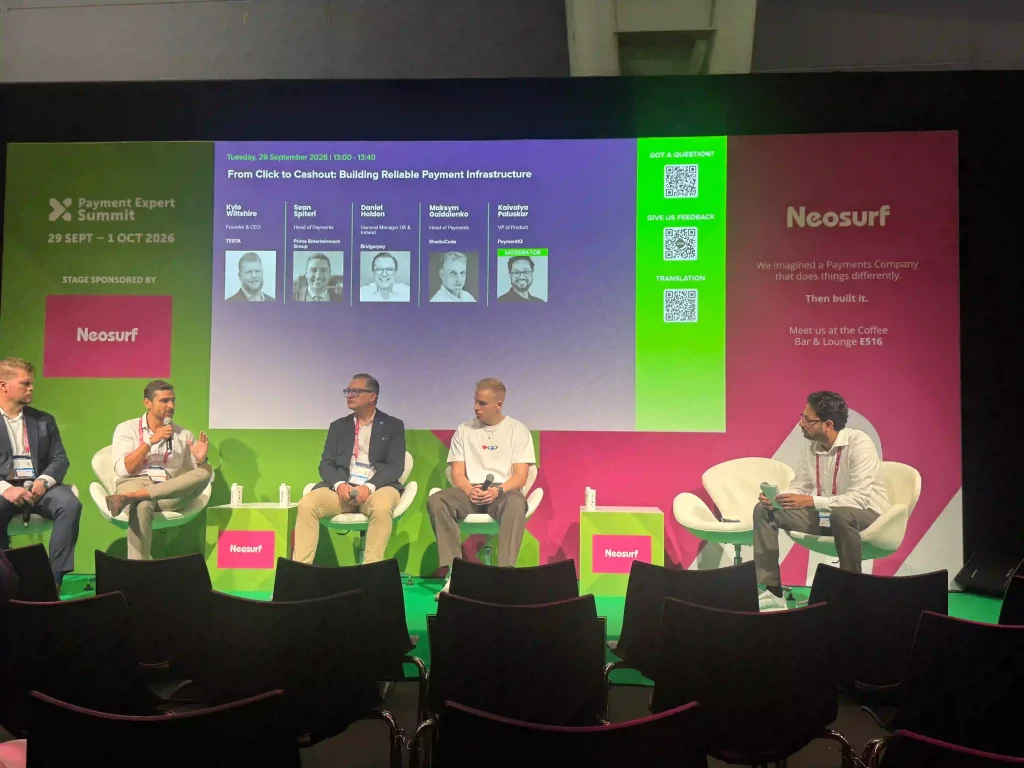
Panellists at the Payment Expert Summit, part of SBC Summit, debated where operators lose players in the deposit process and how the cashier is changing.
The session brought together Sean Spiteri, Head of Payments at Prime Entertainment Group; Kaivalya Paluskar, Head of Product at PaymentIQ; Maksym Gaidaienko, Head of Payments at SharksCode; Daniel Holden, General Manager UK & Ireland at Bridgerpay; and Kyle Wiltshire, Founder and CEO of TESTA.
Discussion centred on friction in the payment journey — the points at which a user abandons a deposit — and the cashier’s expanding role beyond processing payments.
Payment friction costs operators players at three points in the deposit process, Gaidaienko said. “I’d pick three stages of the user’s journey. The first, even before the payment, is where the user sees the payment methods – which might not be well localised – and just leaves the cashier or the brand.
“The second is when the user makes the payment and a poorly selected payment route leads to a failure, so the user leaves. The third is how long it takes to make the deposit or withdrawal. If the processing time is too long, the user simply won’t wait.”
Users judge the process as a whole rather than step by step, he said: “The user doesn’t think about those individual steps. They just see the journey overall, and if they don’t like it, they leave the brand.”
Wiltshire, whose firm runs crowd testing of first-time deposit flows, sorted deposit failures into two categories. “Most issues fall into two broad categories. One is UX and brand — the offer didn’t match what was advertised, they get frustrated, or you’re asking for forms of KYC they’re not comfortable with, and they decide to move on. The other is more functional — they actually try, and something breaks.”
The issue determines the fix needed, he said: “Either you’ve done something wrong before you’ve earned their trust, or something breaks in the financial plumbing of getting their payment. Those two need very different solutions.”
Holden said the cashier’s role is widening beyond the payment itself. “There’s a much more expansive role for the cashier. It goes beyond the payment into ID verification, AI optimisation, and how you re-engage players. Over time the cashier becomes less of a friction point and more about brand engagement. You’ll see operators wanting far fewer choices and a seamless solution.”
Paluskar added that operators need to measure that final step. “You can’t improve what you can’t measure. The cashier is the last point in the acquisition journey, where the player actually deposits, so that’s the point you have to measure. I’d call it a leak diagram rather than a funnel, because you’re losing every player who opens the cashier.”