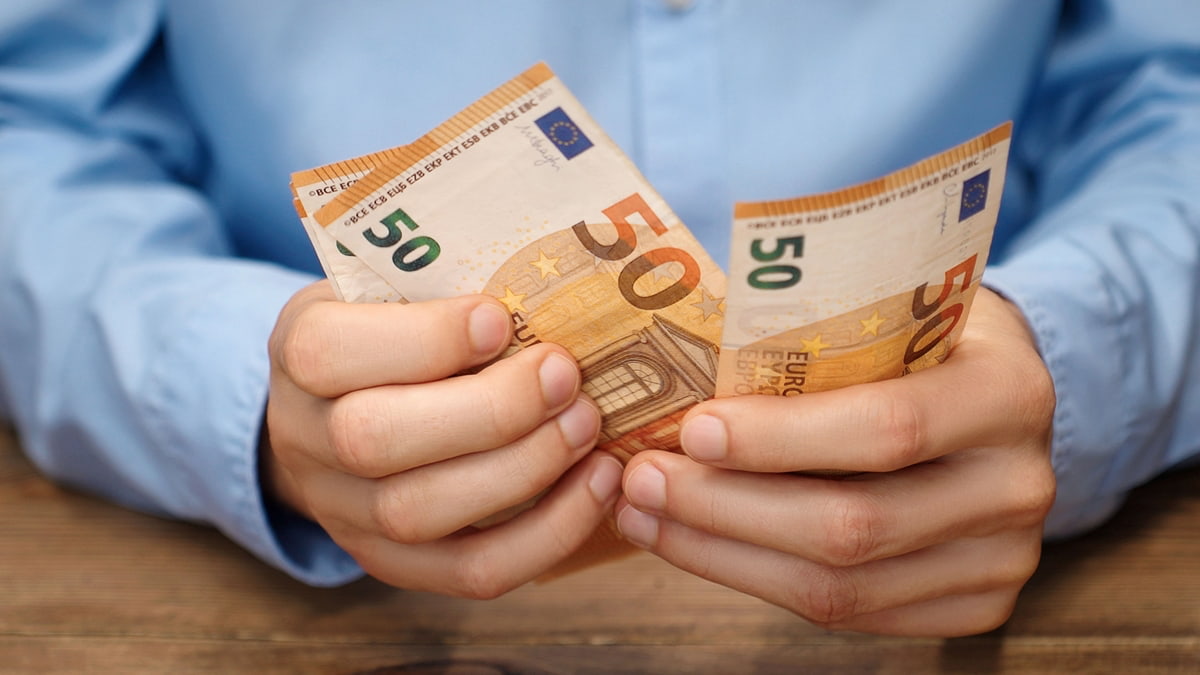
With digital payments continuing to grow, cash has seemingly taken a back seat. But the European Central Bank’s most recent report reveals cash is the most accepted payment method in Europe today.
While digital payments continue to surge in popularity, cash has rebounded in usage as European retail businesses reported a rise in acceptance of cash this year.
According to a recent European Central Bank (ECB) report, titled ‘Use of cash by companies in the euro area 2026’, 92% of consumer-facing companies with physical points-of-sale reported accepting cash.
Businesses across retail, hotels, entertainment and restaurants have experienced an increase in cash acceptance this year, which the ECB revealed is an increase from 90% cash acceptance from 2024.
Perhaps most notably, cash remains the most widely accepted payment method for in-store and physical payments across Europe. This comes during a time where digital local payment methods such as Wero, BLIK and Bizum continue to gain traction.
When comparing cash to digital payment methods, it outranked these methods primarily due to businesses placing greater reliance on cash. Digital payments can often be prone to tech, network or power outages, while also being vulnerable to privacy and data leaks.
Above all else, businesses across Europe do not view cash as a dying payment method. Rather, 92% of respondents believe they will continue to accept cash over the next five years.
However, there has been a rise in retail self-checkouts, as 13% of respondents have introduced these terminals over the past year.
Self-checkout terminals primarily accept digital payments as the primary means of payment, although some allow users to place orders and then pay with cash at the checkout.

Almost half (48%) of the companies utilising self-checkout terminals do not allow cash payments at those specific machines, forcing a digital-only transaction.
Pratiksha Pathak, Partner and Head of Payments at RedCompass Labs, told Payment Expert that cash sets the benchmark, even during a time of digital, instant and blockchain innovations.
“Cash continues to set the benchmark for privacy, reliability and resilience, and those are qualities the digital euro and other new forms of money will have to reproduce,” said Pathak.
“The future of European payments increasingly looks less like a cashless economy and more like a multi-rail economy, where cash, instant payments and new forms of digital money coexist.
Cards plateaus and mobile payments surged
Traditional card payment acceptance remained relatively flat in comparison to cash and mobile payments acceptance so far in 2026.
Payments made via a debit and credit card remained at 88% from 2024 to 2026. Card payments accounted for 57% of all non-cash payments in the second half of 2025, while the total number of payments made via contactless cards was 32.9 billion in volume.
The total number of payment cards in circulation in Europe at the end of the second half of 2025 was 872.7 million, 7.3% higher compared with the second half of 2024
Compare this to the growth of mobile payments, company’s reported a 68% increase in acceptance of mobile payments, from 36% in 2024.
“Last year, the question on everyone’s lips was whether Europe’s love of cash would survive the arrival of instant payments,” added Prathak.
“The ECB’s latest data shows mobile payment acceptance has almost doubled, while cash acceptance has edged higher, suggesting digital payments are growing rapidly without pushing cash out.”

Consumer preference and what this means for a digital euro?
One of the most revealing aspects from the ECB was companies outlining that consumers place preference, security and ease of use when determining their payment method of choice.
This could ultimately play a role in the ECB’s plans for its central bank digital currency (CBDC); the digital euro.
The central bank’s President Christine Lagarde and Executive Member Pierro Cipollone have been vocal of needing a digital representation of the euro in order to fit within the digital age, while also protecting its sovereignty from US-based card payment networks and emerging US dollar stablecoins.
However, critics within Europe have questioned the need for a CBDC and why it could threaten the pirate sector’s competitiveness.
In a letter issued to the ECB in November 2025, banks such as BNP Paribas and Deutsche Bank questioned the consumer benefits of a digital euro, why it may halt Wero’s potential to replace the dependency of Visa/Mastercard and why it should replace cash in the first place.
“The current design of the retail digital euro largely addresses the same use cases as private solutions, without offering any clear added value for consumers,” said the banks in a joint statement.
Pathak believes banks should instead focus on deploying strategies to accommodate all forms of money.
“For banks, trying to predict which form of money will ultimately win is the wrong strategy,” concluded Pathak.
“The priority should be building payment infrastructure that can move seamlessly between cash, bank deposits, instant payments, CBDCs, tokenised deposits and stablecoins as the ecosystem evolves.”