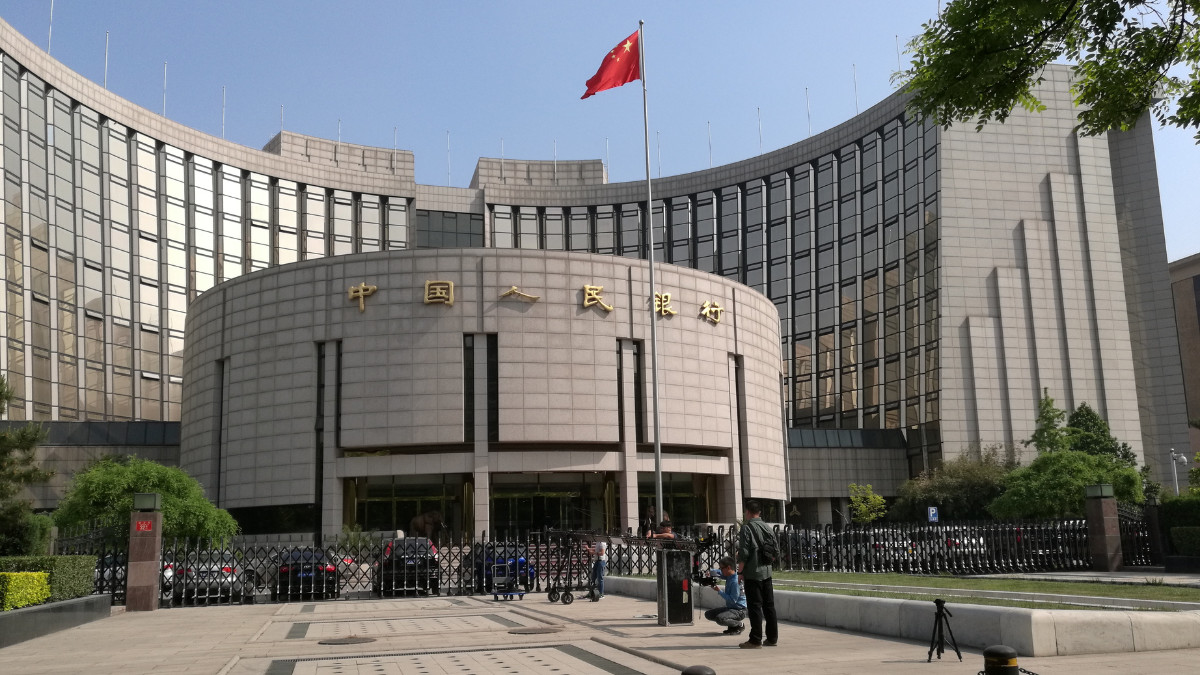
The People’s Bank of China has expanded its network of authorised institutions for the digital yuan by adding eight banks to the list.
Announced on 17 August, the added banks include Ping An Bank, Hengfeng Bank, China Bohai Bank, Bank of Shanghai, Bank of Hangzhou, Huishang Bank, Bank of Changsha, and Guangxi Beibu Gulf Bank.
These institutions will be linked to the central bank’s digital yuan system. Following these additions, there are now 30 operating institutions for the central bank digital currency (CBDC).
According to a release, banks on the list can offer digital yuan services once operational and technical preparations are fully completed.
“The newly added institutions, comprising joint-stock commercial banks and city commercial banks, will fill service gaps in regional small and medium-sized enterprise and cross-border trade,” said Dong Ximiao, Chief Researcher at Merchants Union Consumer Finance Company Limited.

A controlled digital future
China has banned the trading and mining of cryptocurrency, a decision that was extended to stablecoins earlier this year.
“The Notice on Further Preventing and Disposing of Speculation Risks in Virtual Currency Transactions issued in 2021 further clarifies that stablecoins such as Bitcoin, Ethereum, and Tether do not have the same legal status as legal currency,” said the People’s Bank of China’s notice at the time.
“Carrying out virtual currency-related business activities in China is illegal financial activities. It is strictly prohibited.”
The central bank has based its future digital payments strategy around the CBDC, which gives authorities full visibility over every transaction moving through the system.
Research into the digital yuan started in 2014, followed by initial pilot programs in late 2019. Since then, domestic and cross-border trials have entered retail transactions, dining, tourism, education, healthcare, public services and cross-border settlements.
Adoption among retail consumers has been gradual, with most citizens using private payment networks such as Alipay and WeChat Pay. In a bid for progress, authorities have embedded the digital yuan into these daily payment channels and are incentivising merchants to support CBDC settlement.
While China goes down the path of a state-run currency, several Western economies have taken a different approach.
Last year, US President Donald Trump signed an executive order that prevents federal agencies from issuing or endorsing CBDCs. The country has instead embraced dollar-backed stablecoins, passing the GENIUS ACT in July 2025 – a comprehensive national regulatory framework for payment stablecoins.
In the UK, the Bank of England is currently running Phase 2 of its Digital Pound Lab trials to explore how a potential digital pound could function alongside stablecoins to improve cross-border trade finance for small businesses.
Meanwhile, the European Central Bank is progressing through the technical preparation phase for a Digital Euro, targeting a launch in 2029 pending lawmakers passing the required legislation.
Strengthening the network
The latest expansion follows a period of stagnation for the operator network, as Industrial Bank became the 10th authorised operator in 2022, and no further banks were added for more than two years.
In October 2025, the central bank announced that it would support additional commercial banks joining the scheme, a pledge that it started to follow up on earlier this year.
In April 2026, the central bank added 12 banks as new operators, the first time city commercial banks had been brought into the network. The recent addition of eight more banks nearly triples the size of the operator network within roughly a single year.
Central bank leadership has suggested plans to keep growing the number of operators over time, saying that the expansion is vital to building an open, inclusive and fair competitive environment for the digital yuan’s development.