The US crypto industry has been searching for regulatory clarity for the better part of four years, and even when Congress is on the cusp of delivering this, policymakers seem divided more than ever.
The most recent Senate blocking of the CLARITY Act was perhaps the most damning yet, as it is likely the bill will not be picked up once more in the Senate until early next year after the November mid-terms.
Democrat and Republican Senators have had the entire summer to iron out their differences and come to an agreement ever since the Banking Committee passed its markup of the bill in May.
The time for excuses and finger pointing is neither productive nor effective in why the bill has once again not passed a full Senate floor vote, but there is a wider ethical story at hand, which sat at the heart of Senate in-fighting.
Why Trump is – unsurprisingly – at the centre
The CLARITY Act, otherwise known as the Digital Asset Market Clarity Act, has been in the works since crypto advocate and US President Donald Trump assumed the oval office for his second term in January 2025.
Making the US the ‘crypto capital of the world’ was a key element of Trump’s campaign trail, as he looked to secure votes from a US crypto industry that had been embattled with Joe Biden’s perceived tirade against companies like Coinbase, Binance, and Ripple, with lawsuit after lawsuit.
A Gary Gensler-led Securities and Exchange Commission (SEC) asserted that digital assets should be classified as unregulated securities and crypto companies such as Ripple, Binance and Coinbase responded with a simple question: where are the rules?
Trump was offering prosperity through the establishment of a Federal Bitcoin Reserve, lowering barriers for crypto firms to and above all else, legal frameworks to usher in a new age of regulatory clarity.
View the timeline of events on how the CLARITY Act got to where it currently is below
Yet it is Trump’s $1.4bn in crypto holdings that have added a Bitcoin-sized wrench to committee discussions over the ethics of allowing a President, government or federal official to pass a bill which would work to the benefit of the individual in office.
Trump may have signed, sealed and delivered on an ethics provision that promised the prohibition of any political or federal figure from benefiting from digital asset holdings, but the wording of the provision has not gone down well with Democrats.
The ethical concern
In a document issued by Democrat Senator Elizabeth Warren, she identified World Liberty Financial, a decentralised finance platform that issues the USD1 stablecoin founded by Eric and Donald Trump Jr., as a direct conflict of interest between Trump’s role in the company and as head of state.
She states Trump’s involvement in World Liberty represents a governmental and federal figures earning from digital asset holdings – whether associated with the company or asset or not. Crypto friendly regulations, in essence, help Trump’s personal ambitions to generate wealth.
“This bill does not stop Donald Trump from making money from crypto through other people or companies, or through the financial arrangements he has already been using to funnel money, such as his licensing agreements,” asserted Warren. “This bill includes an exception that allows companies already using Trump’s name or image for a cryptocurrency to keep doing so.”
Warren’s thoughts on the ethics provision were echoed throughout the Senate floor, with zero Democrats approving the passage of the CLARITY Act through the cloture vote.
The ethics behind passing the CLARITY Act has – inadvertently – created further confusion among policymakers for an industry that has been largely backed by a President, and has enabled his sons to invest and earn from it.
While many of Trump’s crypto and digital asset holdings were acquired before his second term as President, he also acquired assets through Truth Social’s parent company and via a memecoin representing his wife and first lady, Melania Trump.
Trump did not create the industry, he was merely a beneficiary before becoming President. And while he attempted to create regulatory clarity, the ethics of his holdings came into question, and so far, those sceptics do not like the answers.
Where does it go next?
Following the failed Senate vote, the bill was put forward for procedural motion to reconsider, keeping it alive on the calendar, but it remains unclear how likely those pushing for the bill to be passed are able to add 10 Democratic approvals to make up the 60 votes needed.
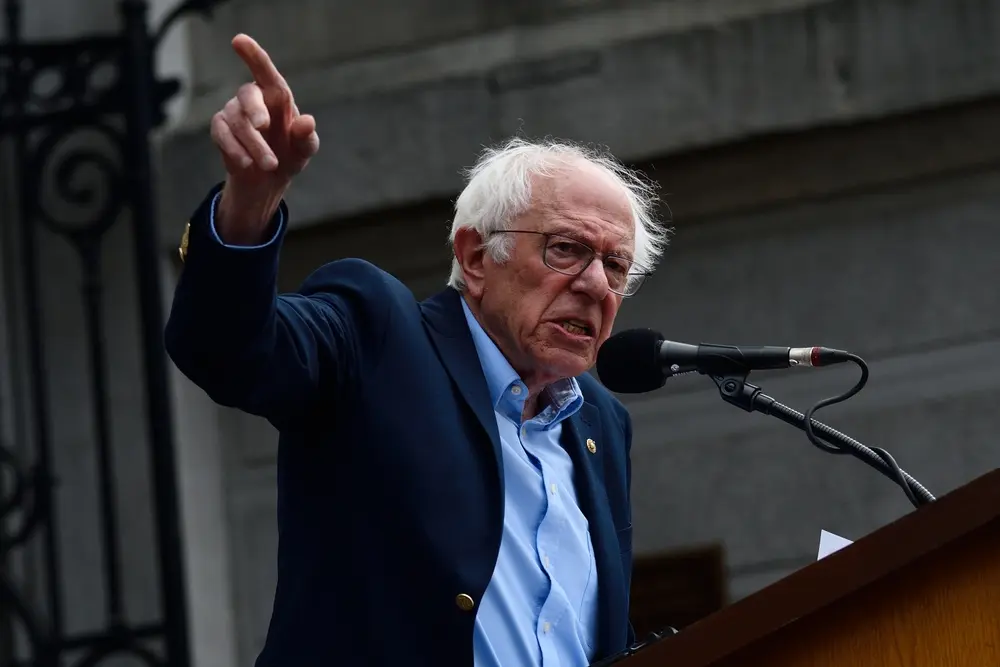
Many of those who did not approve the bill are staunch opposers of the CLARITY Act, and the crypto industry itself, such as Bernie Sanders. There are, however, those within the Democrat Party who want to see the bill passed with the right frameworks in place.
Kirsten Gillibrand has been the biggest champion of the bill; Cory Booker has been regularly involved in drafts, markups and laying the foundations of the CLARITY Act, as have other pro-bill supporters such as Angela Alsobrooks, who worked with Republicans to help resolve the banking stablecoin yield debate.
Their challenge starts now. They must work alongside Republicans to iron out the larger issues at hand, revolving around ethics, digital assets being used for illicit means, and stronger interventions around money laundering.
The time to iron out these issues also poses a challenge. The ‘lame-duck’ period for post-mid-term elections to be finalised means a bi-partisan draft of the bill can neither be formalised or approved until late November/early December.
If that draft can be completed by then, or approved, this would expire. A revised version will need to be drafted, requiring new hearings and markups before a full Senate floor vote.
This takes the bill well into early 2027, a year where the UK will finally launch its regulated market, Europe continues to modify its rulings after four years in effect, while other markets such as the United Arab Emirates and Singapore become increasingly desirable destinations for investment.
It appeared at the start of 2026 that the US was primed to become the ‘global crypto capital’, but ethics, a lack of bi-partisan approach, and wider regulatory implications have created further confusion in an industry that thought it was getting ‘clarity’.