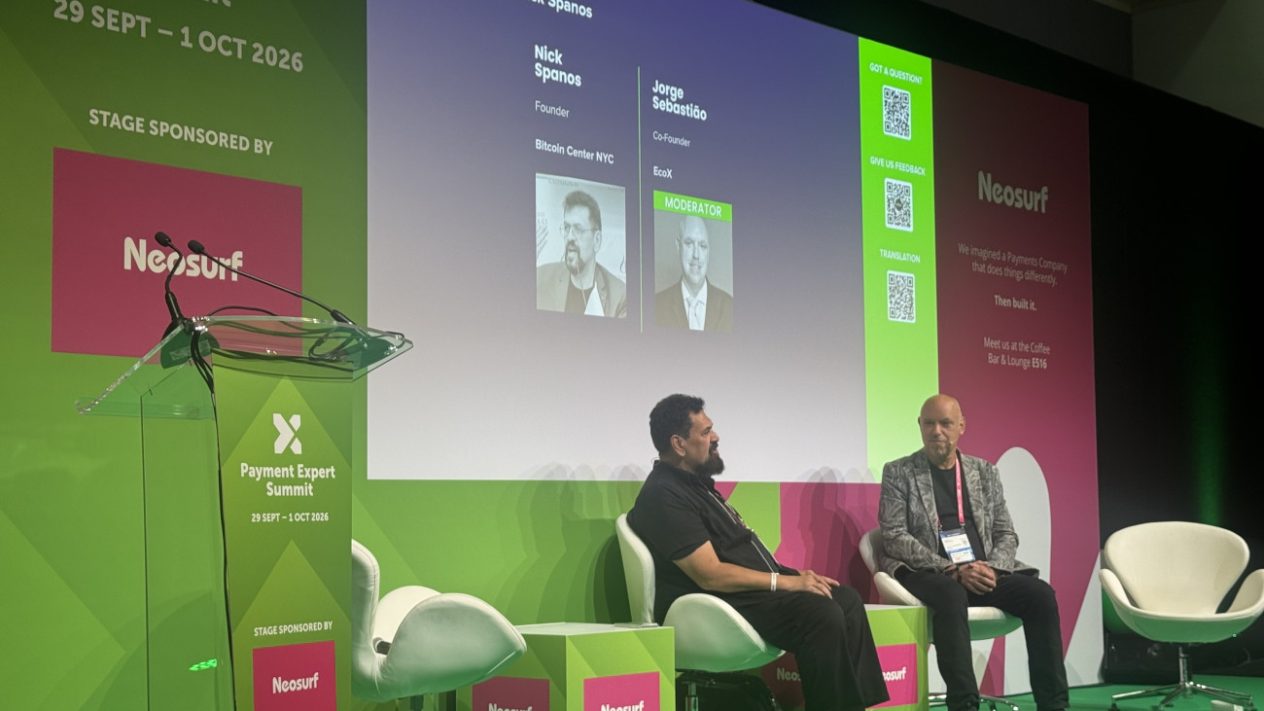
Bitcoin Center NYC founder Nick Spanos pressed gaming operators on blockchain settlement, AI betting agents and the randomness bugs he says sit inside their games.
An affiliate network running on a blockchain can pay 700 people the moment a bet settles, Nick Spanos said, against the 30 days operators now take to clear those payments.
Spanos founded Bitcoin Center NYC in 2013, which he calls the first live cryptocurrency exchange in the United States, sited 100 feet from the New York Stock Exchange. He co-founded the Zap oracle protocol and appears in the Netflix documentary “Banking on Bitcoin.”
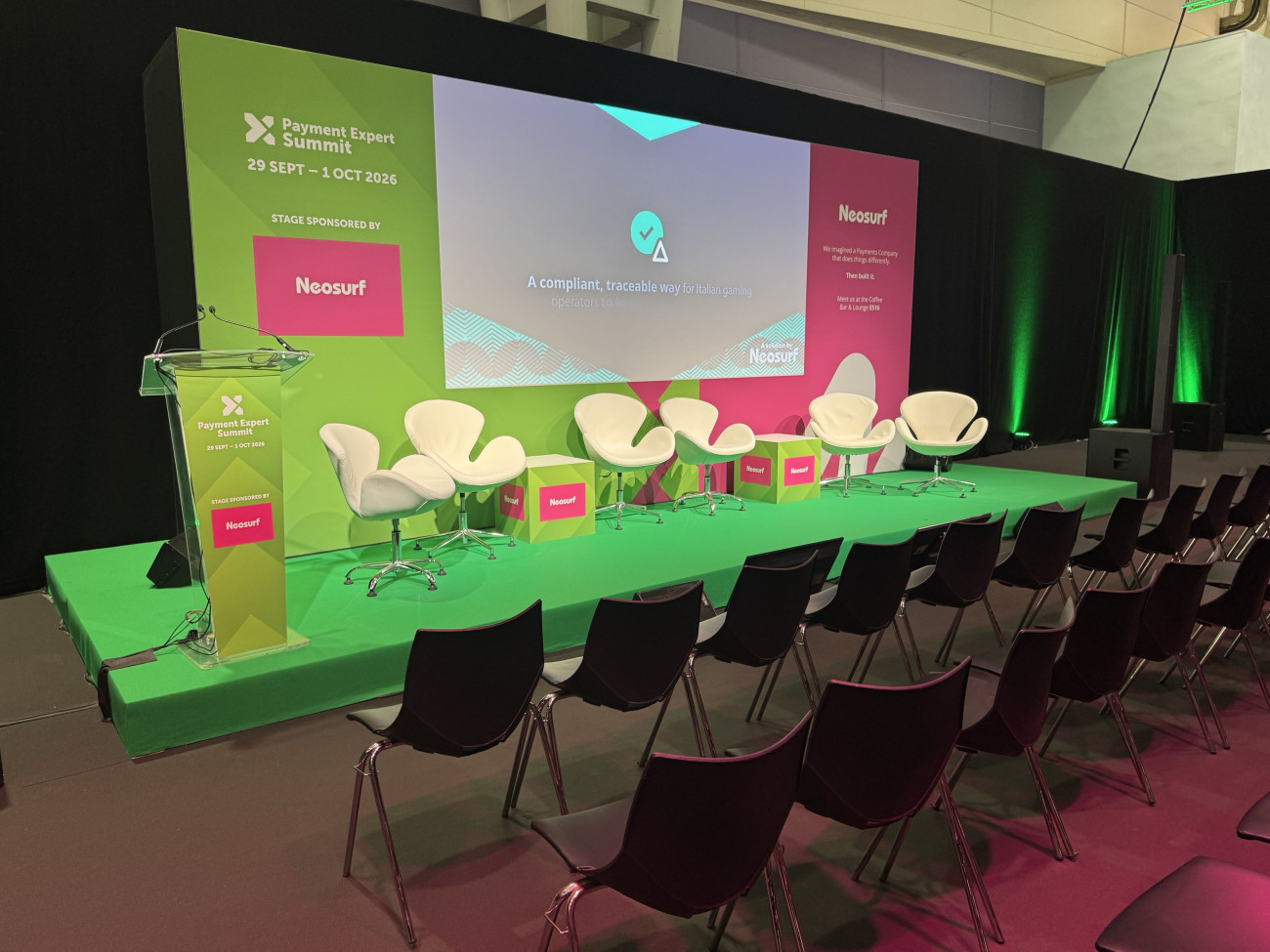
He used his panel at the Payment Expert Summit to argue the gaming industry has not moved its money on chain and will lose ground if it does not, as some traditional payments firms move settlement onto stablecoin rails.

Bitcoin clears every 10 minutes, so Spanos wants operators to run their own layer
Spanos put the Bitcoin base layer at about six transactions a second and called it “the most provable” chain, the place where a record stays “forever.” Speed was its early weakness, he said, which is why the Lightning Network was built on top of it.
Operators frequently discuss faster payments as priority, and Spanos argued operators can fund its own Lightning layer and run thousands of fast bets through it, Spanos said, settling back to Bitcoin roughly every 10 minutes while taking a commission on the layer in between. “You can make your own lightning layer and fund it, and then you can make commissions off your own bank on there,” he said.
He put Mastercard’s network approximately 60,000 transactions a second at peak. His own chain, cryptos.com, has run at 12,000 to 18,000 transactions a second across a year of testing, he said, with a design ceiling he gave as 200,000 transactions a second. Cryptos.com is currently in beta testing.
The industry is a dinosaur, Spanos said, and the meteor has hit
Spanos said he walked the show floor and saw operators spending “tens of millions of dollars” on software that keeps data in internal silos rather than on a public chain, a shift some areas of the wider payments industry is already making market by market. If you don’t use the blockchain, you’re gonna die,” he said of continued operational success for gaming companies. He repeated a line he said he first used on bankers more than a decade ago, that they were “dinosaurs” and “the meteor has already hit.”
He named a Solana-based dice casino as his example of crypto transactions working on the Lightning Network at speed, and praised a staking design in which players who stake the game’s token share in the casino’s results and become part-owners of the house.
AI agents will gamble, and pay each other in crypto
Turning his attention to AI, Spanos said operators should expect AI agents to place bets on a user’s behalf. A gambler could give an agent a small crypto wallet, a strategy and a loss limit, he said, and let it play during the working day. “Don’t lose more than this amount, this percentage,” he said, describing the cap a user would set.
In the future, agents will settle with each other in crypto rather than on card rails, Spanos added, because card payments assume a human in the loop. “The AI wants to use crypto because it’s code to code.”
One oracle is the weak point in a game’s randomness
Spanos, who co-founded the oracle protocol Zap, said most gaming random number generators draw on a single oracle from one of two or three suppliers, and that he would “never do anything with that.” Weak randomness lets an attacker predict outcomes and drain a game without the operator knowing, he said.
He pointed to a hardware wallet whose weak randomness let an attacker guess private keys, a flaw he said sat undetected for five years until an AI tool found it. Coinkite disclosed such a flaw in its Coldcard wallet on 30 July 2026, after firmware bypassed the device’s dedicated randomness chip for five years.
TRM Labs and SelfCustody Labs put the losses at roughly 1,816 BTC, about $116m, taken from more than 5,200 addresses.