The European Central Bank’s (ECB) digital euro has reached a landmark vote in the European Parliament as the central bank digital currency (CBDC) will be tested in real environments over the next year.
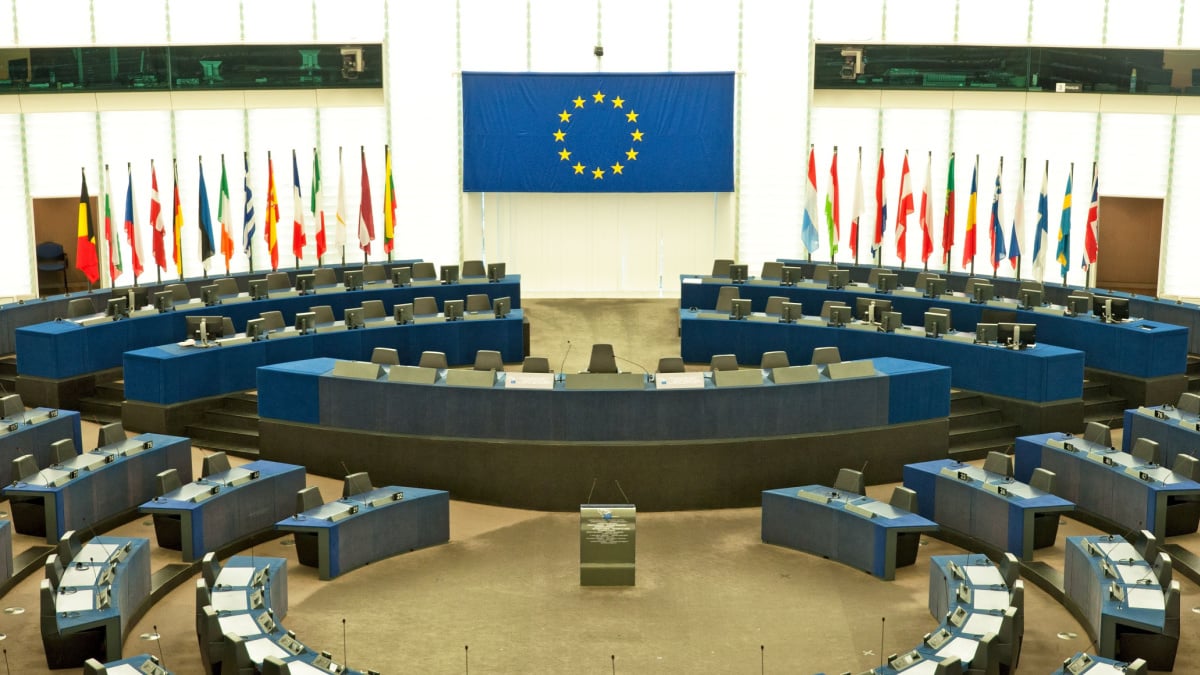
The European Parliament has passed a vote to progress a legal framework for the issuance of the European Central Bank’s (ECB) digital euro.
On 23 June, the Economic and Monetary Affairs Committee voted 43 in favour, 14 against, and one abstention, for the establishment of a digital euro.
Members of the European Parliament (MEP) and European Union (EU) will now begin work on drafting a legal framework for the central bank digital currencies planned issuance, which is set for 2029.
The ECB will now begin a 12-month pilot phase for the digital euro to be tested for both online and offline functionality with selected payment service providers and merchants.
Once the ECB has conducted its use cases and finalised a rule book for the digital euro, a rollout period of at least 23 months will be implemented in order to allow banks and other providers time to prepare, as well as to run awareness campaigns.
ECB President, Christine Lagarde, and Executive Board Member, Piero Cipollone, have lobbied for the introduction of the digital euro for the past three years in a bid to modernise digital payments across the EU, increase the adoption of non-EU payments services, and to protect Europe’s sovereignty.

What will the digital euro legal framework consist of?
The first vote that was passed in Parliament as part of the single currency package was for the establishment of a digital euro, which has been defined as an electronic version of central bank currency issued by the ECB.
The digital euro will be processed through an account-based system for online functionality, while for offline functionality, it will work on local storage devices.
For privacy regulations, the ECB has maintained it will not have access to personal data from consumer’s digital euro transactions, employing ‘privacy-by-design’ and ‘privacy-by-default’ principles.
Zero knowledge proof technologies will be implemented into supported systems to allow transaction verification without exposing personal data.
The digital euro’s distribution will mean EU banks, payment service providers, e-money providers, post offices, and authorised crypto asset service providers are able to offer the CBDC.
Parliament outlined most businesses are required to accept the digital euro with some exemptions for self-employed businesses, as well as small and medium-sized enterprises.
There will be no fees and charges attached to the digital euro for standard services, such as opening an account, as well as for holding and managing funds. Fees for merchants will be capped, while offline payments will be entirely free of charges.
Holding limits will be capped on how many digital euros a consumer holds. MEPs proposed this ceiling based on ECB recommendations to be reviewed every two years. Businesses will only be allowed to hold digital euros for incoming payments within 24 hours and will not be able to earn or charge consumers interest.
Availability to non-EU countries and cash accessibility
Within the second vote of the single currency package, MEPs voted 43 for, nine against, and six abstentions for the introduction of the digital euro in non-EU countries and those where the euro is not the official currency.
Non-EU countries would be subject to the same digital euro rules as EU nations, while the ECB has the power to restrict its access and use to non-EU countries such as the UK and Russia.
Non-euro EU member states would also need to appoint a national authority to monitor any impact on their own currency.

In a bid to preserve the value of physical cash, MEPs voted 46 in favour, four against and eight abstentions to oblige all Euro countries to keep cash accessible, meaning businesses will not be allowed to ban cash with “no cash” signs.
EU member countries are expected to check cash availability regularly and keep a specific focus on demographics, such as elderly or low-income individuals who typically rely on cash the most, as well as the underbanked.
MEP for Spain, Fernando Navarrete Rojas, said: “With the single currency package, we are protecting citizens’ freedom to choose how they pay. We are strengthening access to and acceptance of cash, while making central bank money available in digital form.
“The digital euro will complement cash, never replace it. No one should be forced away from cash, and no one should be left without a secure, resilient and genuinely European digital payment option.”