Europe’s payments habits are changing, but cash is far from being left behind.
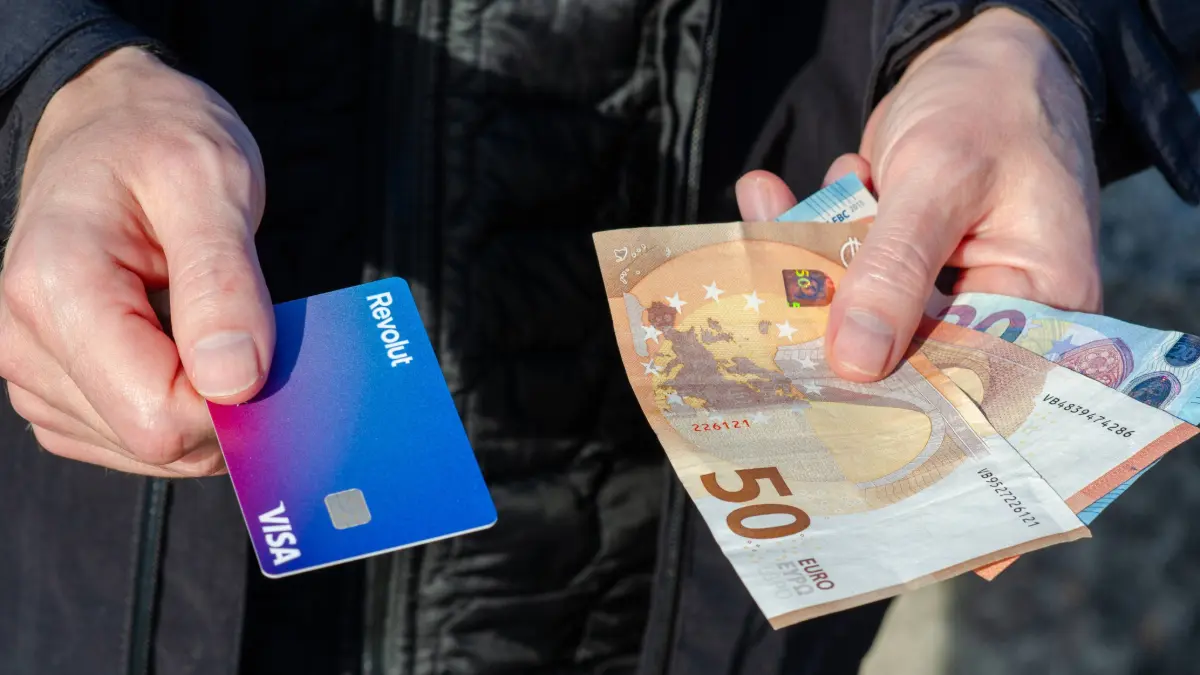
Cards have overtaken cash in European shops for the first time, presenting a mixed picture for Brussels as it works to launch the digital euro.
According to the European Central Bank’s latest Study on the Payment Attitudes of Consumers in the Euro Area (SPACE), cards accounted for 45% of point-of-sale transactions in 2026.

Cash, which has also declined in the UK, falls behind cards for the first time since comparable data collection started in 2016, accounting for 44% of transactions.
A similar pattern emerged across all day-to-day transactions, including remote and person-to-person payments. Cards accounted for 43% of transactions in 2026, up from 39% two years earlier, whereas cash slipped from 40% to 35%.
Piero Cipollone, Executive Board Member at the ECB, acknowledged the findings but described them as marginal. He also noted that mobile payments were on the rise, though they only make up 9% of transactions.
These are clear signals that consumers are diversifying their payment habits,” Cipollone said.
“Although digital payment options improve convenience, the broader movement towards digital transactions also brings new risks, such as payment fraud. This is an area of concern,” he said.
What role for the digital euro?
Another area of concern for the ECB, and one that is much closer to home, is what the findings mean for the digital euro, its proposed digital form of central bank money for everyday payments.
The ECB is working to be ready for a potential launch in 2029, and one motivation behind the project is to reduce Europe’s reliance on foreign-owned payment systems, such as US giants Visa and Mastercard.
Other initiatives have also emerged, including Wero, an account-to-account payment solution backed by European banks that aims to provide an alternative to established payment networks. However, the latest findings show cards are in the driving seat.
This could present a challenge for the digital euro, as consumers have become accustomed to the convenience of tapping their cards or phones at checkout. Convincing them to adopt another payment method will not be easy.
There is, however, a silver lining. As Cipollone pointed out, consumers are diversifying the way they pay, with mobile payments growing and digital options becoming more popular.
The ECB is also looking to make the digital euro useful, with Cipollone saying it would provide “harmonised standards, including for acceptance at the point of sale”, which private payment providers could use to expand across the euro area and support more use cases.
Cash isn’t disappearing
Cash may have lost its title as the most common way to pay in Europe, but the payment method isn’t going anywhere.
While 54% of respondents said they preferred cards or other cashless methods when shopping, 22% preferred cash and 23% had no clear preference. The ECB also found that 62% considered paying with cash important.
Cash appears especially relevant for lower value purchases and person-to-person payments. It continued to account for the largest share of transactions below €20 and represented 44% of person-to-person payments, ahead of mobile payments at 25%.
Consumers also held a median of €64 in cash in their wallets, similar to €62 in 2024. A further 38% said they kept additional cash reserves, up from 35% two years earlier.