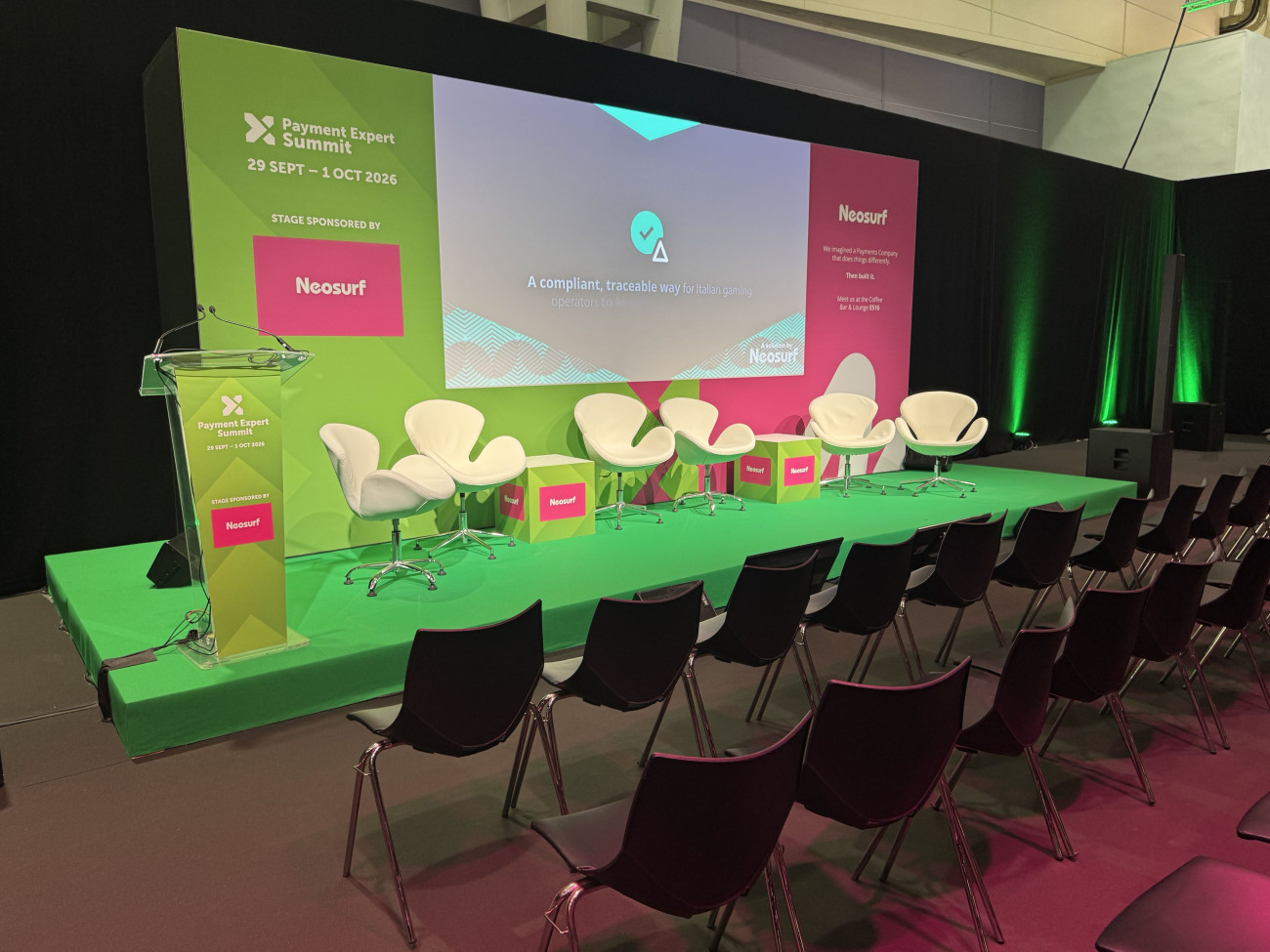
During SBC Summit in Lisbon last September, Executive Leader at CryptoProcessing, Max Krupyshev, discussed how stablecoins sit at the intersection of gaming digital currency payments and what needs to be done to simplify the process for greater adoption.
The igaming sector faces a reckoning on the processing of crypto payments which have become a utility for the modern online consumer, but are still denied by igaming’s regulatory remits.
The observation comes from Max Krupyshev, Executive Leader at CryptoProcessing, who tells Payment Expert there can be no denying that “igaming has long shared a customer base with crypto”.
Both sectors share many parallels in their existence and general acceptance. Yet for crypto, as the younger discipline, its regulatory mould has yet to either mature or find harmony amongst geographical standards.
Though the sectors share history and commonalities, they remain awkward dance partners. Krupyshev believes that the coming years will streamline rules of engagement.
As crypto and blockchain become more integrated into mainstream finance, the phase of assimilation in igaming will be shaped by what players need from a payment method.
“People who use cryptocurrencies and blockchains more for payments than for investments, they obviously use stablecoins,” Krupyshev explained. “There is no need for them to keep anything else.
Stablecoins are viewed as the primary enabler between both sectors, providing a utility for stakeholders to manage the risk and exposure to volatilities by fixing processing prices at non-fluctuating dollar-or-euro prices.
Stablecoins make the proposition of crypto payments simpler for consumers who use blockchain to transfer money. As such, the question is no-longer the processing of crypto – be it Bitcoin, Ethereum or Solana – but the processing availability of stablecoin.
Krupyshev sees stablecoins as a bridge between the two sectors. By tracking the value of currencies such as the dollar or euro, they can help players and merchants manage their exposure to the price swings of assets such as Bitcoin.
Stablecoins simplify crypto payments for consumers who use blockchains to transfer money. For igaming operators serving those customers, the question is which stablecoins they can accept and on which networks.
“Those who are more educated about the industry, about the technology, they would be using stablecoins on faster and cheaper blockchains like Binance Smart Chain, like Ethereum, like Solana,” Krupyshev said.
Krupyshev pointed to USDT on TRON as an example of how those economics can change. The option, he said, “was cheap, was popular, but now became slower and more expensive in transactions”. Supporting a familiar token on the network players actually use can matter as much as adding another asset to the cashier.

A traceable payment still needs a verified customer
Krupyshev sees growing interest from regulated US igaming businesses. In Europe, he says domestic gambling rules still limit some operators even when they have access to a regulated crypto processor.
In parts of Latin America, Africa and Asia, he sees demand coming from consumers who already use stablecoins. Argentina was one example where people turned to stablecoins to preserve purchasing power as the local currency lost value due to high inflation.
For operators that can accept crypto the compliance question is not just about how much money is being paid. A customer can send funds from a self-custodied wallet without a bank authorising the transfer.
Blockchain gives the processor a transaction record it can use to trace where those funds came from (possibly even links to known exchange or wallet service).
“With those tools we have a very good understanding about the source of money — maybe not the name of the person, but nature and source of money that we are receiving as payment to any of our merchants,” Krupyshev said.
Those records can feed a processor’s checks. Operators still have to figure out who is playing and meet their own player-protection obligations. Krupyshev views those checks as shared design challenges because each could add time or steps to a deposit.

Making crypto payments ‘boring’.
CryptoProcessing will support more blockchains and make integrations easier by hosting a payment page that operators can launch and update more easily. It also sees an opportunity with larger operators who have built their own crypto infrastructure but have to pay for the maintenance of it.
Krupyshev says the processor’s job is to ask operators “What do you need? What are the problems? What do your customers want?”
Those answers should determine which networks and payment methods make it into the cashier.
As stablecoins become more familiar with consumers his test for igaming is whether operators can offer them as reliably as any other payment method.
“In payments (especially in high risk) if it works and you don’t have to think about this every day then that is success,” adds Krupyshev.