
The CCCA’s Republican champion has lost his seat and its Democratic author is retiring, leaving a rival interest rate cap to compete for attention in the new Congress.
Republican Senator Roger Marshall’s defeat at the hands of Democrat Adam Hamilton in Kansas on 3 November ended the Senate career of one of the Credit Card Competition Act’s (CCCA) most prominent Republican backers.
Meanwhile, the CCCA’s other champion, and its original author, Sen. Dick Durbin, is set to retire at the end of his term in January 2027, leaving Sen. Peter Welch to carry it forward.
That leaves the bill without its two lead Senate sponsors at a time when the Democrats prepare to take control of Congress and a rival proposal targeting interest rate caps competes for Congressional attention.
The question now is where the CCCA goes from here. Can it still find favour in Washington? Or will lawmakers turn to a different fix for card costs?
The CCCA explained
The CCCA proposes credit cards issued by banks with more than $100bn in assets offer merchants a choice between two unaffiliated networks, where at least one must not be Visa or Mastercard. Banks enable the networks and merchants would simply pick which one processes each transaction.
The main target here is swipe fees. When you use a credit card, merchants pay a transaction fee (typically between 2-3%) to process the payment.
As Visa and Mastercard hold an effective duopoly over credit card payments in the US, controlling around 80% of the market, proponents of the bill say increased competition would help put an end to uncompetitive fees charged by the major payment providers.

Durbin and Marshall first introduced the CCCA back in 2022, where it struggled to win passage. Vice President JD Vance had been a supporter, co-signing the bill back when he was a Senator for Ohio in 2023, but has been less vocal about the issue in recent years.
Since his return to office, President Trump has publicly backed the CCCA on numerous occasions, calling swipe fees “an out of control ripoff” in a Truth Social post on 3 August.
It’s worth pointing out much of this advocacy by the President came alongside efforts to re-elect Marshall during the midterm elections.
Who carries it now?
Sen. Peter Welch stands as an obvious successor. He led the bill as a House member and was an original cosponsor back in 2023, and said that the country needs, “choice, competition, and lower costs”.
The harder job will be in finding a Republican to take over the lead role.
On 7 August, three new Senate cosponsors signed the bill: Sen. Bernie Moreno, Sen. Cynthia Lummis and Sen. Angus King.
Moreno and Lummis are the first members of the Senate Banking, Housing and Urban Affairs Committee to cosponsor the CCCA, making this an important development as their committee holds jurisdiction over the legislation.
Lame-duck unlikely
With the Democrats’ historic sweep of both the House and the Senate, time is ticking for sitting Republicans to push through legislation before 3 January.
An earlier attempt to attach the CCCA to the GENIUS Act digital assets legislation failed in June 2025, suggesting any lame-duck attempt to push through the bill now would also be unsuccessful.
A report from the Wall Street Journal said merchant lobbyists were meeting with White House officials in order to try and get the bill attached to other legislation, but as of October 2026, it had not left committee.
Rate cap alternative
In February 2025, Sens. Bernie Sanders and Josh Hawley introduced legislation that would cap credit card interest rates at 10% for five years. Like the CCCA, the rate cap bill also has bipartisan support, alongside backing from the President himself.
President Trump had campaigned on a similar promise of capping interest rates on credit card companies, going as far as to call on Congress to introduce the cap for one-year during his speech at the World Economic Forum (WEF) in Davos, Switzerland.
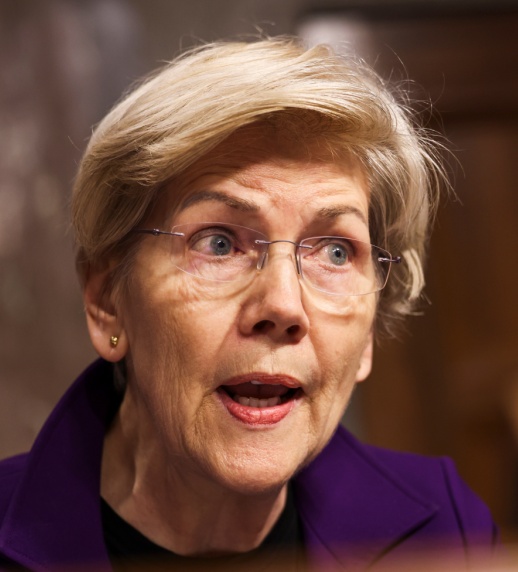
Sen. Elizabeth Warren said she was willing to work with the President, telling him, “Congress can pass legislation to cap credit card rates if he will actually fight for it”.
However, the White House has since distanced itself from the President’s proposal as Republicans on Capitol Hill pushed back against Trump’s speech at the WEF.
But it still has momentum. Senate Democrats are renewing the proposal as they prepare to take control of Washington, with key supporters like Warren expected to be chairing the Senate Banking Committee in the new Congress.
Opposition is still likely, especially from the banking sector, which argues the cap would reduce credit availability for lower-credit-score borrowers, something JPMorgan Chase CEO Jamie Dimon echoed at the World Economic Forum where he said a 10% cap would be catastrophic for most US consumers.
Ultimately, the two bills tackle different costs and a win for one won’t also mean a win for the other. The CCCA targets merchants’ swipe fees, while the cap targets what cardholders pay in interest. Should the rate cap pass, swipe fees in their current form continue.
The cost of change
The case for the CCCA rests on cost.
The Merchants Payments Coalition, citing data from CMSPI, projected the $17bn in savings made from credit routing competition would cause rewards to fall by less than one-tenth of one percent at most.
Banks dispute those figures. According to a December 2025 CFPB report, rewards cards made up 92% of general-purpose card spending in 2023 and 2024, and swipe fees on credit and debit cards totalled $198.25bn in 2025, according to the Nilson Report.
The American Bankers Association also pointed to the 2010 Durbin Amendment on debit cards, which removed debit rewards and raised fees without lowering costs for consumers.
Payment security is another fault line. Opponents argue that routing transactions to networks with less sophisticated fraud detection could weaken the system and point to higher debit fraud after Durbin’s 2010 debit cap as an example of what is to come.
But supporters of the bill point to different data.
The Merchants Payments Coalition cites Federal Reserve data showing that for debit card transactions in 2021, Visa and Mastercard-style networks had a fraud rate of 0.13%, up from 0.11% in 2019. Competing single-message networks meanwhile, saw fraud rates fall from 0.02% to 0.016% in a similar period.
The bill would also require the Federal Reserve and Treasury to keep a list of networks that pose national security risks or are controlled by foreign governments, which cannot be used as the second network.
What next?
The bill’s survival depends on one of two things. Either Welch finds a Republican partner to champion the bill alongside him, or the Democrats decide to support network competition over a cap on interest rates.
Much of the President’s public advocacy for the bill came alongside Marshall’s reelection campaign, so it’s not certain that will continue now Marshall is gone. Beyond that, the 10% rate cap has grown into a popular proposal with bipartisan support and growing Senate momentum.
The question for the new Congress is whether they want to go after what merchants pay, what cardholders pay, or ultimately, neither.