A2A (account to account) payments are bringing new cost effective ways for users and merchants to accept and receive payments, causing leading card networks like Visa and Mastercard to react
What are A2A payments?
Account-to-Account (A2A) payments are a payment method that see’s funds transfer from one bank account to another, bypassing traditional card networks and third-party processors which usually transfer the funds.
A sender’s bank or financial institution, where funds are held, are sent to a domestic or regional banking/payment rail directly to the recipient. Many A2A payments use open banking APIs to automate the process.
At the online checkout, an A2A payment option, such as Pay by Bank, can be used by the payee which sends them to their preferred banking account to authenticate the payment before being approved by the bank.
The benefits of A2A Payments
Many consumers and merchants are turning to A2A payments for its cost effectiveness in bypassing card networks, such as Visa and Mastercard, and in turn, not having to pay interchange fees as part of the transaction.
A2A payments also offer real-time settlement and have stronger safeguards against fraud due to being directly authorised by regulated financial institutions, with no sensitive card information exposed.
The most popular A2A payment use cases
Pix (Brazil)
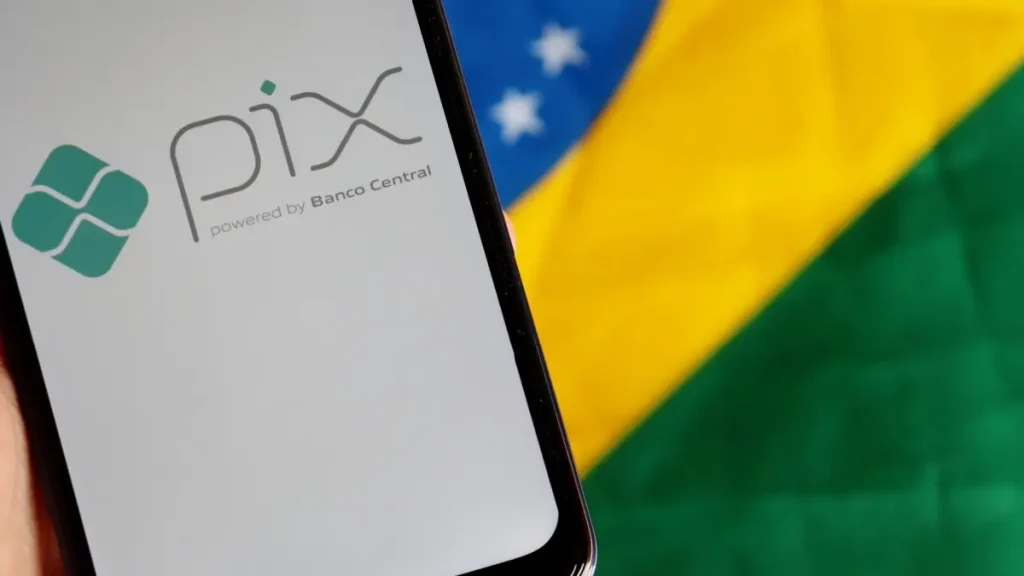
Arguably the most significant and transformative A2A payment method is Pix in Brazil.
Enforced by the Banco Central do Brasil (BCB), Pix has been used by 148 million people in Brazil, 16 million companies, 79.8 billion transactions processed, and $6.87trn in transaction value, in 2025.
Processing payments via its dedicated payment rail, Pix is mandated for integration into almost every Brazilian financial service and digital wallet. As long as a user has a mobile device, they can use Pix as a payment method, which is accepted nationwide.
Pix’s success has been the topic of conversation among global policymakers about how to create their own A2A payment system which is not dependent on the global card networks.
Unified Payments Interface (UPI) (India)
Before Pix, there was the Unified Payments Interface (UPI) in India which arguably has a greater claim of being the leader in A2A payments.
With similar central bank and government enforcement, UPI uses a four-party system to allow users to send funds directly to other bank accounts through the country’s routing and clearing house payment messaging interbank settlement infrastructure.
UPI is free to use and comes with zero fees attached for merchants receiving payments via the method. However, a new update to UPI means payments over $20 will come with a 0.4% charge for payments to merchants, ending more than six years of fee-free processing.
Since launching in 2016, UPI has become the dominant payment method in India. It handled 50% of global real-time digital payments across 2025, processing 228 to 240 billion annual transactions with total volume reaching $3.5trn.
Wero/BLIK/Bizum (Europe)
While not of the scale of Pix and UPI, countries such as Poland and Spain have developed BLIK and Bizum respectively, as their answer to establish an A2A payment system.
BLIK in Poland embeds directly within the country’s banking apps to allow users to make instant payments by entering six-digit one-time codes at the checkout.
Bizum in Spain is similar, with users’ banking information securely stored to enable instant retail payments through the users’ phone number.
Wero is Europe’s answer to consolidate domestic A2A schemes into one unified platform, reducing the continent’s dependency on Visa and Mastercard. Wero digital wallets enable cross-border A2A payments in countries where it has launched, such as in Belgium, France, Germany, and the Netherlands.
How are Visa/Mastercard reacting?
Instead of challenging A2A payment schemes and methods, Visa and Mastercard have pivoted to provide A2A payment methods through partnerships, acquisitions and optimising fraud prevention during A2A payment processing.
Visa has acquired open banking providers in recent years such as Tink to support its infrastructure which powers A2A payments across Europe. The global card network company has also invested in Form3 to scale its cloud-native A2A payment services.
In June 2025, Visa launched a dedicated A2A payment gateway called Visa A2A. The service aims to offer consumers a smarter digital experience with strengthened security and an easy-to-use dispute resolution process.
Visa A2A seeks to improve existing Pay by Bank options and methods, making it simpler for users to get their money back if problems occur.
Visa has also introduced formal liability guidelines as part of its dispute resolution protections under Visa A2A, aiming to mirror card chargebacks for A2A payments to help users recover funds during failures.
Mastercard’s A2A focus has centered around acquisitions and commercialising the A2A space through partnerships to scale Pay by Bank.
Acquiring US-based open banking provider Finicity in November 2020 enabled Mastercard to merge the company’s services into Mastercard Open Banking/Open Finance, alongside other acquisitions, such as the Nordic A2A retail payment provide Nets and UK clearing operator Vocalink, although reports this year have linked Mastercard with selling the latter two.
Mastercard has partnered with payment processors such as Vobapay to deploy its Open Finance APIs to support merchant checkout A2A payments and B2B invoicing, removing manual card entry.