Elizabeth Warren and Maxine Waters are in line to control the committees that will control the future of the CLARITY Act, while the Credit Card Competition Act heads into the new Congress without either of its Senate authors.
The CLARITY Act has until 3 January 2027 to pass in its current form, after which a Democratic Congress will decide what US crypto market structure law looks like.
Democrats won the House and Senate in Tuesday’s midterm elections, and the bill they are set to inherit failed a 49-50 Senate vote on 15 September, which leaves the lame-duck session as the last chance for the text Republicans spent a year negotiating on.
If it fails again, the CLARITY Act must be reintroduced and pass both chambers under new committee leadership.
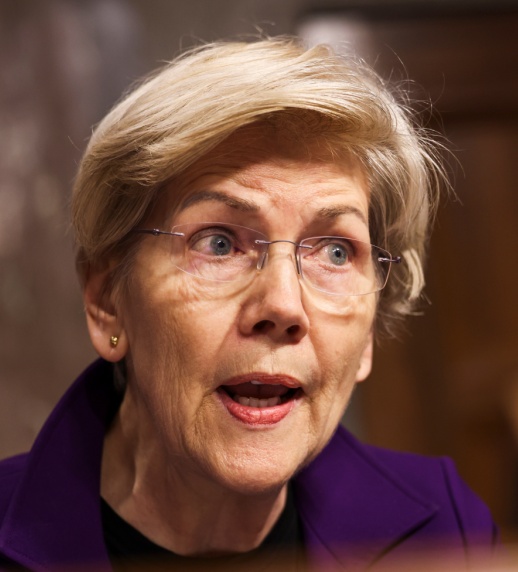
The leadership is likely to be Elizabeth Warren for Senate Banking and Maxine Waters for House Financial Services. Both are the ranking Democrats on those committees, and both voted against the GENIUS Act, and lobbied hard for the CLARITY Act to be denied.
Warren has made the Trump family’s crypto interests the price of any deal, previously saying no market structure bill should pass without guardrails “to stop this kind of corruption”, referring to the president’s crypto company, World Liberty Financial.
Seven of the Senate’s most pro-crypto Democrats went further in July, saying provisions on ethics, consumer protection, illicit finance, conflicts of interest and market integrity “must be strengthened” in relation to the CLARITY Act. They held this position even after the Republican sponsors’ final CLARITY Act text took in 126 changes requested by Democrats, along with ethics rules Trump had agreed to.
A Democratic majority gives the party room to push for stricter consumer safeguards and limits on yield-bearing stablecoins, alongside closer scrutiny of Trump’s crypto businesses. Any CLARITY Act bill would still need the President’s signature, and Trump said on election night he would use his veto as needed.
TD Cowen analyst Jaret Seiberg said he does not expect the CLARITY Act to pass within two years.
Oversight before legislation
Committee control gives Democrats subpoena power over an inquiry Warren and Waters have pursued from the minority for two years. The pair asked the Securities and Exchange Commission (SEC) in April 2025 to preserve all records relating to World Liberty Financial.
Warren later introduced the Ending Presidential Corruption in Banking Act after the Office of the Comptroller of the Currency (OCC) approved the firm’s national bank charter application, saying Trump had become “the first President in history to approve, operate, and supervise his own bank”.
A Senate majority also lets Democrats hold up Trump’s nominees to the SEC and Commodity Futures Trading Commission (CFTC), which have been writing crypto rules in the absence of legislation. The SEC launched an innovation exemption for tokenised securities venues two days after the September vote, and the CFTC sent its own crypto market rules to the White House for review.
Rules set by regulators can be withdrawn by a future administration, and CNBC previously reported the industry wanted the CLARITY Act to turn the regulatory move under Trump into durable law.
The GENIUS Act is less exposed, because changing the stablecoin law would also require Trump’s signature. The OCC finalised its GENIUS Act rules in October, ahead of the law’s 18 January 2027 effective date. Democratic committees will oversee the agencies implementing the OCC stablecoin framework, including Treasury’s separate anti-money laundering rules for issuers.

Swipe fee bill gains a majority but loses its sponsors
Elsewhere, the Credit Card Competition Act (CCCA) has the President’s backing but never reached a Senate floor vote, which hands over control of the chamber in January. Trump renewed his commitment this week to sign the bill, according to the Merchants Payments Coalition. Its Senate authors, Illinois Democrat Dick Durbin and Kansas Republican Roger Marshall, tried and failed to attach it to the GENIUS Act in 2025.
The bill would require banks with more than $100bn in assets to offer at least two unaffiliated networks on their credit cards, one of them outside Visa and Mastercard, according to Durbin’s office. Unlike the 2010 rules on debit cards, it sets no limit on swipe fees and relies on network competition to bring them down. Warren, who is in line to chair Senate Banking, is not among its sponsors.
Neither of the bill’s Senate authors returns in January, after Democrat Adam Hamilton defeated Roger Marshall in Kansas and Dick Durbin chose to retire. It leaves Peter Welch as co-lead alongside Angus King and Bernie Moreno, who signed on in August, while Lance Gooden and Zoe Lofgren lead the House version.

The bill’s backers have repeatedly tried to pass it by attaching it to larger legislation, including a Senate housing bill in March as well as the GENIUS Act.
Jason Stverak of the Defense Credit Union Council told CU Today in August supporters were likely to try this route again or use the bill as leverage in wider financial services negotiations.
Merchants and banks disagree on what the bill would mean for consumers. While the Merchants Payments Coalition estimates it would save merchants and their customers $17bn a year, the American Bankers Association and seven other bank and credit union groups said it would raise the cost of checking accounts by $1.3bn to $2bn a year.