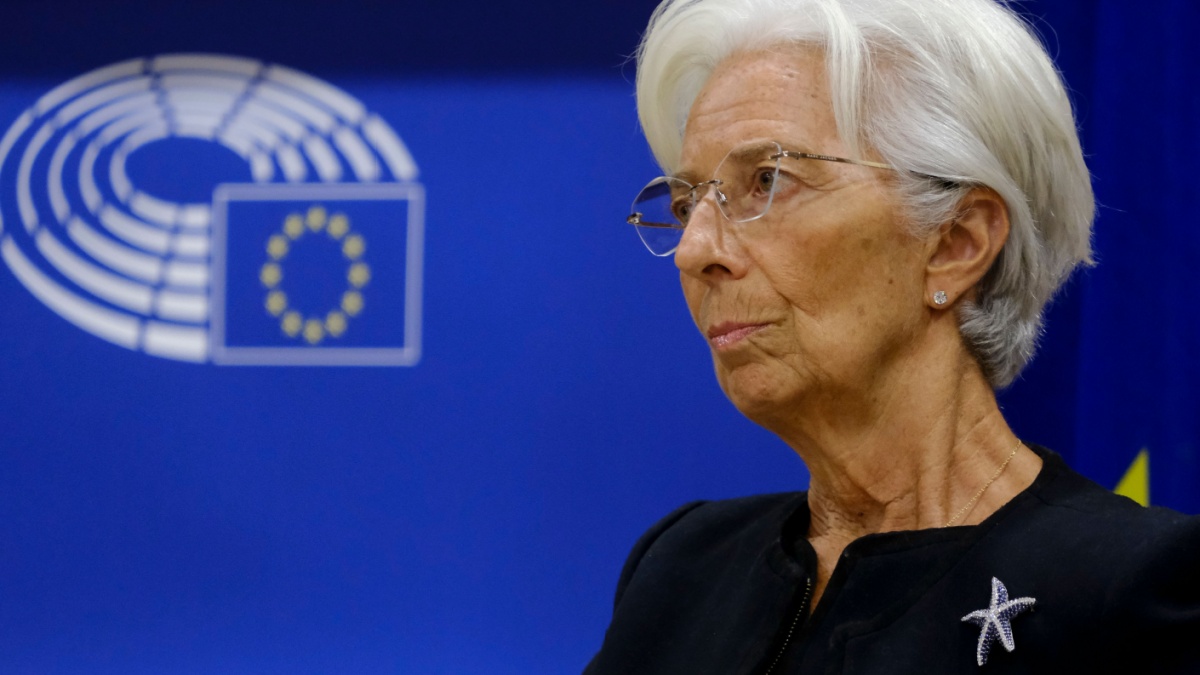
Lagarde leaves before the 36-firm digital euro pilot starts in H2 2027, with EU lawmakers yet to adopt the regulation the ECB needs to issue it.
Christine Lagarde will step down as President of the European Central Bank (ECB) on 7 February 2027, around nine months before her eight-year term was due to end in October 2027.
Lagarde informed the Governing Council and European Council President António Costa of her decision on Thursday, the ECB said.
Her successor will be appointed by the European Council under the nomination process set out in Article 283 of the Treaty on the Functioning of the European Union.
“The Governing Council thanked President Lagarde warmly and gave her a long standing ovation,” the ECB said. Costa praised her “dedication as President of the European Central Bank since November 2019” and said the process to name a successor would begin immediately.
“I leave this institution with a sense of good work done and an ECB that is fit for the future,” Lagarde said in a video posted to social media.
I have just informed my colleagues that I will step down as @ECB President on 7 February 2027.
It has been a source of great pride to serve this institution.
I thank all of those who have supported me on this journey over the past seven years. https://t.co/eSLLTaDAej
— Christine Lagarde (@Lagarde) October 29, 2026
A source told Reuters she resigned so she could comment on political matters in France and globally, which the neutrality expected of an ECB president prevented. The February date allows EU leaders to appoint a successor before France’s presidential election in April 2027.
Former Dutch and Spanish central bank governors Klaas Knot and Pablo Hernández de Cos are seen as front-runners, according to Reuters, which reported the World Economic Forum (WEF) is considered a likely destination for Lagarde.
Lagarde: pandemic, inflation and two hiking cycles
Lagarde became the first woman to lead the ECB on 1 November 2019, succeeding Mario Draghi. The announcement arrived just four months before Covid-19 reached Europe, and in March 2020 the ECB launched a €750bn ($835bn) pandemic emergency purchase programme, which it expanded to €1.85tn by December 2020.
The ECB adopted a symmetric 2% inflation target following a strategy review in July 2021.
Euro area inflation peaked at 10.6% in October 2022 after Russia’s invasion of Ukraine. The ECB raised rates 10 consecutive times from July 2022, taking the deposit rate to 4% by September 2023, its highest level since the euro launched in 1999.
Eight cuts between June 2024 and June 2025 returned it to 2%.
Energy prices linked to the Iran war pushed the ECB back into tightening this year. The bank raised the deposit rate to 2.25% in June and to 2.5% in September, when euro area inflation reached 3.8%.
Digital euro and payments sovereignty

Lagarde inherited early ECB work on a central bank digital currency. The ECB published its first report on a digital euro in October 2020 and ran an investigation phase from October 2021 to October 2023, followed by a two-year preparation phase.
In October 2025 the Governing Council moved the project to its next phase, estimating development costs of around €1.3bn up to a potential first issuance in 2029.
The European Parliament’s economic affairs committee backed the digital euro legislation in June, and the full Parliament voted in July to open negotiations on the final text.
The ECB has selected 36 payment service providers, including Deutsche Bank, Revolut, Stripe and Adyen, for a 12-month pilot beginning in the second half of 2027, and has invited merchants to join the digital euro pilot.
Lagarde linked the project to Europe’s reliance on Visa and Mastercard. “Visa, Mastercard, PayPal and Alipay are all controlled by American or Chinese companies,” she previously said on Irish radio.
And, at the International Monetary Fund (IMF) Annual Meetings on 17 October, she said: “The digital euro will further stimulate innovation and competition in retail payments,” urging lawmakers to adopt the regulation by the end of 2026.
“My mandate will have expired when the digital euro is eventually launched for good,” Lagarde said at a conference in Finland earlier this year.
Stablecoins and tokenised settlement
Lagarde opposed promoting euro-denominated stablecoins as a response to dollar-backed tokens.
“The case for promoting euro-denominated stablecoins is far weaker than it appears,” she said at a Banco de España forum in May, citing the risk of runs and weaker monetary policy transmission.
She put the stablecoin market at more than $300bn, mostly denominated in US dollars. Her position put her at odds with the European Commission and the French government.
Under Lagarde’s presidency, the Eurosystem launched Pontes, its tokenised settlement platform, on 21 September 2026, allowing banks to settle tokenised wholesale transactions in central bank money through TARGET Services.
The ECB expects full implementation by 2028.