The ECB President recently spoke on some of the key concerns of adopting stablecoins as Europe continues to build a more resilient financial system over several fears.
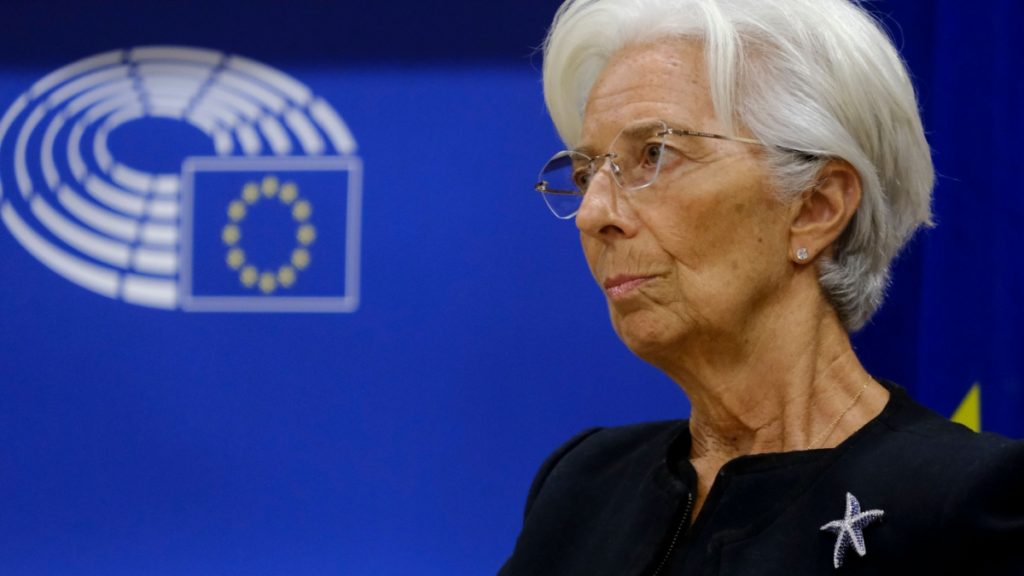
European Central Bank (EBC) President Christine Lagarde has argued the case for promoting euro-denominated stablecoins is “far weaker than it appears”, warning private stablecoins risk introducing fragility and fragmentation into tokenised financial markets.
Speaking in front of an audience at the Banco de España LatAm Economic Forum on 8 May, Lagarde said stablecoins do not provide the “unconditional finality” of central bank money, and warned relying on competing private instruments for settlement could undermine interoperability across tokenised finance platforms.
Lagarde’s speech comes as regulators on both sides of the Atlantic continue formalising rules around stablecoins and tokenised finance. The European Union’s Markets in Crypto-Assets (MiCA) framework brought stablecoins under regulatory supervision in 2024, while the proposed US GENIUS Act has positioned dollar-backed stablecoins as both a financial innovation tool and a mechanism for extending global demand for the US dollar and Treasury markets.
But rather than questioning whether stablecoins should exist at all, Lagarde argued that policymakers have increasingly conflated their technological role in tokenised settlement systems with their monetary role as privately issued digital representations of fiat currencies.
While stablecoin advocates often point to faster settlement and lower cross-border payment costs, Lagarde noted business-to-business stablecoin payment volumes still account for just 0.01% of global B2B flows. She also warned that the costs of converting into and out of stablecoins can erode some of the efficiency gains frequently cited by the sector.
The ECB President also reiterated longstanding European concerns around monetary sovereignty, particularly as nearly 98% of stablecoins remain denominated in US dollars. In the speech, Lagarde pointed to the US administration’s support for stablecoins as part of a broader strategy to reinforce global dollar dominance and sustain demand for US Treasuries
Do stablecoins threaten EU sovereignty?
Lagarde also outlined how dollar-backed stablecoins are increasingly being used beyond crypto trading, particularly in regions where access to stable foreign currencies has historically been limited.
In the speech, she noted that transaction flows linked to stablecoin usage already account for around 7.7% of GDP in Latin America and 6.7% across Africa and the Middle East, as households and businesses use dollar-denominated digital assets as an alternative store of value.
The ECB President also raised concerns about the implications of yield-bearing stablecoins, warning that they effectively turn holders into indirect investors in US government debt.
“As US dollar-pegged stablecoins hold Treasury bills as reserves, a yield-bearing stablecoin makes its holder, indirectly, a holder of US government debt – held not only as a store of value, but as an investment asset,” Lagarde said.
Those concerns sit alongside broader ECB warnings around European monetary sovereignty and the growing dominance of dollar-denominated digital assets within tokenised finance. In the speech, Lagarde noted that close to 98% of stablecoins remain denominated in US dollars, while the US administration has increasingly framed stablecoin legislation as a tool for reinforcing global dollar dominance.
The debate also comes as European lawmakers continue work on the proposed digital euro framework, which the ECB has positioned as a public-sector alternative for digital payments and settlement across the euro area.
“With close to 98% of stablecoins denominated in US dollars, and with the United States now moving to entrench that position through legislation, the growing argument is that Europe must match the US model to remain competitive,” Lagarde said.
“But that framing rests on the confusion I have just described. It treats one instrument as if it performs one function. But when we examine each function separately, the case for adoption looks less compelling.”
Does Europe need a stablecoin? Qivalis says yes
While Lagarde raised concerns around the broader adoption of stablecoins in Europe, she acknowledged that euro-denominated stablecoins operating under the EU’s MiCA framework “could generate additional global demand for euro area safe assets”.
In the speech, Lagarde noted increased demand for euro-denominated stablecoins could compress sovereign yields, ease financing conditions and extend the international reach of the euro through new digital payment channels.
However, she argued that the financial stability and monetary policy trade-offs associated with stablecoins ultimately outweigh those potential gains. Not everyone within Europe’s banking sector agrees with that assessment.
Several European banks, including BNP Paribas, ING and BBVA, are backing Qivalis, a consortium planning to launch a euro-denominated stablecoin in the second half of 2026 as part of a broader effort to strengthen Europe’s position within tokenised finance.
Speaking to Payment Expert in March, Qivalis CEO Jan-Oliver Sell said the consortium viewed euro-denominated stablecoins as a way to reduce dependence on non-European payment infrastructure and dollar-backed digital assets.
“We want to provide an institutional grade ‘Made in Europe’ solution that keeps our digital financial destiny in our own hands,” Sell said.
“If European companies must rely on non-EU payment rails or foreign-denominated stablecoins to conduct instant, cross-border business, we have a vulnerability.
“That is why we need a European response to that imbalance, and the macro conditions for a successful euro stablecoin are more favourable than at any point in recent history.”