Denis Manturov will chair A7’s new supervisory council, two weeks after the US designated the platform a transnational criminal organisation.
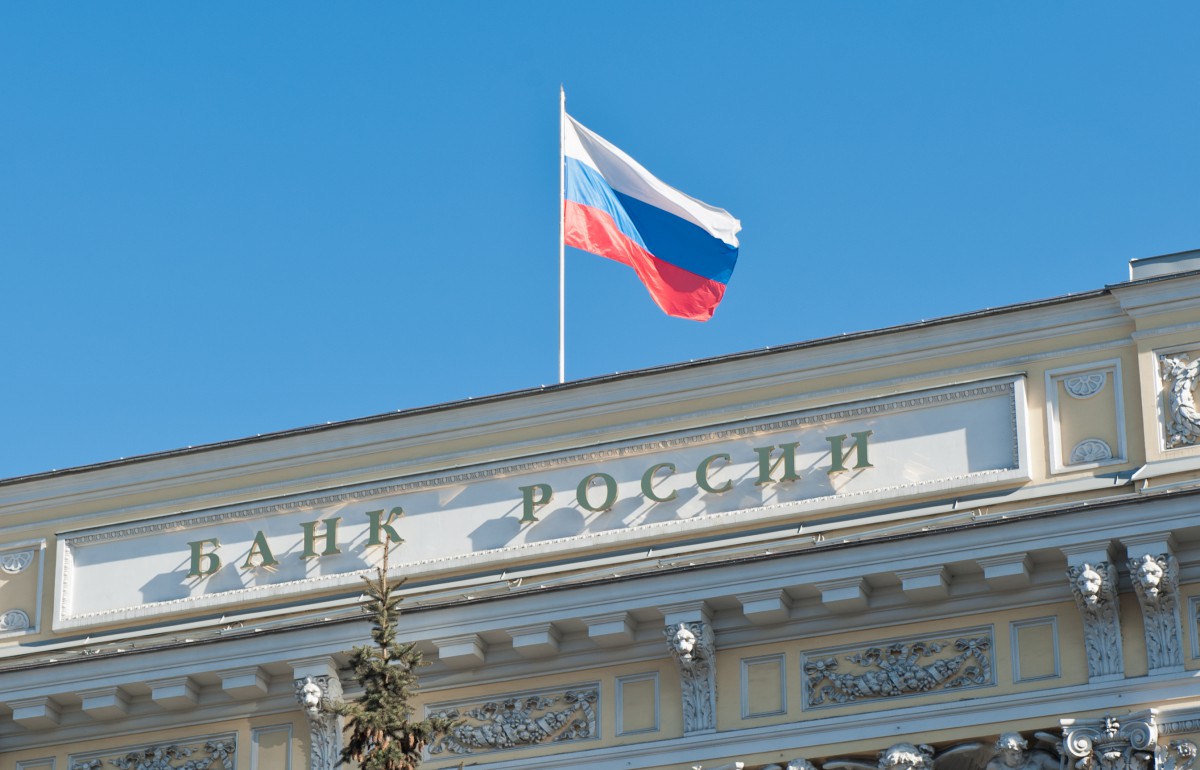
First Deputy Prime Minister Denis Manturov has become Chair of a new supervisory council at A7, the Russian cross-border payments platform sanctioned by the US Treasury. Finance Minister Anton Siluanov and Energy Minister Sergei Tsivilev have also joined the council, which held its first meeting on 15 October, according to Manturov’s office as cited by Reuters.
Igor Chaika, Head of the federal agency Rossotrudnichestvo, and Vasily Sonin, Deputy Director of the National Guard, also attended. So did Promsvyazbank PJSC (PSB) Chairman Pyotr Fradkov and A7 CEO Ilan Shor.
The government said the council was set up as “a consultative expert body bringing together representatives of the state and business” to work on economic, financial and technological questions.
Its meetings will cover the development of international settlements and the resilience of Russia’s settlement infrastructure. A7 had reportedly not announced the council itself as of yet.
Russian sanctions and the A7A5 token
PSB set up A7 in autumn 2024, holding 49% of the company, while Moldovian businessman Shor, who was sanctioned by the US, EU and UK, holds 51%, according to Interfax.
The US Treasury’s Office of Foreign Assets Control (OFAC) designated the A7 Network a significant transnational criminal organisation on 1 October. The Treasury’s Financial Crimes Enforcement Network (FinCEN) proposed a rule the same day that would bar transmittals of funds involving the network’s sub-agents.
The Treasury said those sub-agents processed more than $17bn between January 2025 and June 2026, and linked the network to Iranian sanctions evasion and to Nobitex, Iran’s largest digital asset exchange.
The EU sanctioned A7 in July 2025, and the UK sanctioned it in May 2026.
“Today’s action targeting A7 continues Treasury’s unprecedented efforts to isolate Iran and its financial enablers,” Treasury Secretary Scott Bessent said. A7 said it “categorically rejects any allegations that it has worked with Iran or terrorist organisations.”
A7 settles payments in A7A5, a rouble-backed stablecoin issued by Kyrgyzstan-registered Old Vector, which OFAC designated in August 2025. Fradkov told Russian state TV in August A7A5 turnover had reached almost $140bn since its launch in February 2025.
“This is a small piece of the global stablecoin market, but it is the largest non-dollar stablecoin,” he said. The platform handles up to 2,000 payments a day for about 15,000 regular clients, Fradkov said.
The token’s issued supply stood at around $475m across Tron and Ethereum, according to a Crystal Intelligence report published on 30 July. One wallet held 94.5% of the Tron-based supply.
China’s parallel payment rails
China is Russia’s largest trading partner. Siluanov said in November 2025 that 99.1% of settlements between the two countries were made in roubles and yuan, which he said allowed both to avoid “unfriendly foreign infrastructure”.
He said at the same Russian-Chinese Financial Dialogue in Beijing that the two countries needed to build new settlement channels.
Russian banks settle yuan payments with Chinese counterparts through China’s Cross-Border Interbank Payment System (CIPS). CIPS Co, the system’s operator, said in March that it serves more than 5,000 banking institutions across 190 countries and regions.
The People’s Bank of China’s digital yuan international operation centre signed 26 institutions to its Cross-border e-CNY Transfer Services (CBETS) platform in June. CBETS settles cross-border payments in e-CNY and runs alongside CIPS.
Proposals for China’s next five-year plan call for “the construction of an autonomous and controllable yuan cross-border payment system”, the South China Morning Post reported.
Neither the Russian government nor A7 has said whether the council will pursue links with CIPS or CBETS.