The UK, EU, US and Singapore set different crypto payment rules in 2026. Merchants accepting stablecoins face distinct licensing routes in each market.
A merchant that wants to accept crypto in 2026 rarely becomes the regulated party. Across the UK, EU, US and Singapore, the rules fall on whoever issues the stablecoin or runs the payment rails, so a business connecting to a licensed gateway and settling in local currencies carries little direct compliance responsibility.
The difference market to market is which providers are licensed to serve you, which stablecoins they can legally handle, and what happens to the money on its way to your account. Payment Expert has mapped how those regimes diverge.
Crypto payments in 4 key markets
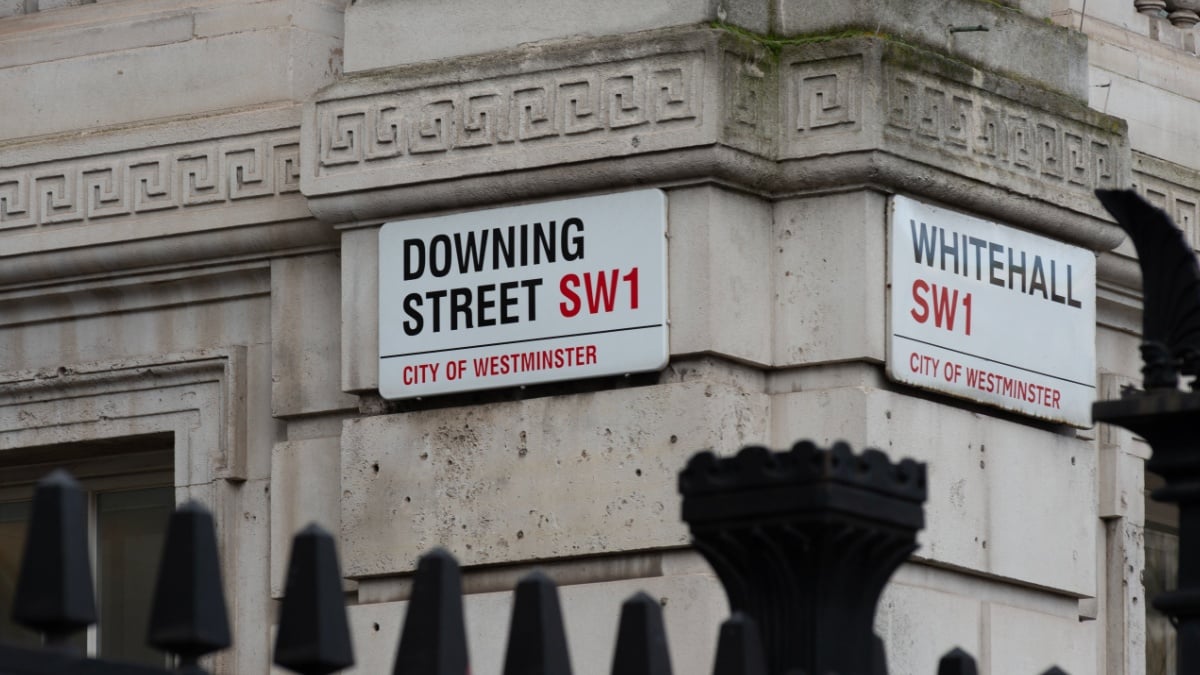
United Kingdom

UK cryptoassets came under the Financial Conduct Authority (FCA) in February 2026, when Parliament passed the Financial Services and Markets Act 2000 (Cryptoassets) Regulations. The FCA finalised its rulebook on 30 June and opened its authorisation gateway on 30 September 2026, though the full regime does not bite until 25 October 2027.
Any firm serving UK customers – an exchange, a custodian, a payment gateway – needs FCA authorisation and registration under the Money Laundering Regulations before it can process a merchant’s crypto.
Stablecoins large enough to matter to the wider system fall to the Bank of England, which has capped issuance at £40bn per systemic coin while it settles the rest of its regime. A merchant sitting behind an authorised processor stays outside all of this, provided it never holds or moves crypto on someone else’s behalf.
European Union

The EU runs a single rulebook, the Markets in Crypto-Assets Regulation (MiCA), which has applied in full since the grandfathering window for nationally licensed firms closed on 1 July 2026.
One licence now travels, because a crypto-asset service provider authorised in any member state can passport across the European Economic Area, which is why firms have routed applications through accommodating regulators such as the Dutch AFM.
Only regulated e-money tokens and asset-referenced tokens can be used for payment, a test USDC and EURC pass and several rivals failed, pulling out of the EU rather than comply.
Providers moving those tokens face a second layer after a February 2026 European Banking Authority (EBA) opinion, which held that handling e-money token transfers can also require a payments licence under PSD2. A merchant accepting through a licensed CASP does not itself become one, provided it leaves custody and transfers to the provider.
United States
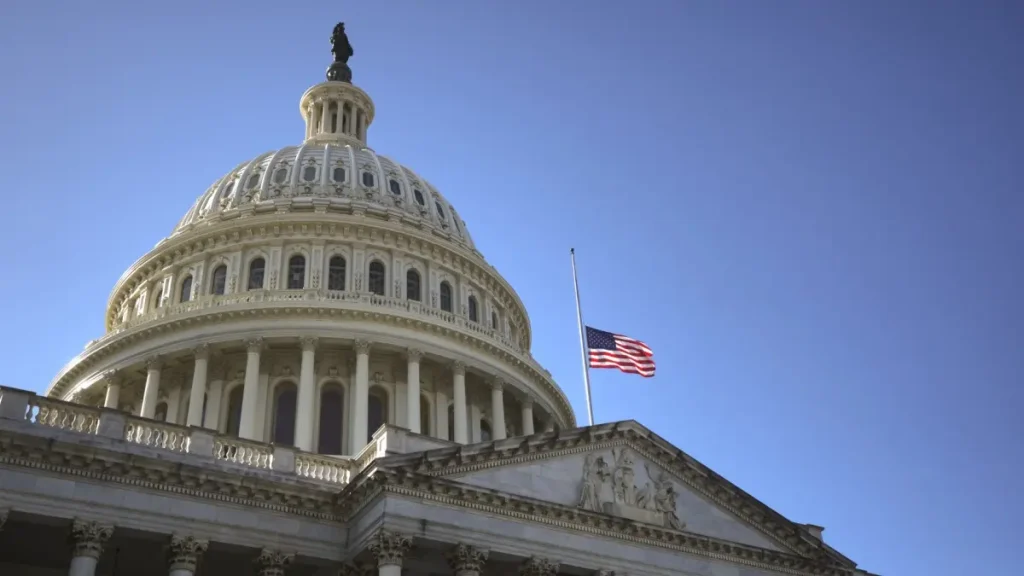
US law regulates the stablecoin issuer rather than the merchant. The GENIUS Act, signed on 18 July 2025 and expected to take effect on 18 January 2027, limits issuance to permitted payment stablecoin issuers, who must back their coins one-for-one with cash and short-term Treasuries, disclose reserves monthly, and pay holders no interest.
The Office of the Comptroller of the Currency (OCC) has already chartered the first wave, granting conditional national trust bank status to Circle, Paxos and three others in December 2025.
None of this touches the merchant directly, and the Act leaves stablecoin payment discounts intact, though a processor that converts and settles crypto still needs state money transmitter licences to operate.
What the US still lacks is a federal market-structure law for crypto more broadly, since the CLARITY Act remains stuck in Congress, which leaves anything beyond payment stablecoins running on older, patchier rules. Payment Expert has traced how the competing dollar regimes interact.
Singapore

Singapore folds crypto into its Payment Services Act, policed by the Monetary Authority of Singapore (MAS), so any provider offering exchange, transfer or custody of digital payment tokens needs a Payment Services licence before a merchant can plug in.
MAS holds a firm line on the retail side, banning lending and staking of those tokens outright. Its stablecoin rules are tightening: a consultation opened on 1 September 2026, proposing a single-currency stablecoin framework through amendments to the Act that would demand 100% reserves, redemption within five business days and no interest, with responses due by 16 October.
Merchants there work through licensed names, with Paxos Digital Singapore holding full MAS approval and DBS acting as custodian, while processors such as Triple-A carry the licence a merchant leans on.
Crypto Payments: what merchants do everywhere
The practical route looks the same in all four markets. A merchant integrates a licensed gateway, the gateway takes the crypto and hands back fiat or stablecoin, and the provider carries the KYC and anti-money-laundering checks that would otherwise land on the merchant.
The card networks have built the same plumbing, with Mastercard routing stablecoin payouts through Thunes. Stablecoins now carry most merchant crypto volume, which is the first thing to check when choosing a provider, as Payment Expert‘s guide to stablecoin use cases sets out.
Tax is the one duty that stays with the merchant in every market; in the UK, cryptoasset service providers began collecting transaction data on 1 January 2026 under the OECD’s Crypto-Asset Reporting Framework, so receipts are increasingly visible to HMRC.