Payment Expert’s ID Check: Payments Professionals offers insight from industry leaders and experts on how they got their start in the financial industry, from their early years in education, to how they have been able to climb the corporate ladder.
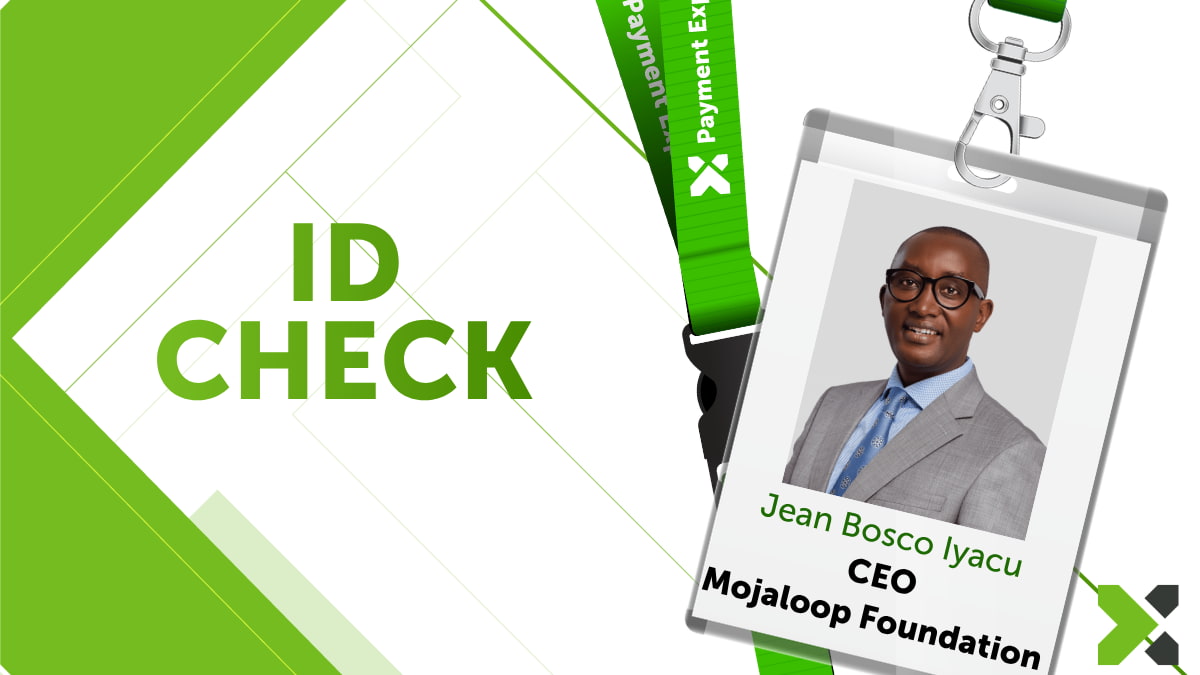
This week, Jean Bosco Iyacu, Chief Executive Officer, The Mojaloop Foundation, breaks down the mechanics of the payments ecosystem and why every person’s role is just as valuable as those working on the next stage.
Where did you go to university and what did you study? What impact did this have on your current journey?
I completed my master’s degree in economics at the University of the Witwatersrand (Wits) in South Africa before continuing my professional education in development finance through programmes at Harvard University, Frankfurt School of Finance & Management and other institutions.
That academic journey gave me a deep understanding of development finance, and the role financial systems play in improving livelihoods. It ultimately led me towards financial inclusion and the belief that well-designed payment systems can create economic opportunity for millions of people.
What first drew you to the payments industry and why have you stayed?
What first drew me to payments was the fundamental role they play across the wider financial ecosystem. Whether it is current accounts, savings, credit, insurance, or investments, payments are the foundation that enables people and businesses to access and use these services. Every payment creates a history and a financial footprint, which can open the door to greater financial inclusion.
I was also attracted by the fact that payments sit at the heart of every economic interaction. Whether people are exchanging goods, services, or value, there is always a payment at the centre of that exchange. Without effective payment systems, economies cannot function efficiently.
The COVID-19 period reinforced this belief for me. It showed how essential digital payments had become, as millions of people relied on electronic channels to access basic goods and services. It also highlighted the inequalities faced by those without access to safe and affordable digital payment solutions.
I have stayed in payments because I believe in the opportunity to build infrastructure that works for everyone – regardless of income level or location. That mission is what attracted me to Mojaloop Foundation: the ability to contribute to creating inclusive, interoperable payment ecosystems that help more people participate in the digital economy across regions including Africa, Asia, and Latin America.
Are there any lessons from your first role in the industry which you still draw on?
One of the key lessons I have learned throughout my career is the importance of building a shared vision across the entire payments ecosystem. Payments involve many different stakeholders – policymakers, regulators, financial institutions, technology providers, and private sector actors – and successful transformation depends on bringing everyone together around a common goal.
A payment ecosystem cannot be built in isolation. It is like constructing a highway: if you build the infrastructure without involving the people who will use it, they may not understand its value or adopt it. The same applies to payments – collaboration, trust, and collective ownership are critical.
Another important lesson is the need for the right technological foundation. Payment infrastructure must be open, interoperable, scalable, and adaptable to changing needs. The technology should support innovation while remaining rooted in the local context.
Finally, I have learned that successful payment systems must always put users at the centre. Trust, accessibility, and simplicity are what drive adoption. Continuous improvement and innovation are essential to ensure these systems remain relevant and continue serving people over the long term.

When was your first big break in the industry? Why was this such a significant moment for you?
Rather than a single personal breakthrough, I would say my biggest turning point came with the emergence of Digital Public Infrastructure (DPI), which was also a defining moment in my career.
It was the moment the industry started to recognise that payment systems needed to move beyond individual solutions and towards shared, nationwide infrastructure that could lower costs, drive scale, and enable broader access. Around the world, countries began focusing on building interoperable payment rails that could support multiple use cases and serve people who had previously been excluded from formal financial services.
For me, this was significant because it aligned strongly with my belief that payments are not just about transactions – they are about creating the foundation for financial inclusion, innovation, and economic participation. Being part of that shift and contributing to the development of more inclusive payment ecosystems has been one of the most meaningful parts of my journey.
Was there a moment you faced in the industry which really challenged you? How did you overcome this?
I faced several challenges throughout this journey, but the first and perhaps most significant was aligning the interests of different stakeholders across the payments ecosystem. When you’re building a nationwide interoperable platform, every participant has different priorities, motivations, and incentives for being part of the ecosystem. Understanding those perspectives and finding common ground was one of the most complex parts of the process.
To overcome this, I focused on what I call the art of market facilitation – creating space for both formal and informal conversations with key stakeholders to understand the real drivers behind their decisions and behaviours. It was important to put myself in their position, understand their concerns, and work towards solutions that addressed the needs of all participants.
In that role, I acted as a catalyst between policymakers, regulators, and private sector actors, helping bridge different perspectives and build trust across the ecosystem. One of the key lessons I learned is that what is said in the room is not always the full story. Often, the most important insights are the concerns, motivations, or challenges that remain unspoken. Identifying and addressing those issues early is critical to keeping everyone aligned and ensuring the journey continues successfully.
What skills do you think are essential for anyone starting in the payments industry?
I believe the essential skills for starting a career in payments begin with curiosity. You need to understand how the ecosystem works, the challenges people face, and how different stakeholders interact. Adaptability is also critical because payments is a fast-moving industry shaped by new technologies, regulations, and changing user needs.
Strong problem-solving skills and attention to detail are equally important. Every payment solution exists to address a problem, and understanding the customer’s needs is key to designing solutions that are practical, inclusive, and effective. It is also important to understand how technology, regulation, and consumer behaviour intersect, as payments sits at the centre of these different areas.
Beyond technical knowledge, continuous learning is essential. The industry evolves quickly, and the ability to adapt and grow is what allows people to thrive.
Finally, collaboration is fundamental. Payment ecosystems involve many players with different interests, so the ability to communicate, build trust, and bring stakeholders together around a shared vision is critical to creating solutions that work for everyone.

Who has been your biggest role model?
My mother was my first role model – to me, she embodies what it means to build something from nothing. Long before I understood the word “entrepreneurship,” I watched her generate income through her own initiative and resourcefulness, turning what she had into what her family needed. She never waited for circumstances to be perfect or for someone else to provide the way forward – she simply found one.
That instilled in me a deep sense of self-reliance: the belief that I could create opportunity rather than wait for it. Just as importantly, she never pursued success in isolation. She understood that what she built was meant to strengthen those around her, and she modelled a genuine sense of community – sharing knowledge and resources, opening doors for others, and reinvesting in the people close to her. It is from her that I first learned that entrepreneurship, at its best, is not just about income, but about independence and interdependence held together.
Furthermore, she introduced me to digital payments long before I truly appreciated their potential. Instead of travelling to a bank branch to collect cash, she insisted I send money directly to her mobile wallet because it was faster and more convenient. That completely changed my perspective on how technology can improve people’s everyday lives.
If you didn’t work in payments, what career would you have pursued?
I’d probably be an entrepreneur – but one focused on solving societal challenges rather than simply building a business to accumulate wealth. Creating meaningful employment opportunities for young people and tackling pressing social issues would be at the heart of anything I built.
What advice would you give to someone looking to build a career in payments?
Stay curious and never stop learning.
Payments touches technology, regulation, economics and human behaviour, so the people who succeed are those who are willing to understand how all of those disciplines come together. Most importantly, remember that behind every payment is a person. If you keep users at the centre of every decision, you’ll build solutions that genuinely make a difference.
Interested in sharing your experiences from the industry and passing on advice to the next-generation for ID Check? Contact: [email protected]