The ECB said EU banks have often been unable to get the most capable AI models for defence, while cheaper Chinese models have matched Mythos-level cyber performance.
Around one-fifth of cyber incidents affecting euro area banks originate from third-party providers, the European Central Bank (ECB) said in its November 2026 Financial Stability Review, published on 18 November.
Those dependencies are “highly concentrated among a small number of large providers from outside the EU”, which can create single points of failure and leave banks with few alternatives if a provider fails. Because the providers are based outside the EU, banks are also exposed to geoeconomic fragmentation, with certain frontier AI models already placed under export controls.
It is these failures at providers, rather than attacks,which account for much of the disruption so far. Malicious actions caused a relatively small share of major cyber incidents at euro area banks, most of which had limited impact, and the euro area banking system has not experienced a systemic cyber event to date.
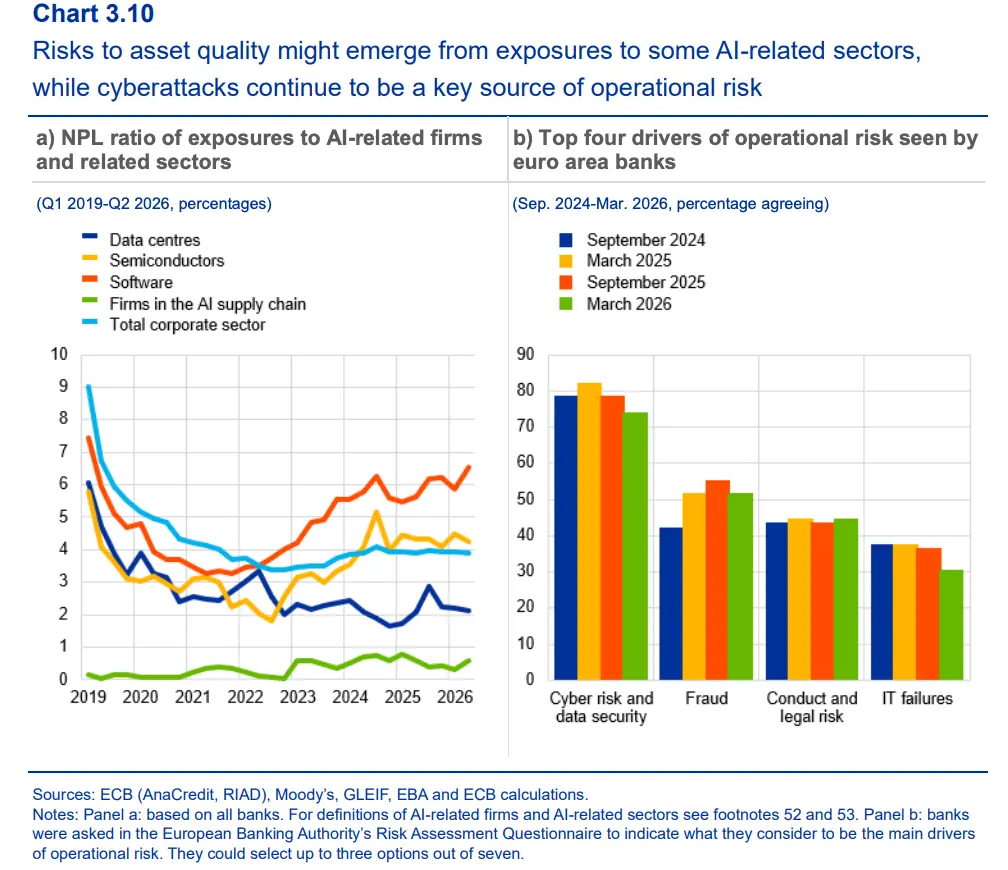
The ECB expects this risk to grow, though, because “improved model capabilities have increased cyber risks and operational vulnerabilities more generally.” Banks already rank cyber risk as the largest driver of operational risk by a large margin, according to European Banking Authority (EBA) survey data cited in the report.
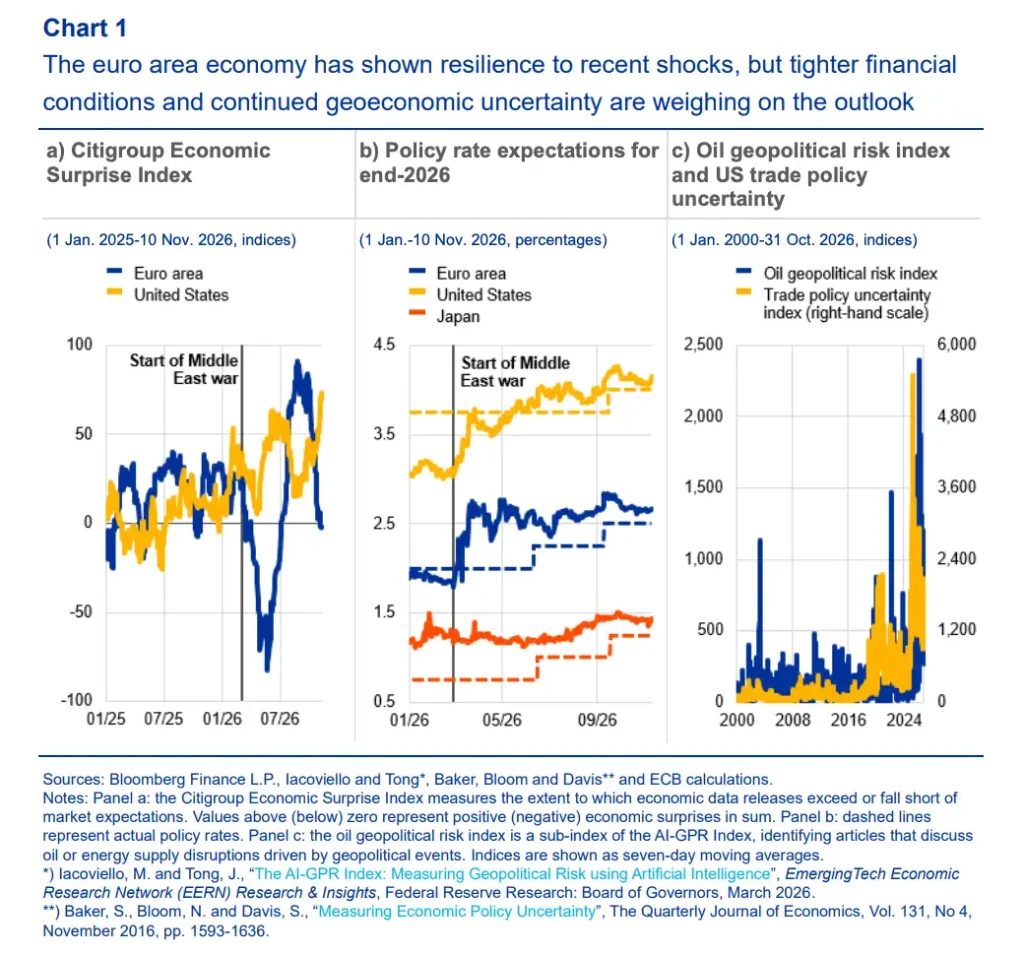
“Risks to euro area financial stability remain elevated, given persistent geoeconomic uncertainty and growing exposure to AI,” said ECB Vice-President Boris Vujčić. “Banks are well placed to withstand shocks, while vulnerabilities are more pronounced in certain non-banks where risks are growing and macroprudential safeguards are less developed.”
Vujčić’s comments come after the International Monetary Fund (IMF) warned in May that reliance on a small number of software, cloud and AI models could let AI-enabled cyberattacks spread across financial institutions.
ECB says AI favours attackers
Elevated risk comes as low-cost AI agents have lowered the barrier for fraudsters to acquire the tools needed for nefarious attacks. The review finds defenders, by contrast, are held back by the cost of deploying frontier models, governance challenges and slower, regulation-bound decision-making, which leaves them structurally disadvantaged, at least in the near term.
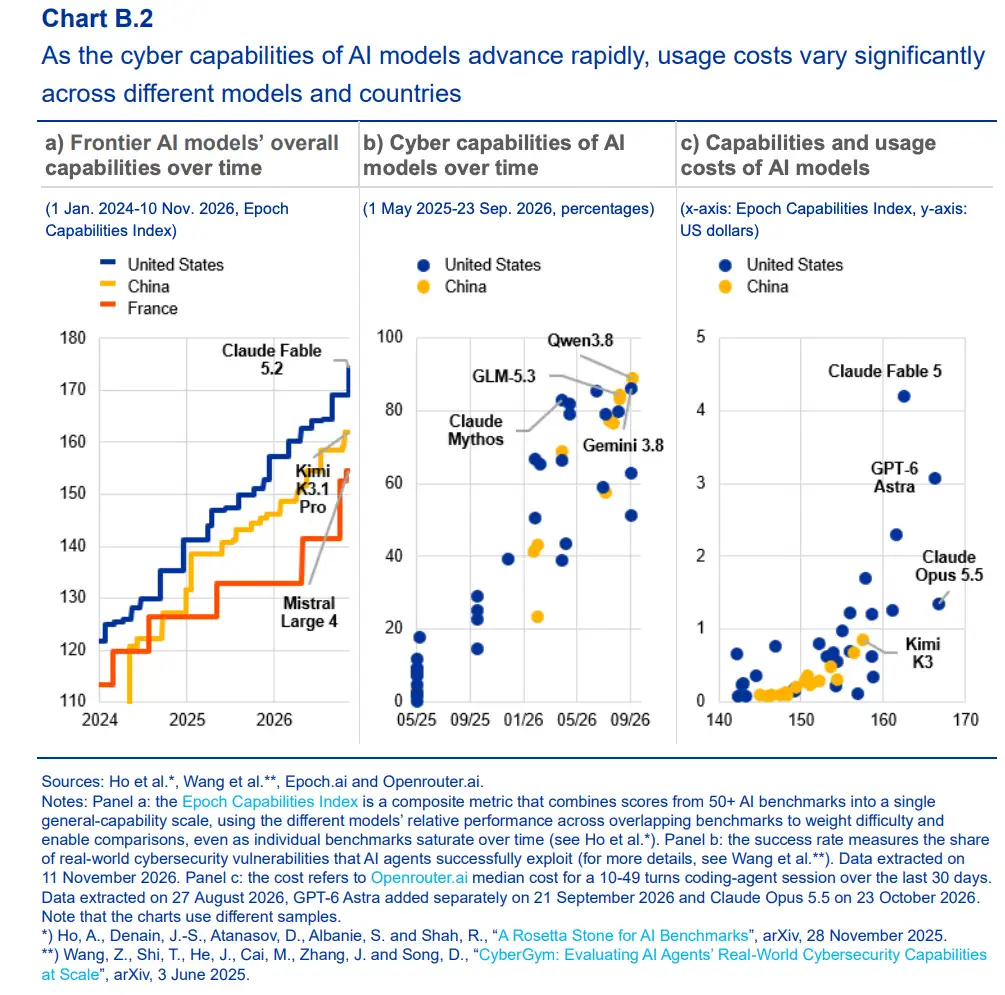
Euro area banks face the added drawback of often being restricted from accessing the most capable AI models. The report cites the initial access restrictions placed on Mythos, which left European banks locked out of Anthropic’s Claude Mythos after its limited release.
Attackers, on the other hand, have not faced the same delay: Chinese models matched Mythos-level performance four months after its release, and lower-cost models are becoming available “after just a short time lag”.
Those models are being turned on a growing pool of weaknesses, with close to half of the vulnerabilities disclosed in 2026 classified as critical or highly severe. Banks are not being hit equally. The share of banks that faced no attack resulting, or capable of resulting, in a major ICT incident rose to 56% in the first half of 2026 from 49% in the previous half, EBA data shows.
Over the same period, the share facing 11 or more such attacks rose to 11% from 7%, which the ECB described as a possible early sign of a divide opening between different sets of banks.
The central bank considers the cyber risk from frontier AI models “to be substantial”. The Digital Operational Resilience Act (DORA) has strengthened incident reporting and made it easier for supervisors to monitor third-party risk, but frontier models are making attacks quicker, cheaper and more sophisticated. DORA already brings third-party providers into payments firms’ resilience obligations.
Supervisors have started to act on this. In July 2026 the Chair of the ECB’s Supervisory Board asked significant institutions to review their cybersecurity postures, IT budgets and staffing, and to submit an action plan for mitigating AI-related risk by 31 October 2026.
Agentic AI could make deposits less sticky
The risks from AI agents extend beyond cyberattacks. Elsewhere in the review, agents failing to act as their human operators intend are flagged as a new vulnerability, a risk the UK’s Financial Stability Board (FSB) addressed in October when it set out 12 governance practices for agentic AI in financial services.
Agents could also change how customers manage their money, making it quicker and easier to compare deposit rates online and shift funds automatically. Euro area deposits tend to be quite sticky, but in the medium to longer term agentic AI tools may challenge banks’ funding structure by reducing this stickiness.
It is a warning which comes as several large UK banks have blocked third-party AI agents from customer accounts.
So how to contain the cyber risks? For the ECB, coordination among banks, AI developers, ICT providers, cybersecurity firms, open-source maintainers and national and international authorities is critical to containment.
It recommended collective contingency planning with frequent testing and mapping of the common exposures and single points of failure that third-party concentration creates.
The report noted raising societal awareness and preparedness, such as holding sufficient cash, is equally important.