Payment Expert’s ID Check: Payments Professionals offers insight from industry leaders and experts on how they got their start in the financial industry, from their early years in education, to how they have been able to climb the corporate ladder.
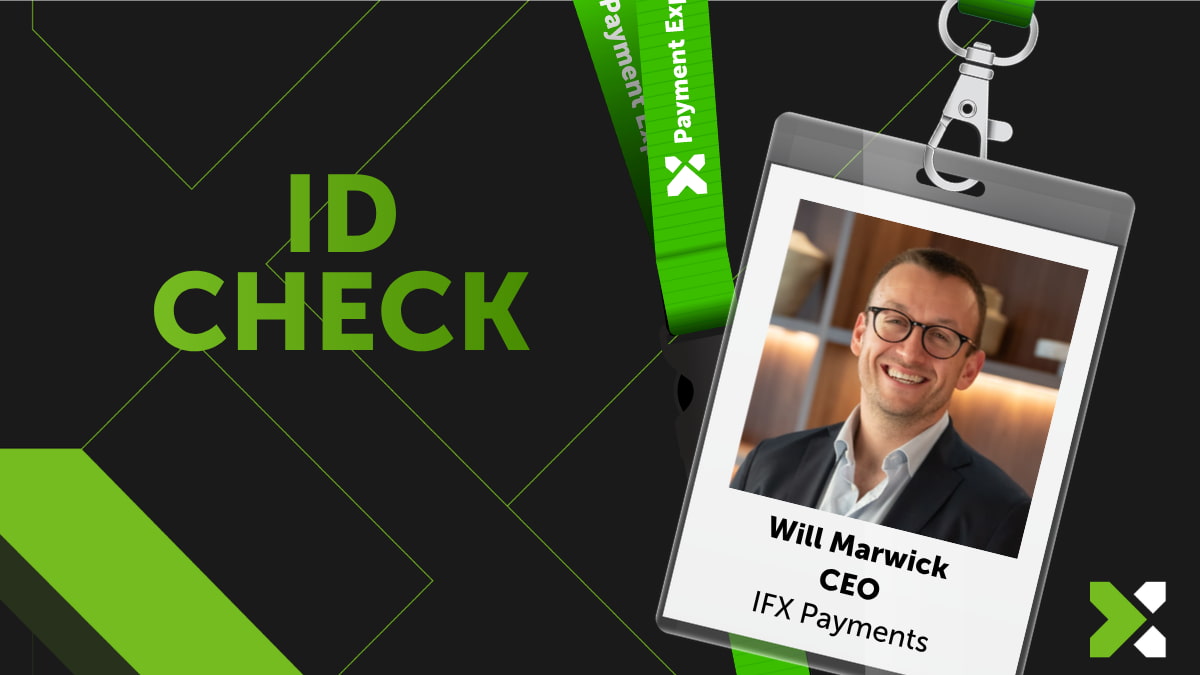
This week, Will Marwick, CEO of IFX Payments, reveals how a start in law turned into a payments career centred around explaining complex subjects, how payments have a tangible impact and the value of good leadership.
Where did you go to university and what did you study? What impact did this have on your current journey?

I studied Crime and Criminal Justice at the University of York before completing my LLB at the University of Law and passing the Bar Professional Training Course to qualify as a barrister.
Like many people with that background, I followed the legal career route. I spent time working as a barrister’s assistant but soon realised I was more interested in applying legal and regulatory expertise within a commercial environment than in practicing at the Bar.
That led me to join IFX Payments as Executive Director & Head of Legal, where I was responsible for building the governance, regulatory and compliance framework that supported the company’s evolution into a fintech business. From there, my career naturally expanded beyond legal into strategy, regulation and payments.
Looking back, my legal education gave me far more than technical knowledge. It taught me how to analyse complex problems, think critically and navigate regulation – skills that have been invaluable throughout my journey in the payments industry.
What first drew you to the payments industry and why have you stayed?
I have always been drawn to businesses that sit in the intersection of technology, regulation and global commerce, which is exactly what attracted me to payments.
When I joined IFX, the business was evolving from a traditional FX broker into a fintech building its own platform for international payments. I was brought in to help shape governance and a regulatory framework for that transition. It was an exciting opportunity to be part of a business transforming the way companies move money across borders.
What has kept me in the industry is the pace of change. Payments is constantly evolving, driven by new technology, changing customer expectations and an ever-shifting regulatory landscape. In FX, global events can have an immediate impact on businesses, while in payments, we’re continually improving the infrastructure that underpins international commerce, making it faster, simpler and more secure.
Most importantly, payments have a tangible impact. Every transaction supports a real business objective, whether that’s paying suppliers, expanding into new markets or managing international cash flow. Helping businesses navigate that complexity and operate with greater confidence is incredibly rewarding.
I’m continually motivated by the opportunity to build better solutions, work with talented people and help businesses operate more confidently in an increasingly connected global economy. There’s always a new challenge to solve, a new technology to explore and another opportunity to improve the customer experience.
Are there any lessons from your first role in the industry which you still draw on?
One lesson has stayed with me throughout my career: opportunities rarely arrive fully formed – you create them by showing initiative.
Early on, I made a conscious effort to get involved wherever I could. I asked to sit in on meetings, volunteered for projects that nobody else wanted and looked for opportunities to contribute beyond my job description. That curiosity and willingness to help gave me exposure to parts of the business I otherwise wouldn’t have experienced.
I also always believed that continuous learning is a competitive advantage. Whether it’s formal qualifications, short courses, books or simply learning from the people around you, investing in your own development compounds over time. The people who progress fastest are usually those with the hunger to keep learning and the tenacity to put that knowledge into practice.

When was your first big break in the industry? Why was this such a significant moment for you?
My first real break came when I joined Salamanca Group as General Counsel, ironically just after missing out on pupillage.
At the time, it felt like a bit of a setback because I’d spent years working toward a career at the Bar. Looking back, it was one of the best things that could have happened to me as it opened the door to financial services and the payments industry.
Initially, I joined on a short-term contract, so I approached every day with the mindset of proving my value. I volunteered for work outside my remit, took on new responsibilities and made the most of every opportunity to learn. As the business evolved, that willingness to contribute led to a permanent role and set the direction for the rest of my career.
It taught me an important lesson: careers rarely follow a perfect plan. Sometimes the opportunities you didn’t expect turn out to be the ones that define you.
Was there a moment you faced in the industry which really challenged you? How did you overcome this?
One of the biggest challenges has been leading through constant change. Payments is an industry where technology, regulation and customer expectations evolve quickly, so leaders often have to make difficult decisions, without having all the answers.
I’ve learned that good leadership starts with listening. It’s important that people feel heard and that different perspectives are considered. But once a decision has been made, everyone needs to align and focus on making it a success.
On a personal level, I’ve always found it difficult to switch off from work. Early in my career I carried every challenge home with me. Over time, I’ve realised that looking after your own wellbeing isn’t a luxury – it’s essential if you want to make better decisions for your team and the wider business.
What are some of the skills you deem essential to starting in your industry and how have yours developed over the years?
Curiosity is one of the most valuable qualities you can bring into the payments industry. Technology, regulation and customer expectations are constantly changing, so being willing to ask questions and keep learning is often more important than arriving with deep industry knowledge.
Communication is also an underrated skill. Payments can be complex, but success often comes from being able to explain complexity clearly to customers, colleagues or regulators. Just as importantly, understanding what a customer is trying to achieve, the better the solutions you’ll build.

Who was your biggest role model – inside or outside of your industry – who continues to inspire you in your current career?
I’ve been fortunate to work with a number of people who have influenced my career, but the ones who’ve had the biggest impact all shared the same qualities: humility, curiosity and integrity.
The best leaders I’ve worked with never pretended to have all the answers. They asked thoughtful questions, backed their people and made difficult decisions without losing sight of their values and end goals. That’s the style of leadership I’ve tried to emulate throughout my own career.
I’ve also learned that leadership isn’t about having the loudest voice in the room. It’s about creating an environment where talented people can do their best work and feel empowered to challenge ideas.
If you didn’t work in the industry, what other career option would you have pursued or would have loved to?
Had I not moved into financial services, I almost certainly would have stayed in law to begin with. But I suspect I would have left it behind eventually. I’ve found a passion for building high-performance cultures that help people develop collectively and as individuals. A role that allowed me to incorporate a degree of coaching and development whilst facing fast-paced challenges would have almost certainly called.
As a business leader, I now have the opportunity to do that at IFX and would have no doubt sought out roles that could offer the same. I’m currently doing my UEFA coaching badges – so maybe professional football coaching would have beckoned in an alternate reality?
Lastly, what is some advice you would give to an aspiring person looking to get a start in your respective industry?
Firstly, be yourself. Authenticity matters, and people recognise those who are genuine. If you’re pretending to be something you’re not, you’ll be found out in the end.
Be intentional about the people you surround yourself with. Find colleagues and mentors who challenge you, support you and push you to keep improving. Your environment has a huge influence on your growth.
Finally, don’t wait for opportunities to come to you – create them. Put your hand up, volunteer for projects and be willing to step outside your comfort zone. Skills can be taught, but a good attitude, curiosity and a strong work ethic is what sets people apart.
Interested in sharing your experiences from the industry and passing on advice to the next-generation for ID Check? Contact: [email protected]