Asia’s payment ecosystem is evolving at speed, but conversations across the region increasingly point to a deeper challenge: financial inclusion depends as much on trust and utility as technology.
Across Asia, payment infrastructure is accelerating at a remarkable speed.
Real-time payment schemes are expanding, QR code adoption is widespread, and fintech firms continue to promote everything from stablecoins to embedded finance as the next step toward financial inclusion.
Yet beneath the momentum lies a more uncomfortable reality. In many parts of the region, large sections of the population still rely heavily on cash, remain outside formal banking systems, or struggle to access affordable financial services.
This contradiction surfaced repeatedly during conversations at Money20/20 Asia in Bangkok earlier this year. While some discussions focused on AI-driven commerce and programmable payments, others centred on a more fundamental question: what happens when payment innovation moves faster than the people it is supposed to serve?
The liquidity paradox
Stablecoins are increasingly positioned as a solution to some of cross-border payments’ most persistent inefficiencies, particularly in emerging markets.
In recent years, they have been touted as a transformative tool for the underbanked, allowing developers in Pakistan or domestic workers in the Philippines to bypass traditional correspondent banking fees and receive funds almost instantly. According to the World Bank, the average cost of sending a $200 remittance is still around 6.5%.
For users without access to traditional banking infrastructure, dollar-backed stablecoins can offer a way to store value digitally and transact internationally through a smartphone. However, as the industry moves from hype to implementation – a takeaway from the event – the commercial reality in emerging markets tells a different story.
Shantnoo Saxsena, Founder and CEO of Encryptus, argues that the promise of blockchain often fails when it meets the friction of local market pricing and accessibility.
“The cost to acquire a stable point in India, if the dollar is at 95 to a rupee, stablecoin is at 98 or 99,” Saxena explains. “If you’re a business, think common sense. Why would you go and acquire a stablecoin in an emerging market when you can actually acquire dollars at a cheaper price?”
Saxena believes the industry is often in a rush to build without addressing the actual pain points of the end customer, particularly the underbanked who are often most sensitive to these hidden costs.
“We are in a rush to build and deliver. We are not taking a step back and thinking what needs to improve,” says Saxena. “If we are unable to pass on the benefit of technology to the end customer, how are we solving the problem?”
He highlighted this disconnect through the merchant experience, questioning how businesses benefit if card payments still take several days to settle despite companies claiming to use stablecoins.
According to Saxena, if stablecoin solutions fail to provide better liquidity or lower overall costs than the traditional dollar system, they risk staying more of a technical curiosity than a financial inclusion tool.
The Brazilian blueprint
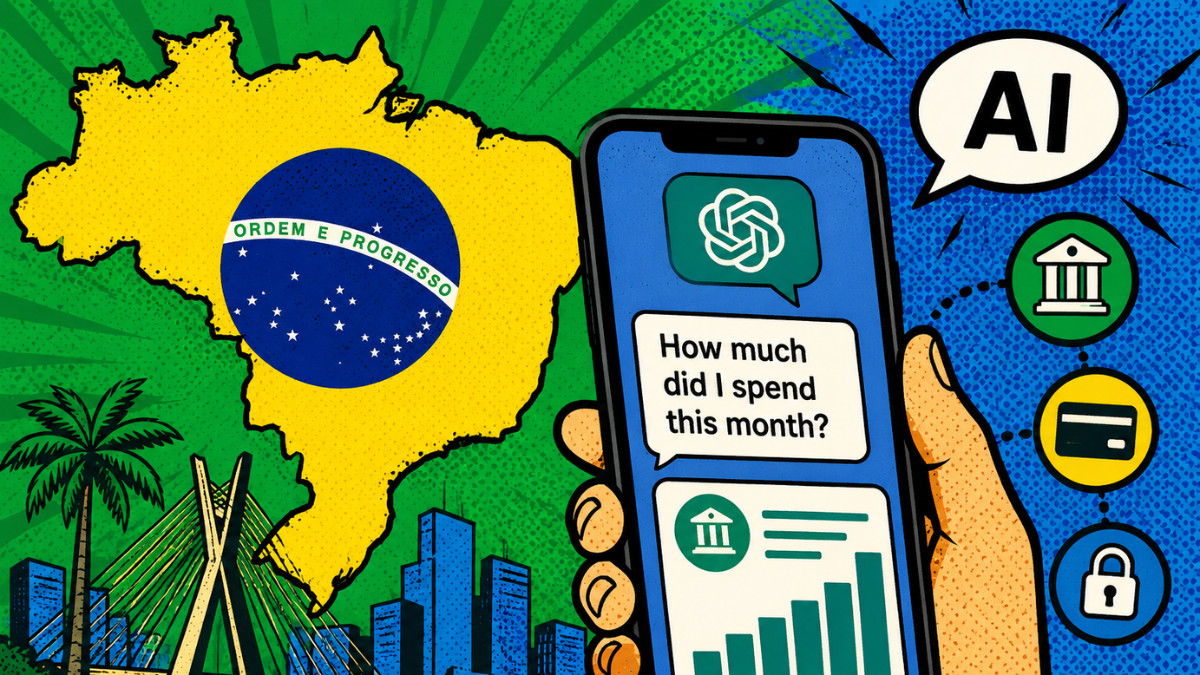
Yet while parts of the industry continue debating stablecoins’ role in financial inclusion, other payment models are already demonstrating what broader adoption can look like. Asia’s commercial strategy is looking toward Brazil, where Pix has become a benchmark for financial access.

Sean Yu, VP of Commercial APAC at EBANX, notes that although each Asian market has its own regulatory and cultural nuances, the region is now following a similar trajectory of mobile adoption.
For a long time, large parts of these populations lacked access to credit cards, creating a structural barrier for global brands. “If you don’t have a credit card, then how can you buy from a global marketplace?” Yu says. “There’s no way to do that.”
Pix changed that in Brazil, surpassing credit card transaction volumes within a few years by giving consumers a simple way to pay. Yu believes Southeast Asia is now replicating that through the rise of local e‑wallets and instant‑payment schemes.
EBANX itself is following this pattern. Originally founded in Brazil, the company has expanded into Asia and recently relocated its Chief Product Officer from São Paulo to Singapore.
“We are going to see a lot of new product launches,” Yu says. “Once you have the right payment solution to reach consumers you previously couldn’t, you unlock a growth story.”
The psychological barrier
While infrastructure is the foundation of financial inclusion, the case of Azerbaijan proves that even the right payment solution requires a psychological shift.
Despite having access to modern technologies like Apple Pay, Google Pay, and QR codes, Azerbaijan remains a heavily cash-reliant economy. Maksim Evdokimov, Chief Product, Marketing and Customer Experience Officer at Bir, estimates that around 55% of the economy still operates in cash.

This reliance isn’t necessarily due to a lack of technology, but a cultural preference. As Evdokimov explains, many consumers still prefer the safe feeling of having cash under a pillow following previous periods of turmoil in the banking industry.
“People say literally – it’s a quote – ‘the terminal gives me a check,’” Evdokimov says. “They need this piece of paper, which they trust, just in case something goes wrong with the app.”
In a bid to alleviate these concerns, Bir is focusing on building an ecosystem that incentivises a flywheel effect. By integrating physical cash-in terminals with a digital loyalty programme, the company is encouraging a conscious transition to digital finance.
The goal is to move users away from unconscious cashback to a system where they see the direct value of digital spending, such as earning bonuses to pay for parking or transport.
“Even though you are inserting your money physically into the cash-in terminal, it becomes digital,” Evdokimov notes. “We support the transition from cash to cashless.”
Engineering the benefit
Across Asia, payment infrastructure is becoming faster, cheaper, and more sophisticated. But the discussions surrounding financial inclusion increasingly point toward a different challenge altogether.
For many consumers, the issue is not whether new payment rails exist, but whether they improve daily life in a visible and practical way. That may come through lower remittance costs, access to global commerce, faster settlement, or simply the confidence that digital money can be trusted as much as physical cash.
Whether through real-time payment schemes like Pix, hybrid cash-to-digital ecosystems, or more transparent liquidity models, the success of financial inclusion efforts will likely depend less on the sophistication of the technology itself and more on whether users can genuinely feel its value.