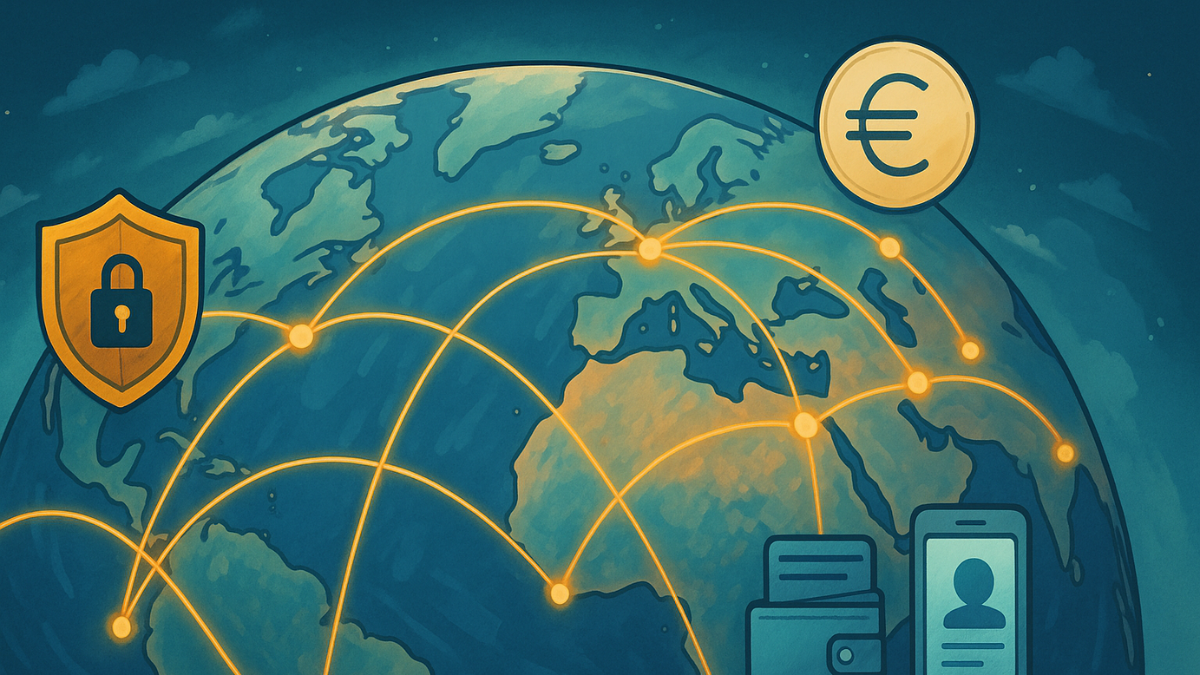
Across Asia, a quiet revolution has seen a seemingly simple symbol become the payment method of choice. Payment Expert explores the rise of the QR code in the region.
Walking through the streets of Bangkok feels worlds away from London’s urban concrete jungle or Amsterdam’s tranquil canal-side lanes.
Over the past decade, the Thai capital has embraced its status as one of Southeast Asia’s leading tourist destinations, blending vibrant street food stalls and sprawling night markets with a skyline of towering skyscrapers. This evolution has also helped position Bangkok as one of the region’s key financial hubs.
Unlike the card-dominated payment culture in the UK, or the digital wallet transactions commonly used in the Netherlands, Thailand has developed a payment ecosystem which feels both familiar and distinctly different.
While cash still plays an important role across the country, QR code payments have surged in popularity thanks to how easily they can be adopted by everyone from small street food vendors to major retail chains.
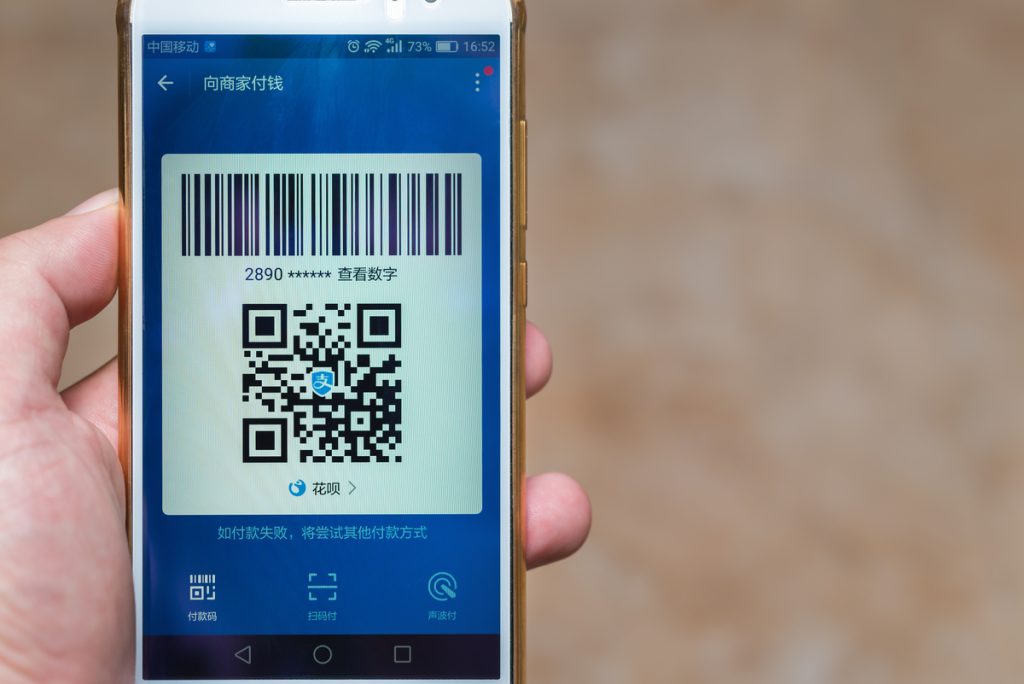
Typically, a merchant displays a unique QR code which the customer scans using their banking or payment app. The customer then confirms the transaction through a password or biometric authentication, with the payment processed almost instantly.
Seamless, right?
While QR code payments have grown exponentially over the past several years, the rise of the technology raises a broader question – what can regions such as Europe learn from Asia’s rapid adoption of seamless digital payments, and can those lessons be applied to other emerging payment methods promising the same blend of convenience and security?
Yogesh Sangle, EVP for Asia-Pacific at Nium, says it is the cost-effective nature of this method of payment which has enabled QR code payments to surge in usage in not just Thailand, but across the region more generally.
“It is the most common way people pay, for domestic payments it is brilliant, it gives you convenience and takes out a lot of friction,” Sangle tells Payment Expert on the sidelines of Money 20/20 Asia earlier this year.
“It’s also regulated in some countries, and it’s cheaper, so merchants prefer it over traditional credit and debit cards.”
QR codes rooted in inclusion
To understand the rapid rise of QR code payments across Asia, it is worth going back more than a decade.
David Brown, Head of Payment Consulting APAC at Finastra, tells Payment Expert that he first encountered QR code payments in Singapore around 10 to 12 years ago, when companies such as Starbucks began introducing the technology at the point of sale.
However, his colleague Arun Kini, Head of Payments APAC at Finastra, argues the origins stretch even further back to China in 2011, before adoption spread first to India and then across wider Southeast Asia.

China’s Alipay is widely regarded as one of the pioneers of QR-based transactions after introducing QR code scanning at point-of-sale terminals, helping drive mass adoption across the country through its vast digital payments network.
Yet the success of QR payments cannot simply be attributed to technology providers or merchants alone. For Kini, financial inclusion has been one of the defining factors underpinning adoption across consumers, businesses and payment companies alike.
“If you look at the markets (QR codes) have really taken off in India, Southeast Asia, etc., it’s about financial inclusion because to a great extent, whether you look at the sellers in India for example, even the roadside vendors have a QR code,” he says.
“It’s not very easy for them to invest or even get a POS terminal there to access card terminals.”
The ability for even the smallest street vendors to accept QR code payments has not only expanded access to digital commerce for merchants, but also opened the door to financial services for underbanked populations.
According to a report from Ecommpay, Thailand has emerged as one of the fastest-growing countries transitioning towards a cashless society. The report found that in 2023 the country recorded more than 30.8 million digital payment users, alongside 19.89 billion transactions processed through PromptPay.
While the finding that 22% of surveyed Thai nationals believe the country will become fully cashless by 2028 may not appear overwhelming at first glance, it reflects the scale of the transformation already underway. Government-backed initiatives, combined with strong support from banks and payment providers, have played a significant role in accelerating QR code adoption across the country.
The regulatory perimeter surrounding QR payments
The rise of QR code payments in Thailand can largely be traced back to a coordinated push from the government and central bank, with policies and infrastructure designed to encourage both businesses and consumers to adopt digital payments.
At the centre of this strategy is the Bank of Thailand’s Payment Systems Act, introduced in 2017, which established the regulatory framework governing e-money services and digital wallet payments.
A year earlier, the central bank launched PromptPay, the country’s national QR code payment system. PromptPay enables consumers and merchants to link QR codes directly to Thai bank accounts and digital wallets, with transactions authenticated and processed through infrastructure overseen by the Bank of Thailand.
“Thailand is a real leading country for the Vietnam’s, Cambodia’s, Myanmar’s, etc.,”
Standardisation has been a key factor behind adoption with merchants across the country able to integrate PromptPay without significant upfront costs, while the widespread acceptance of QR codes has created a near-universal payment experience for consumers.
For businesses, the appeal is also financial, as QR payments avoid many of the interchange fees associated with international card networks.
“If you look at it from a government perspective, it’s about bringing some of these transactions into the regulator fold because cash is difficult to keep track of,” says Kini.
“Whereas once you move on to the QR code-based pay and it’s running on a regulated rail, it’s much easier to keep track of these payments and funds flows. I think it’s a mix of both, financial inclusion and the start of bringing a lot of these transactions more visible as well.”
The opportunity for merchants and tourists
One area where Thailand’s momentum has shown little sign of slowing is tourism. The country remained one of the world’s most visited destinations last year, welcoming 32.9 million international tourists and generating approximately THB1.53tn ($47.58bn) in tourism revenue. Malaysia, China, India, Russia and South Korea ranked among its largest source markets.
For international visitors, navigating foreign exchange rates and unfamiliar local payment methods can often become a friction point. In Thailand, however, the widespread adoption of QR code payments has helped simplify transactions for both consumers and merchants, creating a payment experience that increasingly mirrors the convenience enjoyed by Thai nationals.
A key driver behind government and central bank support for QR payments has been the effort to reduce merchant discount rates and minimise reliance on costly card infrastructure. By lowering interchange and foreign exchange-related costs, merchants are able to offer a cheaper and more seamless payment experience to tourists as well.

The impact is also being felt beyond Thailand. Across Southeast Asia, countries including Vietnam, Cambodia and Myanmar have continued expanding QR payment interoperability, enabling tourists to travel across multiple markets while using similar QR-based payment systems.
Brown believes Thailand has emerged as one of Southeast Asia’s leading innovators in QR payments, with elements of its model increasingly influencing neighbouring countries and regional payment frameworks.
“Thailand is a real leading country for the Vietnam’s, Cambodia’s, Myanmar’s, etc.,” says Brown
“There’s a lot of business between those countries as well. This is much easier for people who have a mobile phone but may not have bank accounts and they have wallets, to get involved with these transactions and not having to carry cash.”
While QR code payments have translated seamlessly across much of Asia, a bigger question remains: how easily can these payment systems scale beyond the region as cross-border commerce and international travel continue to grow?
The cross-border friction layer
The transparency created by QR code payments has also given the Bank of Thailand access to transaction data and consumer insights which would be difficult to capture through cash-based payments alone.
However, this same level of visibility has yet to be fully replicated in cross-border QR transactions. Sangle explains friction still exists because international QR payments continue to rely on multiple intermediaries and payment providers operating across different systems and regulatory frameworks.
As a result, he noted that cross-border QR transactions are still “not as transparent as cards” in terms of settlement visibility and payment tracking. “The convenience is there, but the cost is mandated,” he says.
“It’s still cheaper at times to exchange money and use it somewhere else, or to load a card and use it somewhere else, than actually using QR because you’re not sure what rate you’re going to get. The transparency of the rate does not exist because there are multiple players in the exchange chain and that transparency is not given to the end user at the point of usage.”
Asia is home to some of the largest and most diverse remittance corridors in the world, so the structure underpinning QR code cross-border payments is still being supplied by traditional financial institutions in the region.
As Sangle notes, traditional financial incumbents still retain significant control over foreign exchange pricing in cross-border QR transactions. Intermediaries are often required to facilitate the payment process, meaning settlements can still take between one and three business days to complete.

“From that perspective, companies are trying to simplify the money movement journey of the customer, and the more you get fintech’s to come in, the cheaper it’ll be for customers to use cross-border payments,” he says.
Despite these friction points, many of the challenges facing cross-border QR payments are the same issues which continue to plague traditional international payment systems.
The question for Europe, however, is whether QR codes could help address some of the region’s longstanding payment inefficiencies, or simply add another layer to an already fragmented ecosystem.
What can Europe learn from Asia’s QR success?
It would be easy to view QR code payments as a product of Asia’s digital payments transformation alone, particularly given how closely the technology has become associated with markets such as China, Thailand and Singapore. Yet Europe’s payment sector is increasingly taking notice.
In January 2026, the European Payments Council (EPC) and the European Committee for Standardisation (CEN) introduced a new QR code standard designed to create a common framework for payment initiation across the region. The aim is to ensure that compliant banking apps and payment service providers can interpret QR payment data consistently, regardless of platform or provider.
Several European payment schemes have already begun incorporating QR functionality. Wero, the account-to-account payment platform launched across markets including France, Germany and Belgium, supports QR-based transactions, while QR payments are also commonly used across Nordic countries.
This comes as Europe’s wider payments landscape undergoes its own structural shift. Account-to-account payment schemes such as Wero, Bizum and iDEAL are positioning themselves as lower-cost alternatives to international card networks like Visa and Mastercard, particularly as policymakers and financial institutions push for greater European payments sovereignty.
Which begs the question: are QR code payments needed in Europe?
While providers such as Alipay helped consolidate QR payments into a dominant consumer behaviour across much of Asia, Sangle argues the technology’s next phase of growth may not come from standalone QR platforms themselves, but from their integration into digital wallets and banking applications already used by consumers every day.
“I think QR codes can be translated universally,” concludes Sangle.
“What we’re seeing in our business is that a lot of our customers are sending in wallets, and the way that people are using those wallets is QR code payments. The cross-border money is actually flowing into places where the main channel of usage is QR.
“I think that’s going to be more and more prevalent, people are going to be able to use their wallets to use QR.”