Worldpay, Silverflow and Equals told Payment Expert at Money20/20 Europe the tech is maturing fast – identity, liability and disputes are the holdup
Building an AI agent that can shop and pay on a customer’s behalf is, increasingly, straightforward from a technological point to achieve success in agentic commerce.
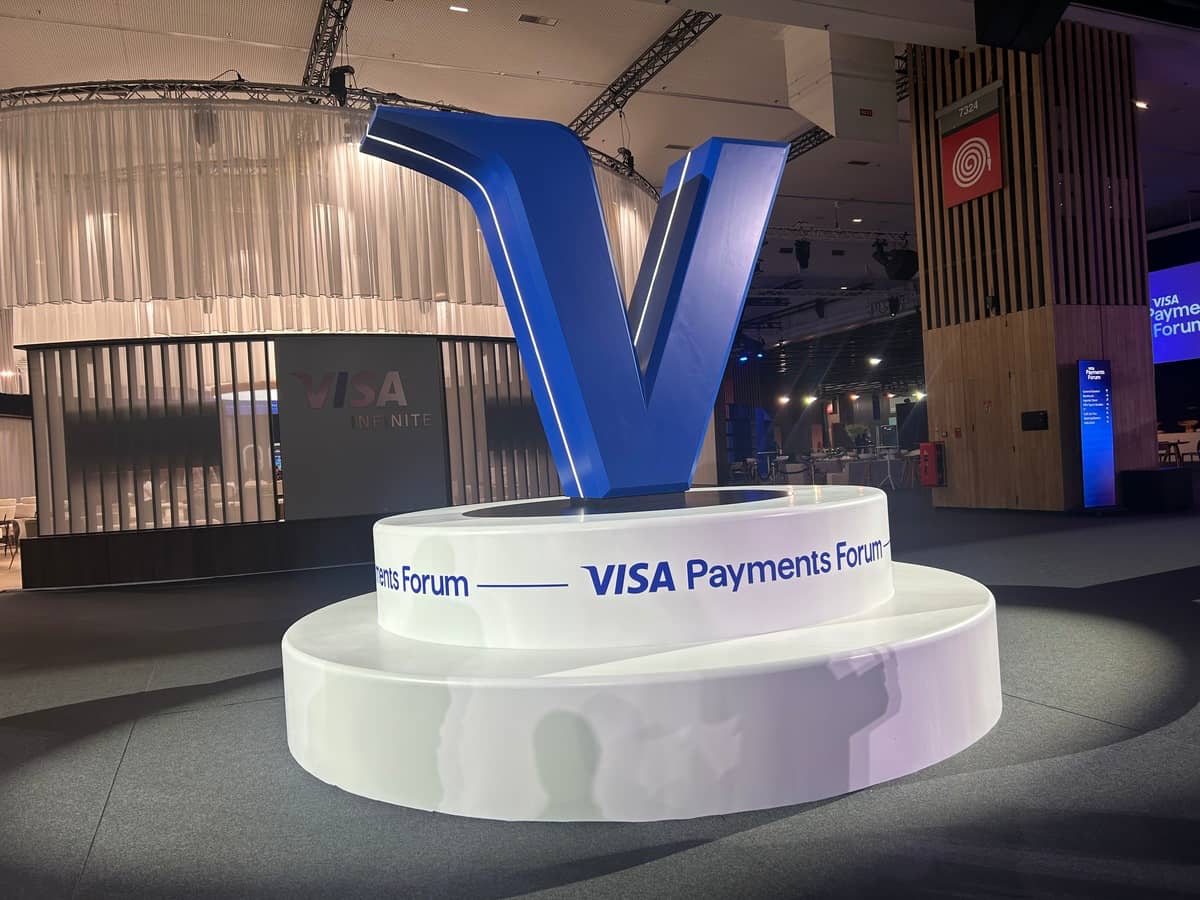
Over the past year Visa, Mastercard, OpenAI, PayPal and Google have all launched agentic-payment systems of their own, and Visa’s Intelligent Commerce Connect – in pilot since April 2026 – is designed, Visa says, to accept payments initiated across the main competing protocols: Trusted Agent, Machine Payments, Agentic Commerce and Universal Commerce.
The remaining work sits around the transaction, not inside it. Who the agent legally is, who pays when it buys the wrong thing, and whose fraud rules apply when a purchase runs through several parties are questions the industry has barely begun to answer, and none can be solved by one company shipping a product.
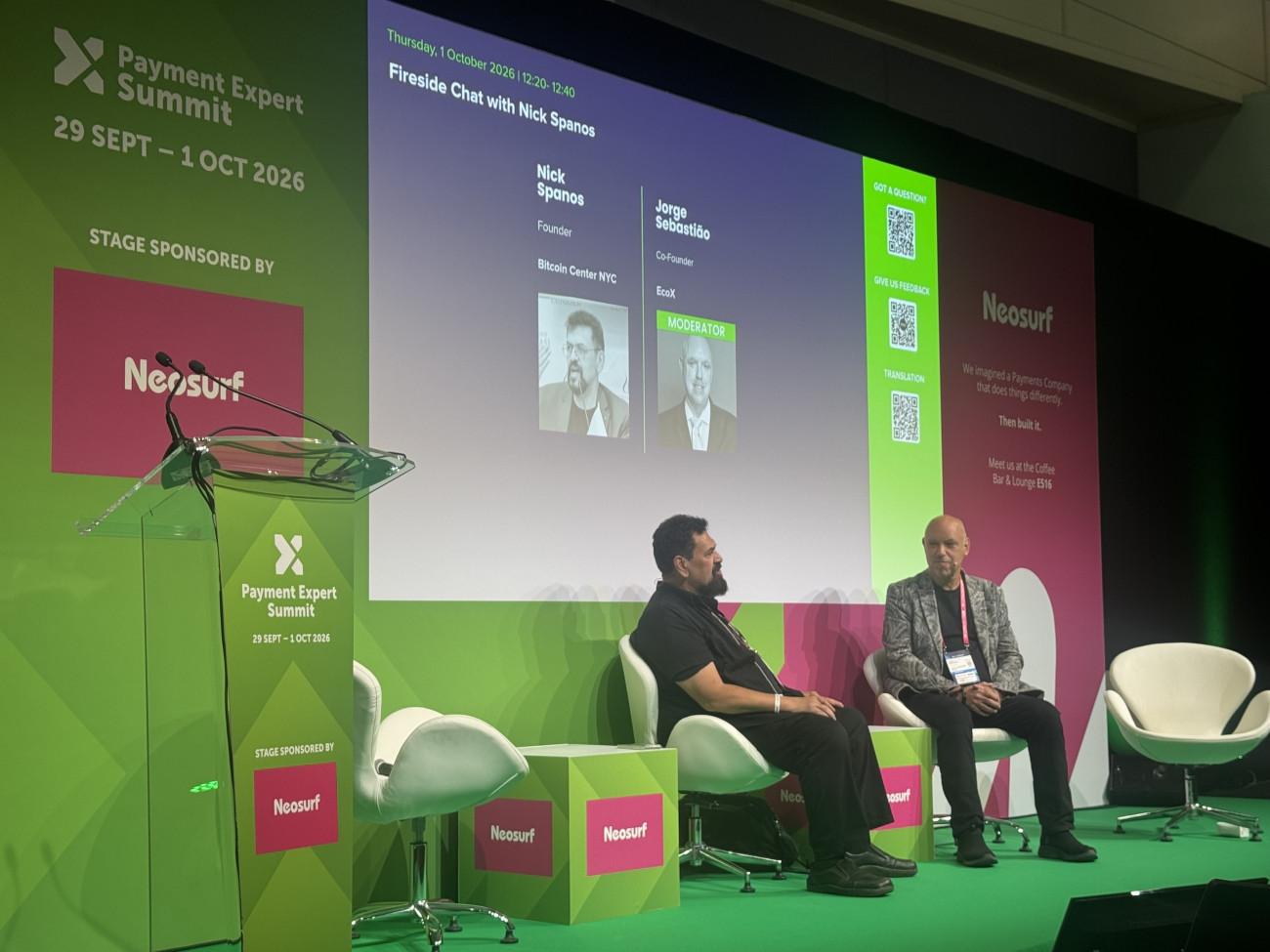
This was a core discussion point between three conversations Payment Expert held at Money20/20 Europe in Amsterdam, with executives from Worldpay (now a Global Payments business), Silverflow and Equals.

Robert Kraal, Co-founder of Silverflow, called the challenges facing agentic commerce today “a big puzzle”.
“Many pieces have been filled in, mostly on the technical side. From a technology point of view, we know what we can do, we know the gaps, and we know what still needs to be built. The rules around liability – what happens in the edge cases, the fault cases – that is still not clear for most cases.”
The standards race has no finish line yet
The standard approach to agentic commerce is not becoming clearer either, with every network and platform building an aggregation layer of its own, and new protocols are arriving faster than the industry can standardise the ones already in use.
James Simcox, Chief Product Officer at Equals, has watched the pattern before and expects it to end the same way.
“We’ll get to a point where there are two or three standards in use, and then it’s the Betamax versus VHS thing we all went through,” he said. Endorsements, he added, count for little in the meantime. “Even if you publicly say ‘this is my standard,’ you’re probably working on the other one behind the scenes, because someone’s going to win.”
Reshmi Suresh, Head of Agentic Commerce at Worldpay, now Global Payments, believes rather than waiting for one system, the industry should strive for mutual recognition, the way passports work across borders. ““It’s probably fine if different schemes have slightly different structured for agent verification, as long as they’re publicly available to look up against, and we know what goes into an agent being approved,” she said.
“If you’re making registries, make them public. What we want to avoid is 200 different closed registries, each needing its own contract to look up. That’s the nightmare.” Until this exists, the competing standards remain a coordination problem, not a technical one.
Who the agent is, and who pays when it errs
Beneath the debate about unified standards is another issue of identity; what actually is an agent in law? Should it be treated as an extension of its owner, where one set of liability and dispute rules applies? Or, should it be treated as a party in its own right?
Equals has settled on the second reading and works with identity provider Okta to enforce it. “The approach we’re taking, working closely with Okta, is that agents are like teammates,” Simcox said.
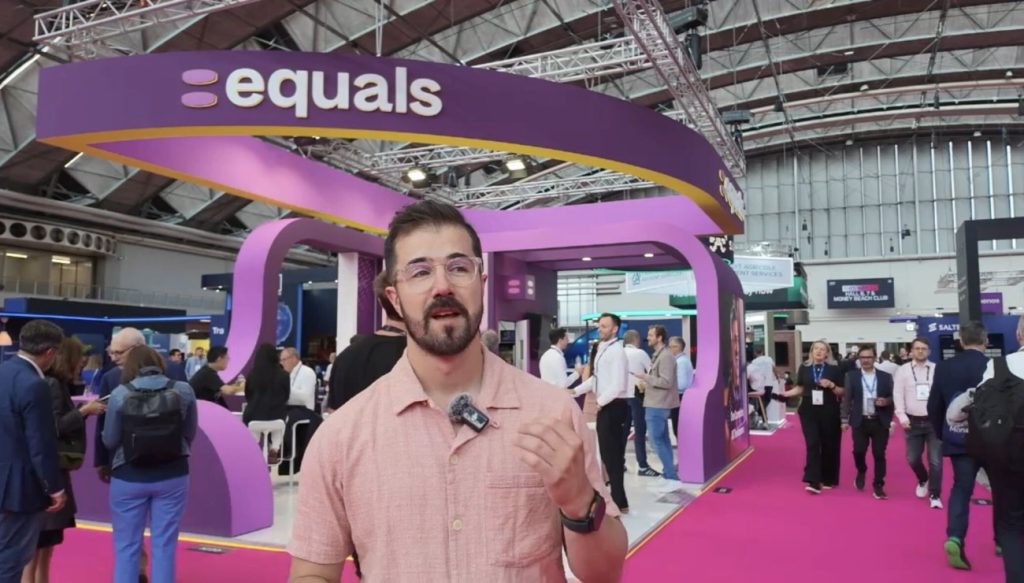
But a separate identity is only half the task. “Once an agent has an identity separate from you, the question is how you give it an authorisation framework in a way that also meets the regulators’ frameworks. Regulation very rarely leads in these spaces.” Simcox adds.
Worldpay reaches the same conclusion by a different route, assessing the human and the agent as two identities because multiple people could be using the same agent provider to build agents.
However, liability is where this approach meets its hardest test, and Kraal uses a holiday to show why.
Book a package through a travel agent and a cancelled flight sinks the trip; book the flight and hotel separately and the hotel still charges when the flight falls through. An agent blurs the line. “What happens if my agent does that?” he asked.
“Did I instruct it to buy a full trip, or is it making individual transactions? For me as a consumer it looks like a holiday. From a legal perspective, these are examples of edge cases around agentic commerce.”
Both he and Simcox expect the cost to land on the consumer, provided the agent acted within its instructions. “If I authorise an agent to spend a certain amount at a certain type of merchant and it makes the wrong choice, that has to sit with the consumer, because you said go and spend money in a certain place,” Simcox said. Shoppers have not been asked to accept the bargain yet, and it is the kind of question regulators settle rather than product teams.
Fraud built for humans, and merchants who move first
Agents also break the assumption fraud systems were built on, that any bot is a bad one. Suresh said the specialists she speaks to are relatively calm about malicious agents, because hostile bots are nothing new and the defences against them already exist.

The difficult move for merchants is that some bots now have to be let in. “It was easier when you were categorically blocking everything,” she said.
“Now, if you have to let in some parties, that’s where the difficulty comes in. Fraud protection was built for bots. The evolution now is that you have good bots among the bad ones.”
Simcox sees a newer exposure, one the victim signs off themselves. He expects fraudsters to run agent platforms that people authorise and then abuse, producing “a whole new type of authorised agentic fraud” which mirrors the authorised push payment scams banks already struggle to contain. Kraal frames the same danger as account takeover moving up a level, to the agent itself.
No regulator is forcing merchants to prepare, but competition will. “If I need to buy a pair of trainers and the agent has three choices, and only one supports agentic commerce, it’s going to use that route, because it’s easier, quicker and cheaper,” Simcox said.
He expects platforms such as Shopify to switch it on across their seller bases at once, dragging the rest of the market along, with a discipline he calls agentic SEO forming around being the merchant an agent picks.
For merchants, Suresh feels they should try the tools now rather than wait. “Go on Gemini or ChatGPT and search for your product,” she said. “If you sell white shoes, ask to see some white shoes and see where you show up. If you do, you’re already ahead. If you don’t, that’s your baseline.”
She doubts agentic commerce will surpass website-based commerce in the next few years, given Europe’s regulatory load, but regards even a few per cent of e-commerce as too large to ignore for agentic commerce not to become a more dominant force in the near future.