The new US dollar-backed stablecoin, OpenUSD, issued by OpenStandard is redefining stablecoin governance, issuance, yield and accessibility for global payment acceptance.
Marc Boiron, CEO of Polygon Labs, Radi El-Haj, CEO of RS2, and Ron Tarter, CEO of MNEE Pay, spoke to Payment Expert on how the stablecoin market’s latest arrival bucks the trend of common practices and if its 140 global backers can breakthrough the consumer adoption barrier that has plagued stablecoin payments.
At the end of June, one of the most significant stablecoin developments occurred when 140 of some of the largest companies in the world helped create a new stablecoin; OpenUSD.
The US dollar-denominated stablecoin will be issued by Open Standard, a consortium led by founding CEO Zach Abrams which is seeking to address several stablecoin friction points and compete with the two stablecoins currently dominating the market.
Its backing is seismic. Payment leaders such as Visa, Mastercard and Stripe sit on the consortium board, alongside crypto veterans like Coinbase and Ripple. Private equity giants like BlackRock, and even big tech firms such as Google and Samsung, are just a few of the names that will support the issuance and distribution of OpenUSD.
This type of backing suggests that companies want a stablecoin to support their global money movement ambitions, and Open Standard is aiming to deliver that.
How OpenUSD is flipping the stablecoin script
Expected to launch in late 2026, OpenStandard wants to redefine what stablecoin issuance is and how companies can be rewarded in yield reserves.
OpenStandard will issue OpenUSD under partner-led governance as opposed to a sole entity, such as Circle’s issuance of USDC. OpenStandard stated this allows companies to make decisions “for the collective interest” of OpenUSD.
The consortium believes open governance will help build greater adoption for OpenUSD as it will become a shared financial asset to become adaptable to many financial markets and industries.
The stablecoin comes with zero fees attached to minting (purchasing) and redeeming (cashing out). Contrast this to USDC, it does not charge for minting but has fees for monthly redemptions exceeding $40m. With USDT, Tether charges 0.1% for minting and 0.1% for redemptions exceeding $1,000.
OpenUSD reserves are held at major financial institutions, similar to Circle which also holds USDC reserves separately in a Circle Reserve Fund. Tether’s USDT reserves are held in short-term bills with the US Treasury operated under a reverse repurchase agreement.
Speaking to Payment Expert, Marc Boiron, CEO of Polygon Labs – part of the OpenStandard consortium, believes the collaborative governance will enable stablecoins to evolve further into the future.
“With most established stablecoins, the issuer sets the terms and the businesses driving the volume have little input into the economics or the direction of the product,” said Boiron.
“OpenUSD is designed around the opposite premise, minting and redemption cost nothing, reserve yield is shared with the partners generating the volume, and governance gives them a real say in how the stablecoin evolves.”
With how OpenStandard has positioned its stablecoin as an alternative to USDC and USDT with different policies on governance, minting, redemption and issuance, Boiron expects OpenUSD to have “real staying power”.
“For a large company moving serious payment volume, that alignment is the reason to look closely at this model,” continued Boiron. “Pair it with deep liquidity and real infrastructure investment and you have a stablecoin with real staying power.”

Incentivising OpenUSD usage: shared yield reserves
OpenStandard is promising a new economic model that is built on sharing all of its reserves with the companies part of the consortium, and that means more yield to be earned.
The best way to incentivise companies such as Visa and Google to use OpenUSD is to not only allow authorisation of how it can be used for global payments, but to be rewarded with yield through the distribution of the stablecoin.
Whereas companies such as Circle and Tether have enabled yield tied primarily to the underlying dollar reserves that are 1:1 backed to be distributed to its central reserves, OpenUSD’s yield distributes across all of its partners and distributors.
This yield reserve policy once again bucks common stablecoin standards. OpenStandard is focusing on rewarding the use of OpenUSD to be passed onto banks, fintech firms, crypto exchanges in which they can then provide it to their clients and merchants.
Radi El Haj, CEO of RS2, told Payment Expert OpenStandard’s attempts to flip the script on stablecoin yield comes as no surprise with so many of the largest companies in the world interested in building a global network that supports its distribution, and rewards them in the process.
“Reserve yield is the actual business model behind most stablecoins – it’s how issuers make money while promising users a ‘free’ dollar,” says El Haj.
“Splitting that yield across 140 partners only works if volume is enormous, which tells you these companies think this is going to get very big, very fast.”
Unlocking stablecoin payment, and consumer, demand
With no minting or redemption fees, this opens avenues for both businesses and consumers to hold micro amounts of OpenUSD to hold and use without the constraints of being unable to use it for payments, with liquidity becoming more accessible for merchants.
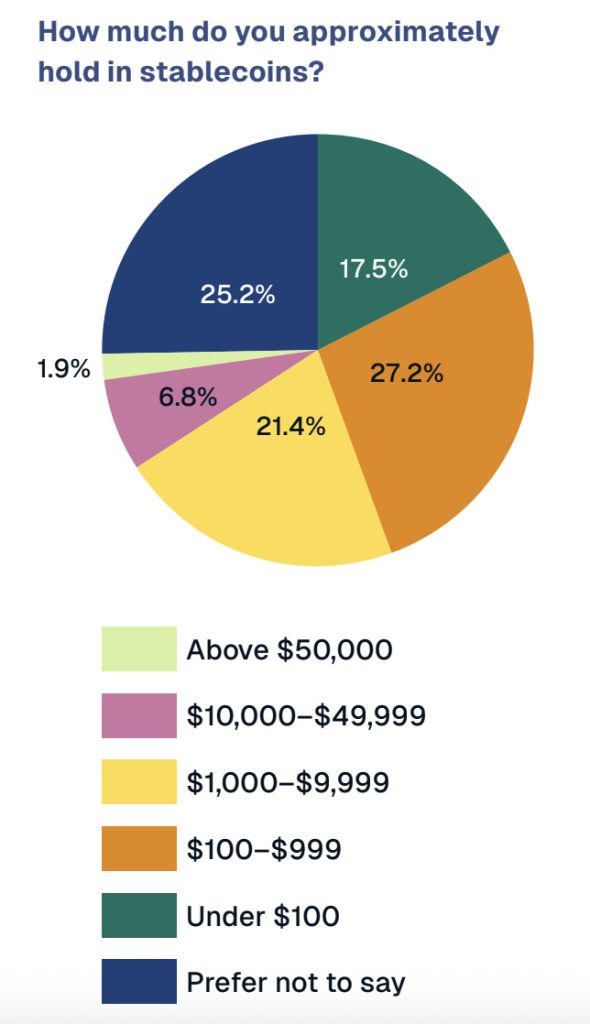
A recently launched report from MNEE Pay, a stablecoin infrastructure firm, revealed 62% of American stablecoin holders converted their stablecoins back into US dollars due to merchants not being able to accept it as payment.
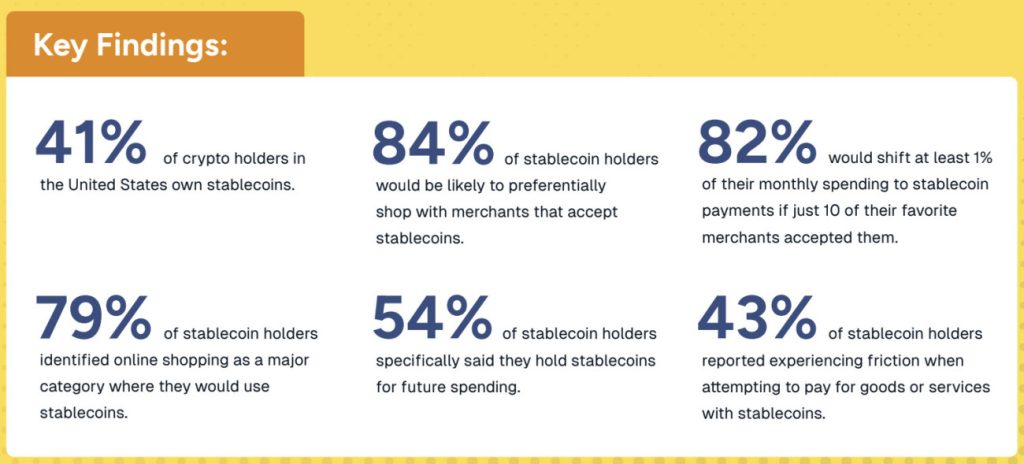
Idle stablecoin reserves have benefited holders in the US due to the yield on offer from the distributors. But with the US GENIUS Act banning interest-bearing yield on consumer holdings, consumer adoption could potentially dwindle.
While MNEE Pay’s report revealed 49% survey respondents admitted to holding stablecoins to earn yield, 54% stated they are going to use their stablecoins for future spending.
Herein lies the opportunity for OpenStandard – create a network amongst its 140 global companies that have access to hundreds of millions of businesses and merchants to distribute OpenUSD and make it available to be accepted as payment at the checkout.
One of the OpenStandard partners, Visa, is already looking to develop OpenUSD use cases. As part of its newly launched Visa Stablecoin Platform, the company will use OpenUSD to become compatible with its Wallet-as-a-Service function for clients to onboard and use the stablecoin for payment flows and liquidity management.
“Firms like BlackRock, Stripe, Coinbase, and other major participants already reach millions of users, businesses, institutions, and developers, giving the consortium an opportunity to drive adoption at a scale that few new entrants could hope to match,” says Ron Tarter, CEO of MNEE Pay.
“If these organisations are driving the initiative, OpenUSD has a credible chance of competing with today’s dominant stablecoins.”
Does OpenUSD regulatory align?
OpenStandard has hundreds of large financial institutions with strong regulatory compliance teams with shared knowledge of the regulatory landscape.
This landscape is rapidly shifting, as the US has already passed the GENIUS Act into law with the CLARITY Act set for a Senate vote in August before it can be passed onto President Donald Trump to sign into law.
In Europe, the Markets in Crypto Assets (MiCA) is now in full effect and its stablecoin guidelines has already seen Tether pass on being compliant with the rules, whilst Circle made it a priority to become the first stablecoin issuer to gain regulatory approval.
For OpenUSD to grow mass distribution and adoption in a regulatory new age for stablecoins, it must be compliant with the various global regulations.
In the US, it has been purpose built to be compliant with the GENIUS Act; 1:1 reserve backing, reserves held by regulated financial institutions, and monthly public reserve disclosures with audited financial statements.
The future of what will be passed into law within the CLARITY Act creates an interesting narrative for the future of stablecoins in the US.
Since the start of the year, US banks have lobbied for a ban on interest-bearing yield held by crypto exchanges and affiliates, arguing it would cause deposit flight. But what if OpenStandard consortium members, such as US Bank, can benefit from reserve yield facilitating OpenUSD distribution and transactions?
Banking officials will no doubt hold firm on their stance over consumer-held yield, which can be argued acts as a consumer incentive to withdraw fiat deposits into stablecoin holdings. However, when yield can be distributed among a partner-led governance policy to incentivise payments, this adds another layer to CLARITY Act discussions that have already dragged on longer than expected.
The competitive edge the stablecoin market needs?
OpenStandard is positioning its stablecoin as a global money movement currency that is regulatory compliant to be distributed among some of the largest companies in the world.
This distinction for the longest time lied with Circle’s USDC, placing emphasis on large reserve pools to be used for payments use cases with a regulatory-first approach across multiple markets.
“The market is not starting from a blank slate. Incumbents like Tether and Circle have built enormous head-starts,” says Tarter.
With a combined market capitalisation of $257bn, USDT ($184bn market cap) and USDC ($73bn market cap) have been the undisputed number one and two stablecoins in the market.
This type of market power has caused foreign markets, such as Europe, to question its sovereignty if mass adoption of US-backed stablecoins can cause digital dollarisation and impact its plans for its own digital currency.
And OpenUSD is not a guaranteed success. It still has years to make up ground on the market caps of USDT and USDC and while its global, partnership-led backing of companies may be an advantage, it may also become a hindrance.
“The biggest challenge will be execution,” continues Tarter. “Large industry consortiums often struggle to move quickly because coordinating multiple stakeholders can slow decision-making and product development.”
OpenStandard now has a task on its hands to mint and issue OpenUSD to its leading partners in large volumes to ready the stablecoin for pilot programmes and develop payment use cases.
If the liquidity pool of OpenUSD can move at the same pace as any future demand for a stablecoin that incentivises payment usage, it could become a viable competitor to USDT and USDC.
“In a market that evolves as rapidly as digital assets, speed matters,” concludes Tarter. “Some of the consortium’s leading participants (particularly BlackRock and Coinbase) have demonstrated an ability to execute efficiently within the crypto ecosystem.
“If these organisations are driving the initiative, OpenUSD has a credible chance of competing with today’s dominant stablecoins.