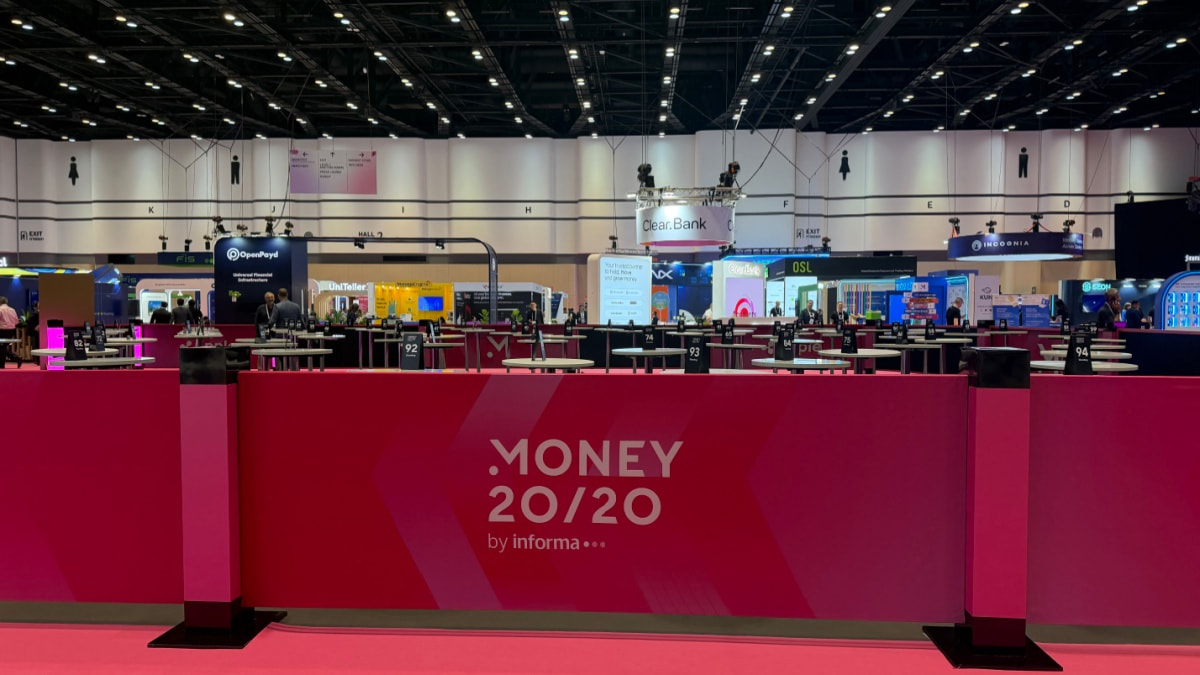
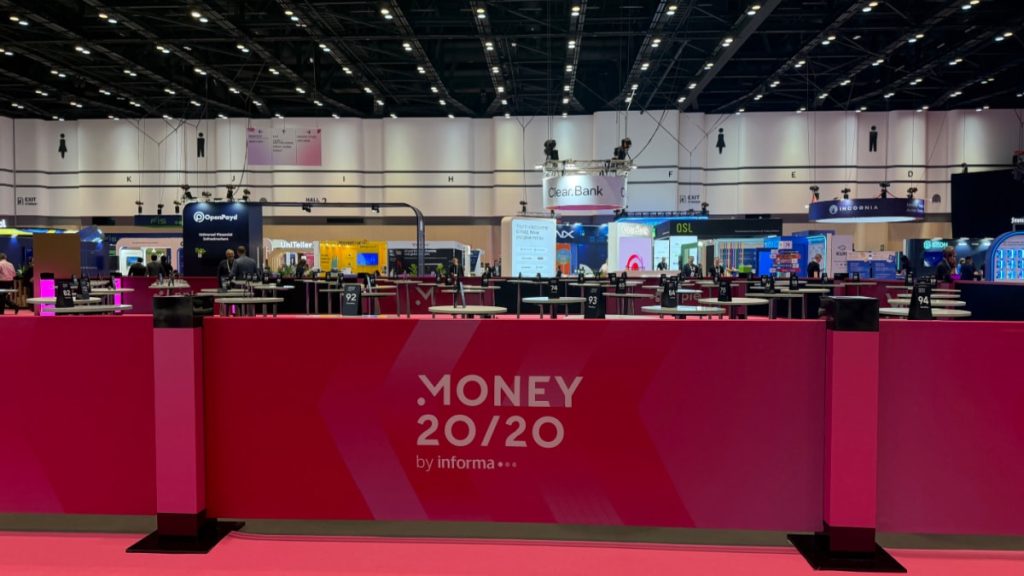
Bangkok hosted Money20/20 Asia last week, inviting banks, fintechs and regulators to discuss the future of payments.
Asia is one of the world’s most unique markets, with Singapore pushing ahead on stablecoin regulation, India a benchmark for instant payments, and China continuing to influence consumer behaviour through its super‑apps.
Despite this progress, fragmentation is a huge challenge. Markets are progressing at different speeds, regulatory approaches vary, and cross‑border interoperability isn’t frictionless, making Asia a region others are watching for innovation and lessons learned.
Here are Payment Expert’s five key takeaways from Money20/20 Asia.
1. Cross-border payments are disconnected
Cross-border payments were one of the most discussed topics across all three days of Money20/20 Asia, with the industry searching for a solution to fragmentation.
Interoperability appears to be the biggest hurdle – not a lack of infrastructure – with leaders noting domestic payment systems across the region are highly efficient; though this efficiency does not translate across borders.
In one session, Rachel Whelan, APAC and MEA Head of Corporate Cash Management at Deutsche Bank, highlighted the reality on the ground, noting that in some markets “the beneficiary has to show up to its branch in person just to prove the payment is there”.
While emerging technologies like blockchain were put forward as a fix, there was scepticism about their ability to solve everything. Devedra Verma, Business Lead for Digital Assets at Swift, stated “existing rails are not as bad as people think”, pointing instead to persistent challenges such as operating hours, FX and liquidity.
With no single solution in place, attention is turning to how systems can better work together. Wenhui Yang, CEO of TenPay Global (Singapore, Tencent), suggested localisation could be the answer, explaining that users expect to use their domestic payment methods abroad.
The next step, he added, could be building a layer which connects these systems, allowing cross-border payments to feel the same as those at home.
2. Stablecoins as infrastructure
It wouldn’t be a payments event without stablecoins on the agenda, as has been the case for the past couple of years. However, there was a noticeable change in how people spoke about them this time. Panels and several press announcements saw the focus shift to how stablecoins can be, and already are, being embedded into payment systems.
While in Bangkok, dLocal enabled stablecoin payouts across emerging markets and Coins.ph launched QR-based stablecoin payments in the Philippines. It seems that the experimentation phase might be over.
Paul van Sint Fiet, Head of Cross-Currency Solutions, APAC at J.P. Morgan, said the “ultimate goal” is for stablecoins to be integrated into the current stack, adding that in five years “we won’t be talking about stablecoins, we’ll just be moving funds”.
However, questions around regulation, FX and multi-currency settlement are still being worked through, with speakers acknowledging the industry is still in its early stages.
3. AI… now comes the hard part
AI was impossible to ignore at this year’s event. Across banks, fintechs and infrastructure providers, the conversation was about how quickly it can be scaled safely and effectively. Some speakers still brought the hype, though; Roger Wang, VP of Huawei’s Digital Finance BU, said “AI is going to be the next big thing”, while also warning that firms risk missing out if they hesitate too long.
At the same time, financial institutions are already feeling the operational impact. Standard Chartered’s Craig Corte pointed to a “significant change to the back office”, sharing how AI is being used across data, digital channels and internal systems.
However, scaling these capabilities is a huge hurdle. Pedro Uria-Recio of CIMB noted that while AI tools are now widely accessible, banks face the complexity of deploying them across large customer bases.
Risk management also sits at the heart, as Pichet Durongkaveroj of Bangkok Bank stressed that “risk management must come first”, particularly as AI integrates into more customer-facing roles.
AI may feel like it’s been around for some time now, but Money20/20 Asia suggested the hardest phase is only just beginning.
4. Innovation is outpacing trust
If there was one recurring tension last week at Money20/20 Asia, it was the gap between the speed of innovation and the pace at which trust is being built. AI, stablecoins and agentic commerce are developing quickly, but confidence in these innovations isn’t.
Fangfang Jiang, Regional Lead for Digital Financial Services at the International Finance Corporation, highlighted the need for “accountability, client protection and technological maturity” before new financial technologies can be widely adopted, stressing the importance of building safeguards in parallel to innovation.
Visa’s Abhijeet Ramesh introduced the idea of “Know Your Agent”, saying that as AI agents begin initiating transactions, the industry needs a way to verify who or what is acting on behalf of a user. He noted that banks, merchants and networks all need confidence in these new actors before adoption can scale.
Speakers also noted the rising security risks, with Navin Gupta of Crystal Intelligence warning that new technologies inevitably attract bad actors.
Even newer concerns, such as quantum computing, were raised as a longer-term threat to cryptographic security, with speakers saying that encryption vulnerabilities could become a serious issue sooner than expected.
5. Payments are becoming a data-driven ecosystem
Payments are more and more influenced by data, with transaction information becoming a significant part of how financial services are designed, delivered and scaled. Speakers at Money20/20 Asia highlighted how real-time data is already changing decision-making across the industry.
Jessie Toh, VP and Global Treasurer at Coda Payments, brought up how improved transparency is enabling money to move earlier and reducing delays previously caused by limited visibility across the payment chain.
Open finance is where the connection between data and payments becomes strongest. With deeper datasets, lenders can build “a more granular and predictive credit assessment”, Ida Tiongson of Opal Portfolio Investments said, giving them better insight into customer behaviour and risk.
However, speakers warned against assuming more data automatically improves outcomes. Moritz Gastl of Tala Financing Philippines said that “every additional data point becomes less useful” if it is not applied effectively, emphasising the importance of meaningful data use over sheer volume.

More from Money20/20 Asia
For more details on each day’s discussions and announcements, you can read Payment Expert’s daily coverage below: