Asia may look like it operates without card payments, but the rails underneath tell a very different story.
In parts of Asia, paying by card can feel oddly out of place.
In Singapore, customers scan QR codes for coffee before the barista has finished pouring it. In Bangkok shopping centres, digital wallets sit more prominently at checkout than international card logos. Across Manila, market stalls, restaurants and convenience stores often display entire walls of accepted payment methods, many tied to domestic real-time payment systems.
For governments and regulators in the UK and Europe attempting to reduce dependence on Visa and Mastercard, the region can appear to offer a glimpse of a post-card future.
And who would blame them? At first glance, it is easy to see why: QR payments and account-to-account transfers have become so embedded in everyday commerce across parts of Asia that card payments can appear almost secondary.
Yet beneath the surface, card infrastructure remains deeply woven into how transactions are processed, routed and secured across the region. In many cases, the global card schemes are still powering the very systems that appear to be replacing them.
QR growth meets card reality
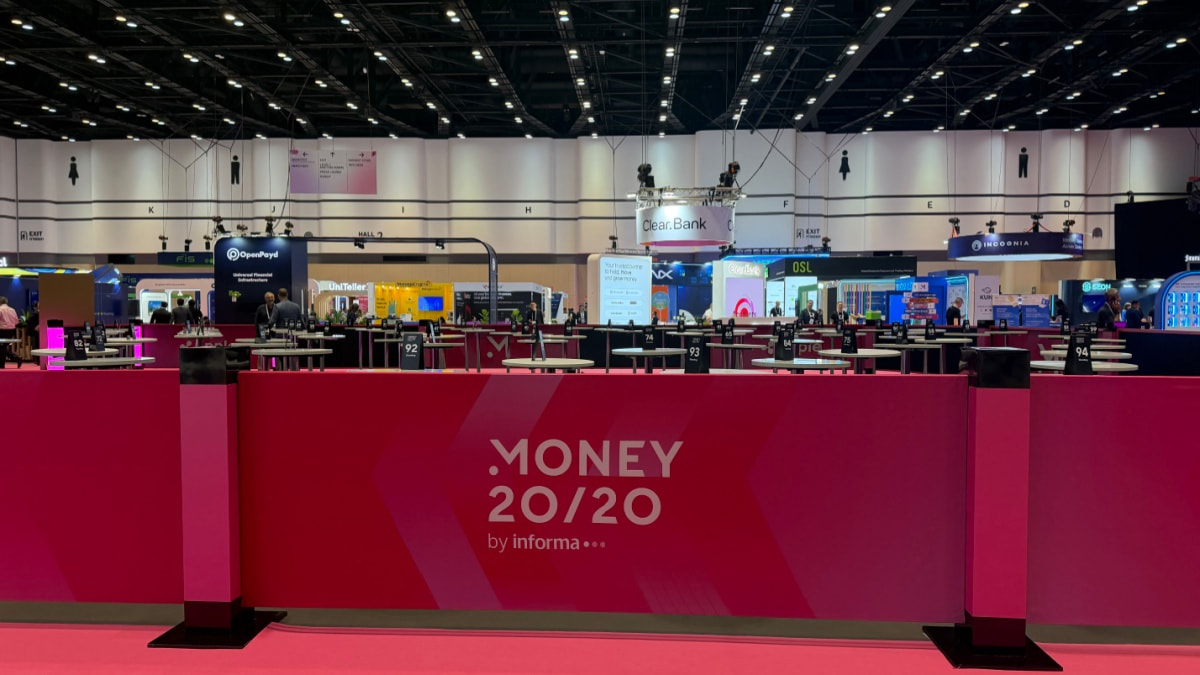
Speaking to Payment Expert on the sidelines of Money20/20 Asia earlier this year, Andrew Murray, Head of International Banking and Payments at FIS, says QR code adoption across Asia has moved in tandem with the region’s move towards instant payments and digital commerce.

He explains merchants benefit from receiving funds immediately, reducing delays between payment and settlement and, of course, reducing costs by cutting out layers of fees and intermediaries.
It is easy to see why consumers have also made this their preferred way to pay. In many Asian markets, a mobile-first culture has allowed QR payments and digital wallets to become embedded into their daily lives.
Consumers are also presented with far more choice than users in many Western markets, with local schemes and wallets competing for adoption rather than relying on the kind of duopoly Europe and North America have become accustomed to.
As traditional banking infrastructure lagged, countries throughout Asia created localised mobile-first systems tailored to their own populations and backed them with initiatives designed to encourage adoption. However, the sheer number of payment options has also created fragmentation.
Murray notes consumers in Asia are now faced with a growing number of wallets, schemes and payment options, many of which work well domestically but create friction once users travel or attempt to pay across borders.
This fragmentation places pressure on merchants, who must support multiple payment methods to ensure customers can transact comfortably and is often the reason why payment signs resemble a tattoo book of fintech logos.
Whatever criticism is directed towards Visa and Mastercard, their universal acceptance still gives them a significant advantage in this environment. Jeff Parker, CEO at Paymentology, says card networks are “massive and growing” across the region despite the prominence of QR codes and alternative payment methods.
“I think it sits alongside the QR payment schemes,” Parker tells Payment Expert.
He explains cards continue to play an important role in use cases such as stablecoin-backed spending, payroll, and cross-border transactions, particularly in underbanked markets.
Cards are hiding in plain sight
So while physical cards may appear less visible in Asia, the infrastructure behind them is embedded directly into the digital experiences consumers already use. Parker explains payments are becoming less about the instrument itself and more about how naturally they fit into consumer habits and digital behaviour.

“The digital experience now is actually almost the differentiator,” Parker says.
Rather than forcing users towards a specific payment method, payment providers are increasingly adapting to the ways consumers already prefer to transact. In Asia, that often means embedding card infrastructure into wallets, apps and QR-based experiences while removing the need for a physical card.
Parker says the flexibility of cloud-based and API driven infrastructure allows payment providers to support these embedded use cases far more effectively than legacy systems.
“It’s actually the underlying technology that allows you to create great apps on top of it,” he says.
Virtual cards have also become increasingly important, particularly in travel and ecommerce, where instant issuance and stronger fraud controls make them well suited to digital environments.
At the same time, card infrastructure is operating across multiple rails in ways consumers often do not notice. Parker explains that domestic schemes and international card networks are increasingly working alongside each other rather than competing directly.
“I think the trend for local domestic schemes will continue, but that doesn’t stop cards. Those local schemes will use cards as well,” Parker says.
Parker explains many cards now operate as what the industry refers to as ‘dual badged cards’, where both international and domestic schemes sit on the same card and routing happens automatically depending on where the transaction takes place.
“And so when you tap your card, it will automatically decide. If it’s in that country, it will use the local domestic scheme. If you’re overseas, it will use Visa or Mastercard,” he explains.
Where the real competition now sits
As cards disguise themselves as QR codes, the next battle will likely be fought in orchestration, with routing and fraud protection becoming even more important as payment methods continue to multiply.
Both Murray and Parker say the fight is already underway, with Murray highlighting AI-driven reconciliation and real-time processing becoming standard across Asia, while Parker describes fraud as “probably the number one conversation we have with all clients”.
The challenge, he notes, is balancing rising fraud sophistication with the need to keep approval rates high. “The one way to get rid of fraud is to accept no transactions,” Parker says. “But that’s not very business-friendly.”
QR payments may define the checkout experience, and local schemes continue to expand, but the infrastructure behind cards still carries a level of maturity, reach and interoperability that newer systems are working towards.
What looks like displacement at the point of sale is, in reality, a layering of systems, with different payment methods serving different roles depending on context, geography and use case.