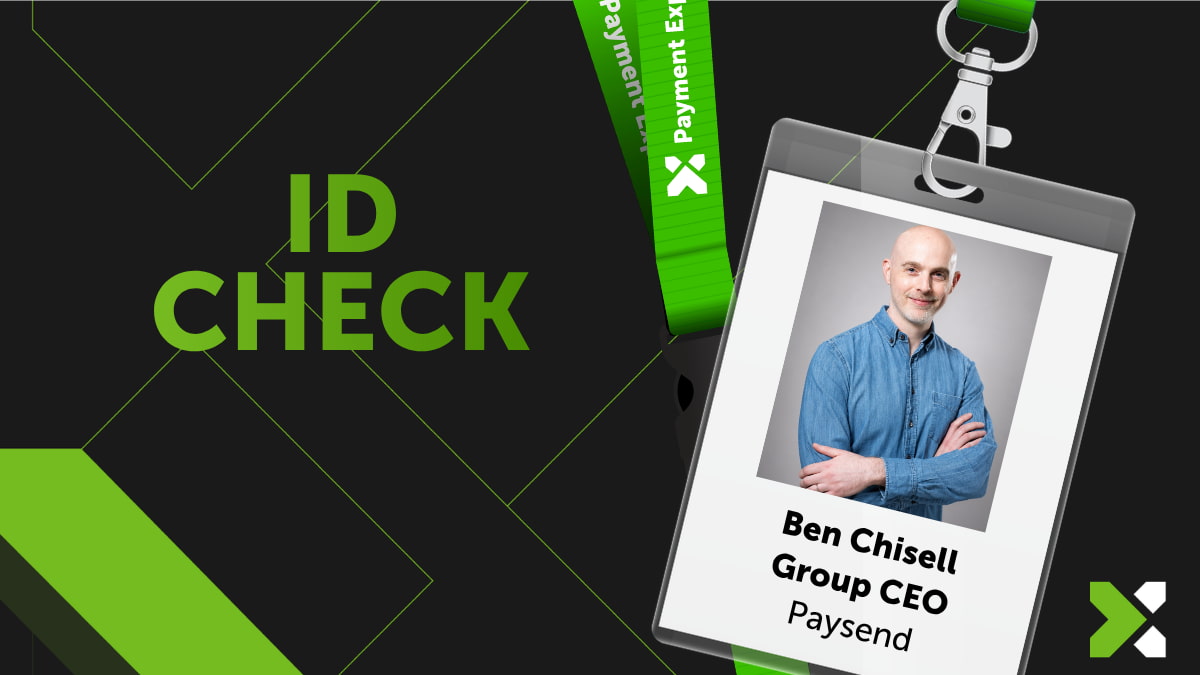
Payment Expert’s ID Check: Payments Professionals offers insight from industry leaders and experts on how they got their start in the financial industry, from their early years in education, to how they have been able to climb the corporate ladder.
The second year of ID Check: Payments Professionals has come to an end and Payment Expert has spoken to a variety of people from a variety of roles and companies, from CEO’s of startups, to specialised roles at high-profile companies.
In part two, payment executives share some of the key skills they believe are essential to work in the industry, while also sharing some of their highs and lows and why these shaped who they are today.
When was your first big break in the industry? Why was this such a significant moment for you?
Holly Coventry: The pivotal moment was when I was asked to lead the development of Pay with Bank Transfer – Amex’s Open Banking powered payment platform.

I think I was chosen, at least in part, because of how I had previously demonstrated a desire to take on a challenge – I’m never afraid to try something new and bring a fresh perspective to it.
When I was seconded to the project, Open Banking was still in its infancy. I had six months to build the product, secure a launch partner, and prove its potential. It was a typical start-up journey, which may sound surprising for a business as established and well known as American Express. It was a true test of balancing instinct and experience with rigorous planning and execution to ultimately make it a success.
It proved to me how important tenacity, perseverance, and belief in what you’re building is to success. That experience defined my career and reinforced my love for innovation and challenge.
Jayne Sibley: Appearing on Dragon’s Den was a defining moment for us. The exposure was astounding – not only did it help give us instant credibility (thanks to Sara and Deborah’s investments), but it helped introduce Sibstar to a much wider audience, opening doors to communities we hadn’t even anticipated.
Almost overnight we were reaching people who needed our solutions the most and having conversations with industry leaders who could help us scale. I never expected to feature on Radio 4, but that’s the power of moments like this.
Benjamin Avraham: After years of working with businesses and banks, I recognized a fundamental gap in the financial ecosystem that no one was addressing. On one side, currency volatility is a universal challenge—impacting businesses of all sizes and industries. On the other, banks lacked the deep technological capabilities to manage FX risk at scale, relying instead on human expertise and trading desks.
This realization led me to build okoora, a platform designed to bridge this gap. For businesses, okoora provides a fully integrated financial ecosystem—from multi-currency wallets and payments to cash flow management and procurement—all seamlessly embedded with FX risk management tools. For banks, we deliver advanced modular solutions that replace traditional FX dealers, enabling them to serve a much broader range of clients through technology-driven automation.
This was my breakthrough moment—understanding that the future of finance wasn’t just about offering better trading tools but about redefining the financial infrastructure that businesses and banks rely on every day.
Was there a moment you faced in the industry that really challenged you? How did you overcome this?
Chris Smith: The moment I realised my target of becoming CEO, which was the next promotion for me, was not going to give me what I wanted, despite having worked twenty years to achieve it, was pivotal.
The closer I got to the steering wheel, the more I realised I would only be able to amend the organisation’s direction by a small fraction. The system was simply too rigid. The ability to completely rethink how a bank worked for the average person and how it could solve major societal problems was not something I was going to be able to do, even as CEO.

That realisation triggered a huge mid-life crisis for me. Everything I had worked toward, and all the sacrifices I had made to reach that point, suddenly felt meaningless. It took me two years to fully come to terms with this inevitable outcome.
Ultimately, this led me to make one of the biggest decisions of my life: to leave banking, step away from the comfortable corporate job, and venture alone into the world of entrepreneurship, without knowing when I would next get paid, which is a big deal when you have six kids!
Despite the obvious nerves and risks of making this decision, I felt truly free and ready to build the new financial system, one where everyone wins.
Nick Jones: The crypto winter of 2023-2024 and the two years that followed the financial crisis of 2008 have been the biggest challenges I’ve faced as a business owner.
In both cases, the macro environment was unbelievably challenging and the only way to navigate it was to control the controllables and then be as resilient as possible. Surrounding yourself with equally resilient people with different skills but the same values was the other key strategy.
Mark Fieldhouse: Drawing on my experience working in technology, I worked for Tivoli Software, which was a startup at the time. It’s quite an amusing story about how this job offer came about. I was at IBM on a work trip, running on a treadmill in a gym. Someone next to me started talking to me about work. He then asked if I wanted to join a startup based in Austin, Texas. This was a challenge, as I’d never worked for a startup at the time.
So, I accepted the offer, left IBM, and went to live in Austin. This was a cool experience as it gave me the taste for scale up companies. Subsequently, IBM then acquired Tivoli Software – small world!
What are some of the skills you deem essential to starting in your industry and how have yours developed over the years?
Justin Pike: Risk tolerance is a big one. When starting a business in this industry, risk is an essential part.

Taking more risks increases your risk appetite, and it’s an essential part of breaking down industry barriers. When the rules don’t allow you to develop or introduce your project, my experience has taught me that you need to make new rules and standards, or bend existing ones if you really believe your product will bring about meaningful industry changes. As long as you believe in what you want to do, you’ll achieve it.
Risks should be calculated, and learning from the challenges of your previous ventures is essential, especially when building something new.
Thomas Gillan: Payments are incredibly complex, so patience and a willingness to learn are essential. It takes time to understand all the different touchpoints and actors in the payments ecosystem. It can still be a challenge for our business. When we recruit people – the BR-DGE Builders – we’re trying to get their knowledge base to a place where they can call themselves experts, and that takes time and patience.
In payments, understanding data is key so my background in finance has been helpful because it’s a numbers and data-driven industry.
I’ve also learned the importance of the end-customer experience. Consumers may have a really good browsing experience to the basket, but as soon as you get into the checkout, you have to type in your card details, address and so on, and as a customer it’s massively frustrating. Payments are a critical part of the customer journey; making it personalised and frictionless is no longer a nice to have.
Julie Sutton: For anyone starting in this industry, I think curiosity is essential. Having the drive to ask questions and really understand how things work. Alongside that, listening is hugely important, because so much of what we do is about understanding client needs and reading between the lines.
Early on, I also learned the importance of multi-tasking, but over time I’ve balanced that with giving myself space to think. One of the biggest skills I’ve developed is knowing when a situation calls for a fast decision and when it’s worth slowing down to take a more considered approach.
Lastly, what is some advice you would give to an aspiring person looking to get a start in your respective industry?
Rishi Patel: Start by building depth of knowledge, whether through formal education, industry experience, or hands-on roles in start-ups. Be prepared to work hard, wear multiple hats, and embrace uncertainty – because in fintech, the rules are still being written. Surround yourself with mentors, networks, and peers who can challenge your thinking and support your growth.

And most importantly: don’t be afraid to challenge convention. The industry needs people who are willing to question the way things have always been done and who can bring fresh ideas to complex, global problems.
If you can combine innovation with integrity, you’ll find yourself not just in a career, but in a position to help shape the future of finance.
Zaki Farooq: Don’t just chase money – chase impact and believe in yourself. Build something meaningful, something that lasts. And don’t be afraid of setbacks.
I’ve had successes and also failures, but what defines me is that I always come back stronger and have the will to succeed and prove doubters wrong.
Aymeric Monod-Gayraud: Just do it. Overthinking kills more ideas than failure ever will.
Michael Jordan put it best: “I’ve failed over and over and over again in my life. And that is why I succeed.”
Entrepreneurship works the same way – you take the shot, you miss, you learn, and you take the next one, all to give yourself a real shot at winning big. The only real difference between those who make it and those who don’t? The ones who make it… they keep shooting.