Alipay and WeChat Pay transformed mobile payments from a banking function into an everyday digital behaviour, helping China become the world’s leading super app economy
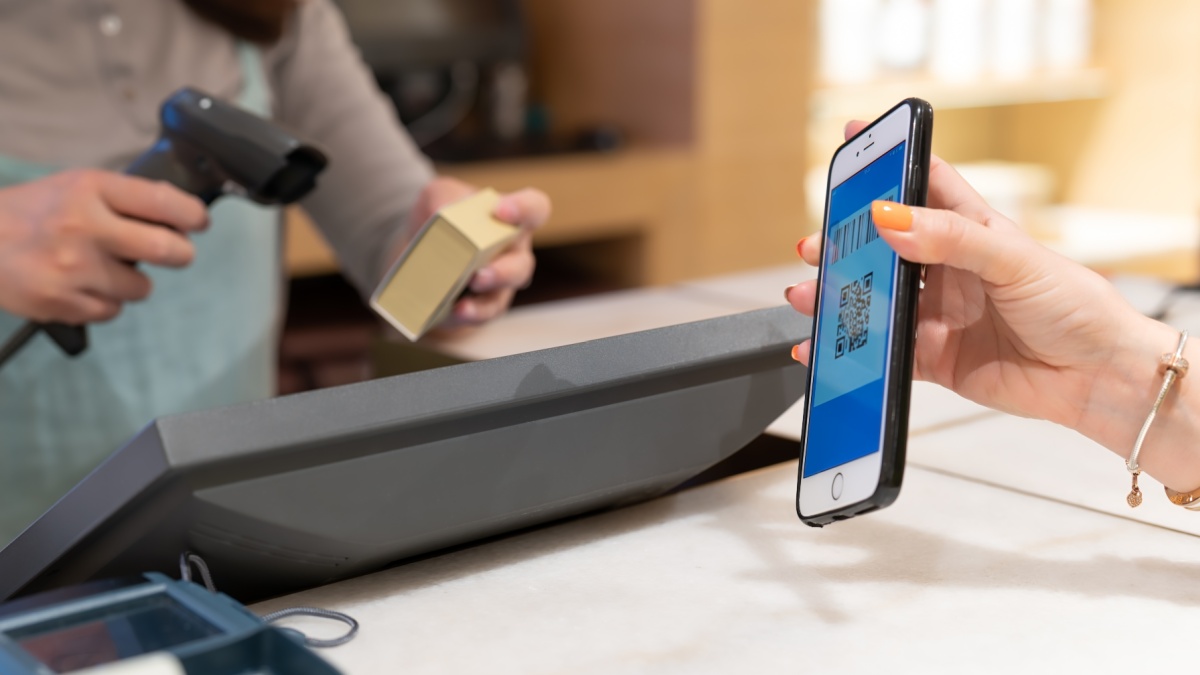
In many Chinese cities today, paying with cash can feel more unusual than paying with a QR code.
Ordering food, splitting a restaurant bill, booking a doctor’s appointment, hailing a taxi, shopping online, or donating money to a street performer can all happen within a single mobile app. What began as a convenience feature has evolved into an entire commercial ecosystem built around digital wallets.
That behavioural shift did not emerge from traditional banks or card networks. Instead, it was driven by two technology platforms: Alibaba’s Alipay and Tencent’s WeChat Pay.
Together, the two companies transformed how consumers interacted with digital payments, helping popularise QR code transactions, mobile wallets and the ‘super app’ model long before embedded finance became a global fintech trend.
Their influence now stretches far beyond China, shaping payment strategies from Southeast Asia to Silicon Valley.
Alipay built the foundations of China’s wallet economy
Before WeChat Pay emerged, Alipay had already established itself as the dominant force in China’s digital payments sector.
Launched by Alibaba in 2004, Alipay was originally developed to solve a trust problem within Chinese ecommerce. At the time, online shopping adoption was accelerating rapidly, but many consumers remained reluctant to pay merchants before receiving goods.
To address this, Alipay introduced an escrow-style payment model, holding customer funds until products were delivered. The system helped Alibaba’s ecommerce marketplaces, including Taobao and Tmall, gain consumer confidence while simultaneously familiarising millions of users with digital payments.
As smartphones became more widespread in the early 2010s, Alipay expanded beyond ecommerce into retail transactions, utility payments, transport and wealth management services.
China’s payment environment also evolved differently from many Western economies. Credit card penetration remained significantly lower than in the US and parts of Europe, while mobile internet adoption accelerated rapidly. Rather than replacing deeply entrenched card infrastructure, mobile wallets were able to grow alongside the country’s expanding digital economy.
QR codes became central to that growth. Unlike traditional card terminals, QR payments were inexpensive for merchants to deploy and easy for consumers to use through smartphone cameras. Small businesses and street vendors could accept digital payments without investing in costly hardware, helping mobile wallets spread quickly across both urban and rural markets.
By 2014, Alipay controlled close to 80% of China’s third-party mobile payments market, according to industry estimates – dwarfing the likes of TenPay (8.9%), Kalaka (6.5%), and China Mobile (0.6%) – establishing itself as the country’s leading digital wallet provider.
WeChat Pay turned payments into social behaviour
Tencent entered the payments market later than Alibaba, officially launching WeChat Pay in August 2013 as part of its WeChat messaging platform. While Alipay’s strength came from ecommerce, WeChat Pay focused on social interaction.
Integrated directly into the WeChat app, the wallet allowed users to make peer-to-peer transfers, pay merchants, purchase digital products and complete ecommerce transactions without leaving the platform. Users linked debit or credit cards directly to their accounts, enabling payments through QR codes, mini-programs and in-app purchases.
The breakthrough moment came during Chinese New Year in 2014 when Tencent launched ‘Red Envelopes’, a digital version of the traditional practice of gifting money to friends and family in red packets during celebrations. Users could send money instantly through WeChat chats, often within group conversations.
The campaign quickly became one of the most successful payment onboarding exercises in the industry’s history. To receive funds, users were required to connect bank accounts to WeChat Pay, dramatically accelerating wallet adoption. The social and viral nature of the feature also created powerful network effects as users encouraged friends and relatives to join the platform.
During the 2015 Chinese New Year period, more than one billion digital red envelopes were exchanged on WeChat, up from around 20 million the year before. WeChat Pay reportedly grew from roughly 30 million users in 2014 to more than 100 million users shortly after the campaign.
The initiative helped Tencent close the gap with Alipay far faster than many expected.
Why China embraced QR payments faster than the West
The rise of Alipay and WeChat Pay coincided with broader shifts in Chinese consumer behaviour and infrastructure development. In many Western economies, digital payments were built on decades of established card networks and point-of-sale systems. China’s payments ecosystem was comparatively less mature, creating an opportunity for mobile-first alternatives to emerge quickly.
QR codes proved particularly effective because they dramatically lowered merchant acceptance costs. Instead of relying on traditional payment terminals, businesses could generate printed QR codes that customers scanned using their mobile wallets. The model reduced hardware requirements and simplified onboarding for smaller merchants.
The approach also aligned with the rapid growth of smartphone adoption across China during the 2010s. Consumers increasingly used mobile devices as their primary gateway to ecommerce, messaging and entertainment, allowing payments to become integrated into wider digital habits rather than existing as standalone banking functions.
The Covid-19 pandemic further accelerated contactless payment adoption globally, strengthening the position of mobile wallets across China and wider Asia. By 2025, industry estimates suggested Alipay held roughly 53% of China’s third-party mobile payment market, while WeChat Pay accounted for around 42%, highlighting how closely the two platforms now compete after years of Alipay dominance.
The rise of the super app
As WeChat Pay expanded, Tencent increasingly positioned WeChat as more than a messaging platform.
The app evolved into what became widely known as a ‘super app’, a platform combining messaging, payments, ecommerce, entertainment and financial services within a single ecosystem. Payments became the infrastructure layer connecting those services together.
WeChat users could order food, book travel, access government services, shop online or pay utility bills without leaving the application. This integration helped make digital payments part of everyday behaviour rather than a separate financial activity.
The launch of WeChat Mini Programs in 2017 accelerated that strategy further.
Mini Programs allowed businesses and developers to create lightweight applications operating directly inside WeChat, eliminating the need for separate app downloads. Retailers, restaurants, gaming companies and travel providers could all build services linked directly to WeChat Pay.
QR codes became the bridge between physical and digital commerce. Consumers could scan codes in stores, restaurants or transport hubs to access mini-programs and complete payments within seconds.
The ecosystem also created new revenue streams for Tencent.
WeChat Mini Games, launched later in 2017, introduced lightweight social games playable inside the app. Many integrated in-app purchase systems through WeChat Pay, helping generate significant digital commerce revenue. Industry projections estimated Mini Games revenue could exceed 50bn yuan ($7.4bn) in 2025 from in-app purchases alone.
Why the super-app model matters to global payments
The success of Alipay and WeChat Pay reshaped how technology companies viewed payments infrastructure.
Rather than treating payments as a standalone banking service, the Chinese super-app model demonstrated how financial services could increase user engagement, strengthen customer retention and support wider platform ecosystems.
Payments became less about transaction processing and more about keeping users inside a digital environmen Across Southeast Asia, companies such as Grab and Gojek have built multi-service ecosystems combining ride-hailing, food delivery, digital wallets and financial services. India’s Tata Neu has pursued a similar integrated commerce model, while Latin American fintech firms increasingly combine payments with ecommerce and consumer finance.
Western technology firms have also explored similar strategies, though with mixed success. Meta previously attempted to expand into digital payments and stablecoins through the Libra project, later renamed Diem, before regulatory opposition halted the initiative.
Apple has continued expanding its financial services ecosystem through Apple Pay, Apple Card and embedded wallet services, while Elon Musk has repeatedly stated ambitions to turn X into an “everything app”.
In early 2025, X announced plans for ‘X Money’, a peer-to-peer payment platform supported by Visa Direct infrastructure.
However, replicating the Chinese super-app model outside Asia has proven difficult. In the US and Europe, consumers already have established banking relationships, widespread card infrastructure and a fragmented app ecosystem dominated by specialist platforms.
Regulatory scrutiny around competition, data privacy and financial licensing has also created barriers to building highly integrated ecosystems similar to WeChat.