Payment Expert’s ID Check: Payments Professionals offers insight from industry leaders and experts on how they got their start in the financial industry, from their early years in education, to how they have been able to climb the corporate ladder.
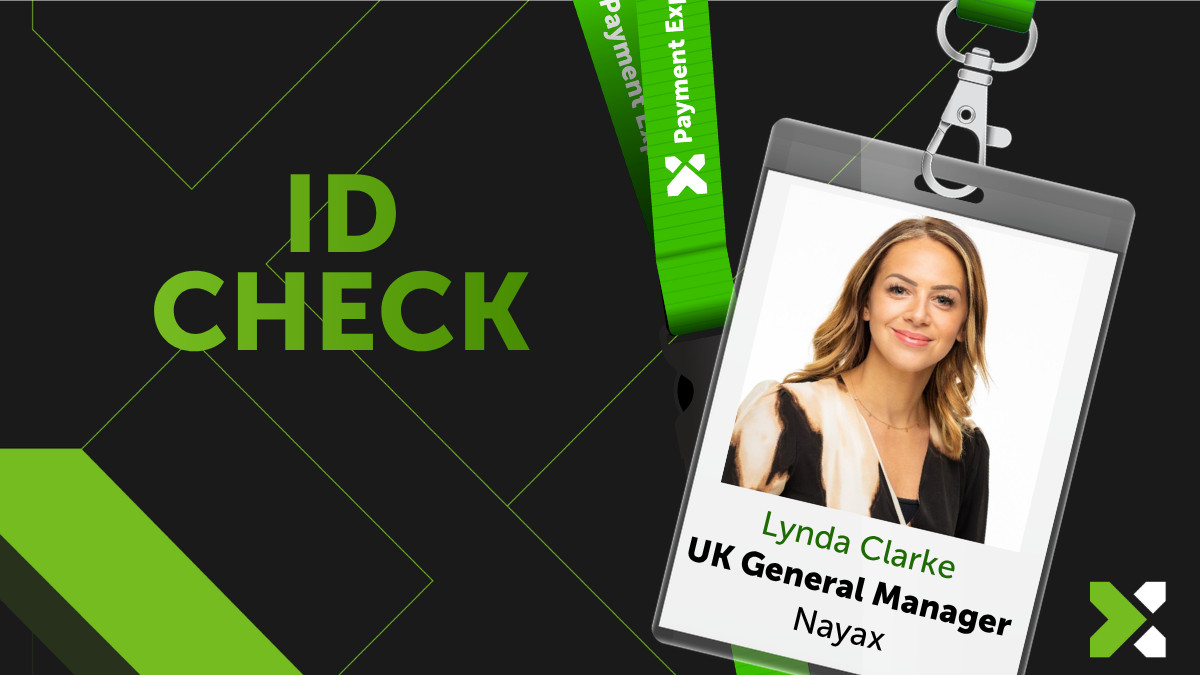
This week, Lynda Clarke, General Manager UK at Nayax, talks on how balancing being a mother while deep diving into payments has been a rewarding challenge as she explains how curiosity, multiple steps forward and knowledge of how consumers want to be paid has guided her in her journey.

Where did you go to university and what did you study? What impact did this have on your current journey?
I didn’t go to university or take the traditional route into my career. While I would have liked to, my family circumstances at the time meant it wasn’t an option for me. Instead, I worked while continuing to study and develop my skills alongside my job.
Looking back, I believe this experience gave me a strong work ethic and a determination to keep learning and progressing. It taught me the value of resilience, self-motivation and continuous development. Throughout my career, I’ve never stopped investing in my own learning, and I think that mindset has played a significant role in helping me grow into leadership positions within the payments industry.
What first drew you to the payments industry and why have you stayed?
I didn’t actually plan to work in the payments industry at all. At the time, I was working in recruitment and Barclaycard was one of my clients. When I had my twins, I decided to step away from my career and planned to work only evenings while staying at home with them during the day.
After about three months, I found myself working evening shifts answering calls from customers whose payment terminals had stopped working. It wasn’t a glamorous role, but it gave me my first real insight into the industry and, more importantly, made me realise something about myself: as much as I loved being a mother, I also missed the challenge, purpose and sense of achievement that came from working.
That experience was a turning point. It helped me recognise that having a career and being a mother weren’t mutually exclusive, and it opened the door to an industry that I’ve now spent more than fifteen years in.
What has kept me in payments is the constant evolution of the industry. Payments sits at the heart of commerce, technology and customer experience, and no two years are ever the same. I’ve had the opportunity to work through significant changes in technology, consumer behaviour and the way businesses operate. I love the fact that we’re continually solving problems, enabling growth and making everyday experiences easier for businesses and consumers.
Most importantly, I’ve stayed because of the people. Throughout my career I’ve worked with talented colleagues, customers and partners who have challenged me, inspired me and helped me grow. The industry has given me opportunities that I never expected when I first answered those calls from customers with broken terminals, and I’m still excited by what comes next.
Are there any lessons from your first role in the industry which you still draw on?
Absolutely. My first role involved speaking to customers whose payment terminals weren’t working, often at stressful moments when they couldn’t take payments and their business was being impacted. It taught me very quickly that behind every transaction is a real person trying to do their job or run their business.
One lesson that has stayed with me throughout my career is the importance of understanding the customer perspective. It’s easy as you progress into leadership roles to focus on strategy, technology and growth, but ultimately our industry exists to solve problems for customers.
Starting at the frontline gave me an appreciation for the importance of listening, empathy and accountability. It also reinforced something that had already been a big part of my life – if there’s a problem, focus on finding a solution rather than looking for someone to blame. That’s a mindset that I’ve carried throughout my career.

When was your first big break in the industry? Why was this such a significant moment for you?
I’m not sure I’ve ever really had one defining “big break” moment. Looking back, my career has been built through lots of small opportunities rather than one major event. I’ve been fortunate to be selected for leadership programmes, speaking opportunities, new roles and projects that have pushed me outside my comfort zone, but none of those happened in isolation.
For me, careers are built through the accumulation of many small moments over time. Saying yes to opportunities before you feel completely ready, taking on challenges that scare you a little, putting yourself in unfamiliar situations, and being willing to learn as you go. Those experiences compound over the years and ultimately shape where you end up.
If there’s one thing I’ve learned, it’s that growth rarely comes from being comfortable. Some of the most important steps in my career happened when I felt uncertain, stretched or even slightly out of my depth. Those moments taught me the most and gave me the confidence to keep pushing myself further.
So, rather than one big break, I’d say my career has been the result of a lot of small decisions to take a chance, keep learning and embrace opportunities when they presented themselves.
Was there a moment you faced in the industry which really challenged you? How did you overcome this?
Similarly, one of the biggest challenges wasn’t a single moment but learning to balance leadership, career progression and family life. Like many working parents, particularly women, there were times when I questioned whether I could successfully do both. Having grown up in an environment where financial security was never guaranteed, I felt a strong sense of responsibility to create stability for my family. At the same time, I wanted to be present as a mother. But finding that balance wasn’t always easy.
What helped me was accepting that there isn’t a perfect formula. I learned to focus on what mattered most, build strong support networks and stop striving for perfection. Over time, I realised that being a successful leader and being a good mother weren’t competing priorities; they were both important parts of who I am.
What are some of the skills you deem essential to starting in your industry and how have yours developed over the years?
Curiosity is probably the most important skill of all. The payments industry changes constantly, and if you’re not willing to learn, you’ll quickly fall behind.
Alongside that, resilience, adaptability and strong relationship-building skills are all essential. Technical knowledge can be learned, but the ability to work with people, understand challenges and adapt to change is what really drives success.
My own skills have evolved significantly over the years. Early in my career, I focused on learning the industry, understanding customers and building my knowledge. As I moved into leadership roles, I developed a broader strategic perspective and became more focused on building teams, creating culture and helping others succeed.
One thing I hadn’t fully appreciated earlier in my career was the importance of bravery and vulnerability, and how intrinsically linked the two are. When you’re leading, you don’t always have the answers. Sometimes the bravest thing you can do is admit that, ask for help, seek different perspectives or make a difficult decision despite uncertainty. I think vulnerability builds trust, and trust is the foundation of strong leadership.

Who was your biggest role model – inside or outside of your industry – who continues to inspire you in your current career?
I don’t think I have one single role model. Throughout my life and career, I’ve been fortunate to meet and work with many people who have inspired me in different ways, and I’ve probably taken a little from all of them.
Some have inspired me through their courage, others through their leadership, resilience, authenticity or the way they treat people. Equally, I’ve learned a great deal from people whose approach I wouldn’t necessarily want to emulate. Sometimes understanding how not to do something can be just as valuable as seeing it done well.
The people who inspire me most are those who challenge the status quo, push boundaries and create opportunities for others. I’m particularly drawn to leaders who are prepared to be brave, think differently and use their position to break down barriers rather than reinforce them.
As I’ve progressed in my career, I’ve realised that leadership isn’t about having all the answers or fitting a particular mould. The leaders that I’ve admired most are those who remain authentic, stay curious, lift others up and create environments where people feel able to succeed as themselves. Those are the qualities I continue to aspire to in my own leadership journey.
If you didn’t work in the industry, what other career option would you have pursued?
I’ve always enjoyed understanding people and helping them develop. If I wasn’t working in payments, I think I would have pursued something focused on people development.
One of the most rewarding parts of leadership is helping people grow in confidence and achieve things they didn’t think were possible, and I think I’d always be drawn towards a career that involved supporting others to reach their potential.
Lastly, what is some advice you would give to an aspiring person looking to get a start in your respective industry?
Be curious. Ask questions. Build relationships. Find mentors. Don’t be afraid to start at the bottom because every role teaches you something valuable.
Most importantly, don’t let your background or circumstances define what you think is possible. Some of the skills that help people succeed in this industry; resilience, determination, adaptability and the ability to connect with people, are often developed through life’s challenges rather than through a textbook.