
Payment Expert’s ID Check: Payments Professionals offers insight from industry leaders and experts on how they got their start in the financial industry, from their early years in education, to how they have been able to climb the corporate ladder.
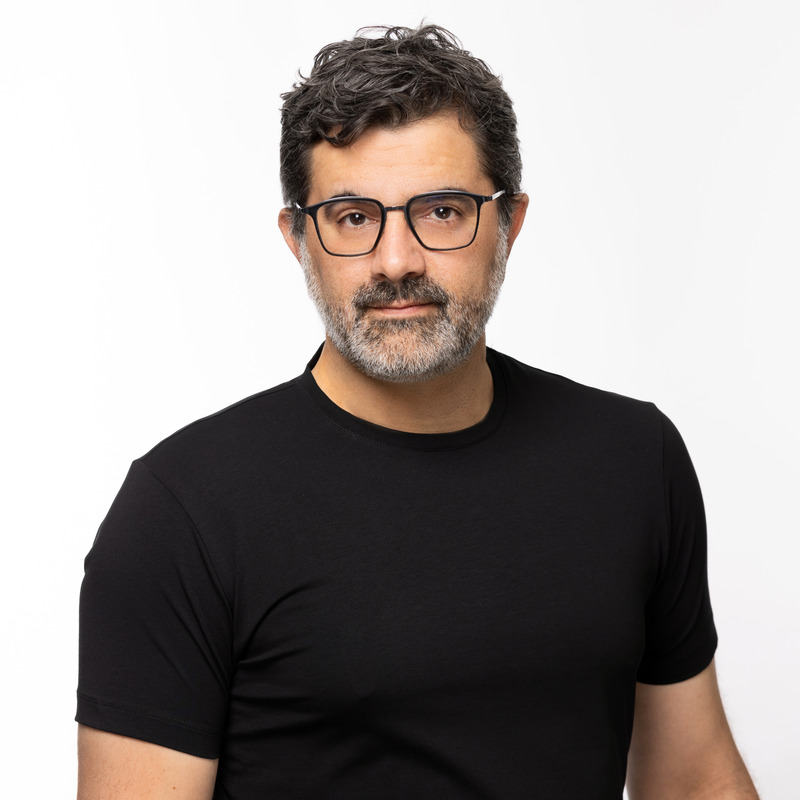
This week, Founder & CEO of Okoora, Benjamin Avraham, details the journey of understanding market discipline from the outset, in order to build a company from the ground up and why moving at a fast pace is essential in the fintech sector.
Where did you go to university and what did you study? What impact did this have on your current journey?
I studied Finance at the College of Management in Israel, but my passion for financial markets started long before that. Ever since I was a child, I was fascinated by investments and the stock market. Studying finance allowed me to deepen my understanding of financial structures, derivatives, and risk management.
It was during my academic years that I realized this field was not just an interest—it was my calling. The knowledge I gained laid the foundation for my career, ultimately shaping my journey into fintech and financial innovation.
Were you part of any sports clubs or societies at university and has this influenced your educational and professional development?
While I wasn’t part of any formal sports clubs or societies during university, I’ve always been deeply engaged in competitive environments—whether in finance, business, or personal challenges. I believe that the same principles that drive success in sports—discipline, strategic thinking, and resilience—are crucial in the financial industry.
Throughout my career, I’ve embraced a mindset of continuous learning and competition, always striving to push boundaries and excel. This competitive drive has played a significant role in shaping my professional journey.
What was the first job you had in the industry and are there any lessons from this you still draw on?
My first job in the industry was as a portfolio management intern at an investment firm, where I was fortunate to be mentored by Gil Gasner, an expert in derivatives trading and strategic investments. Working alongside him was an intense, hands-on education in financial markets.
I spent my days absorbing trading tactics and risk management strategies, and my nights building Excel-based models to simulate market scenarios and optimize portfolio structures.
That experience laid the foundation for my professional and personal growth. I learned how to operate under extreme pressure, construct resilient positions that withstand market volatility, and, most importantly, understand the psychology behind investments. The lessons I took from that period—discipline, analytical thinking, and the ability to anticipate risk—still guide me in every business decision I make today.
Who was your biggest role model – inside or outside of your industry – who continues to inspire you in your current career?
I draw inspiration from visionary leaders who have reshaped entire industries and defied conventional thinking. Warren Buffett taught me the art of long-term strategic investments and the discipline of rational decision-making. Jeff Bezos demonstrated the power of relentless execution—turning what seemed like an impossible dream into a global empire. Steve Jobs showed me that true innovation isn’t just about building great products but about fundamentally changing how people interact with technology.
Beyond them, I’m deeply inspired by Elon Musk, who redefined what’s possible across multiple industries by combining vision with fearless execution, and Brian Chesky, who transformed Airbnb into a global force by challenging traditional market structures.
I see my journey at okoora in a similar light. I’m not just building a fintech company; I’m designing a new category in financial infrastructure—one that simplifies global finance for businesses. Walking in the footsteps of these giants, I believe in pushing boundaries, thinking beyond the limits of what’s “normal,” and executing at a level that changes the game entirely.
When was your first big break in the industry? Why was this such a significant moment for you?
After years of working with businesses and banks, I recognized a fundamental gap in the financial ecosystem that no one was addressing. On one side, currency volatility is a universal challenge—impacting businesses of all sizes and industries. On the other, banks lacked the deep technological capabilities to manage FX risk at scale, relying instead on human expertise and trading desks.
This realization led me to build okoora, a platform designed to bridge this gap. For businesses, okoora provides a fully integrated financial ecosystem—from multi-currency wallets and payments to cash flow management and procurement—all seamlessly embedded with FX risk management tools. For banks, we deliver advanced modular solutions that replace traditional FX dealers, enabling them to serve a much broader range of clients through technology-driven automation.
This was my breakthrough moment—understanding that the future of finance wasn’t just about offering better trading tools but about redefining the financial infrastructure that businesses and banks rely on every day.
Was there a moment you faced in the industry that really challenged you? How did you overcome this?
One of the biggest challenges I faced in the industry was not just launching a company but creating an entirely new category in financial infrastructure. When I founded okoora, the market was accustomed to fragmented solutions—businesses used one provider for payments, another for FX trading, and relied on banks for liquidity and risk management. No one was offering a holistic, technology-driven ecosystem that integrated everything into a seamless, automated experience.
The challenge was twofold:
- Educating the market – Businesses and banks weren’t actively looking for a solution like okoora because they didn’t even realize such an integrated approach was possible.
- Changing entrenched industry habits – Financial institutions had been operating the same way for decades, relying on manual FX desks and fragmented workflows.
To overcome this, I focused on two key strategies:
- Building undeniable proof of value – Instead of just selling a vision, we showed measurable benefits—how businesses could simplify operations, reduce FX risks, and cut costs dramatically.
- Creating a movement, not just a product – We positioned okoora as more than a fintech company; we are redefining financial efficiency. This meant aligning with forward-thinking partners, financial institutions, and clients who saw the need for change.
Today, okoora is driving a fundamental shift in how businesses and banks handle global finance. Overcoming the initial resistance wasn’t easy, but it reinforced a core lesson: true innovation isn’t just about better technology—it’s about transforming the way industries think and operate.
What are some of the skills you deem essential to starting in your industry and how have yours developed over the years?
Succeeding in the fintech and financial industry requires a combination of deep technical knowledge, strategic thinking, and strong leadership. Over the years, I’ve identified three key skills that have been essential in my journey:
- Deep Understanding of Finance and Capital Markets
From an early age, I was fascinated by financial markets, and studying finance strengthened my expertise in risk management, derivatives, and macroeconomic trends. Early in my career, working in investment management exposed me to real-world financial complexities, reinforcing the need to develop models and frameworks to optimize decision-making. This foundation has been critical in shaping how I approach financial innovation today. - Navigating Uncertainty and Performing Under Pressure
The financial world is built on uncertainty—markets fluctuate, economic shifts happen, and even the best strategies face unexpected challenges. I learned early on how to analyze risks, make calculated decisions, and remain composed under extreme pressure. Whether in high-stakes trading or launching a fintech company from scratch, the ability to make rational, data-driven decisions in unpredictable environments has been invaluable. - Building and Leading High-Performance Teams
No major success happens in isolation. As I transitioned from being an expert in financial strategy to leading a company, I had to develop the ability to attract top talent, empower people, and create a culture of execution and innovation. Leading okoora has taught me that the most powerful advantage isn’t just having a great vision but surrounding yourself with the right people who can bring that vision to life.
These skills—financial expertise, resilience under pressure, and leadership—have shaped my journey and continue to be the foundation of my approach to building and scaling okoora.
Lastly, what is some advice you would give to an aspiring person looking to get a start in your respective industry?
My advice to anyone entering this industry is simple: don’t just fit into the market—reshape it.
Fintech and finance are evolving at an unprecedented pace, and the biggest opportunities lie in identifying real problems and creating transformative solutions. When I built okoora, I didn’t aim to compete within an existing category—I created a new one. That’s the mindset that will set you apart.
Second, execution is everything. The world is full of big ideas, but success belongs to those who execute relentlessly. Take action, test, refine, and move fast. In finance, the best strategies don’t live on PowerPoint slides—they live in real-world results.
Lastly, embrace uncertainty. The financial industry is complex, volatile, and often unpredictable. But within that chaos lie the greatest opportunities. If you learn how to navigate risk rather than fear it, you’ll gain a competitive edge that most people never develop.
If you’re entering this field, think more than a job—think about how you can redefine the way finance works. The industry doesn’t need more employees; it needs more innovators.