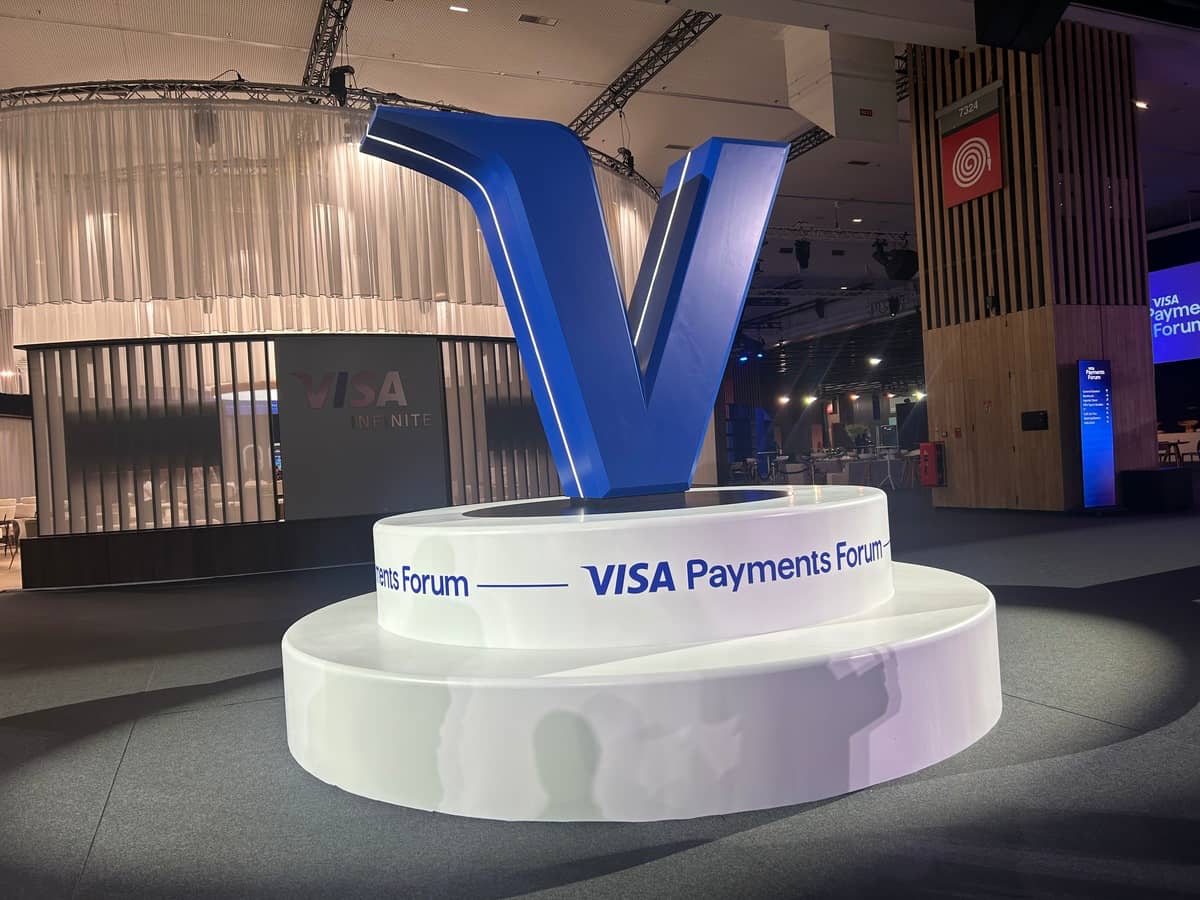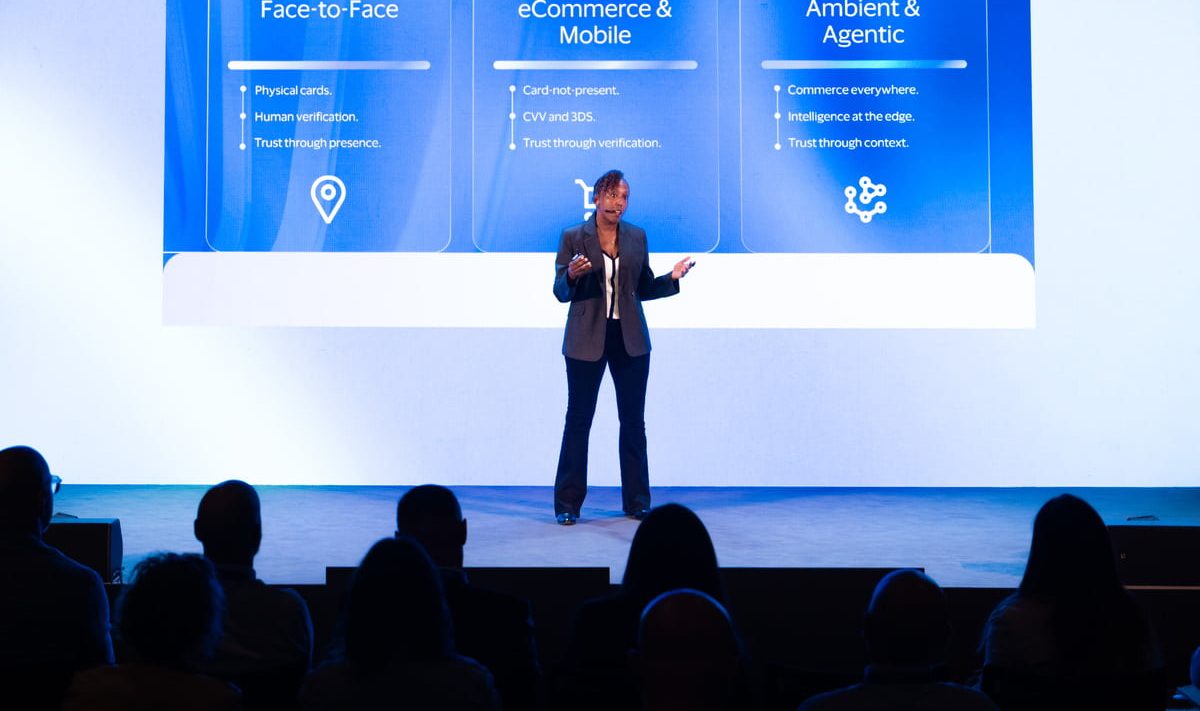
Payment Expert was invited to Visa Payments Forum 2026 in Paris last week, gaining insight from the company’s senior figureheads on how Visa is preparing for agents to transform commerce payments.
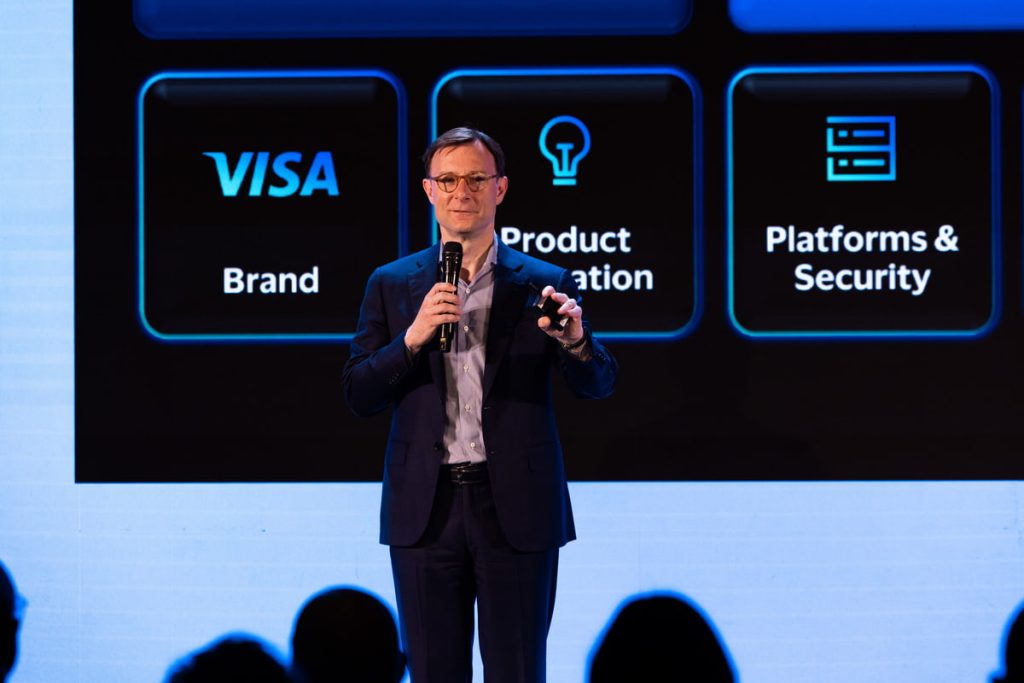
Oliver Jenkyn, Group President of Visa, told the audience at Visa Payments Forum 2026: “If you aren’t a little bit confused, then you aren’t paying attention.”
Of course, he could have been talking about myriad technological advancements currently shaping the payments industry; from stablecoins and digital currencies, to a constantly shifting regulatory landscape.
But much of Jenkyn’s opening presentation in Paris last week centred around generative AI (GenAI), and how agentic commerce is transforming the retail experience for both merchants and consumers.
“We believe that GenAI will have a powerful and positive impact on our industry,” said Jenkyn. “Agentic commerce will digitise the acceleration of commerce in a good way.”
He revealed his journeys travelling across the world meeting Visa partners, and of the anxieties that lie within their decision making and strategies for agentic commerce.
Jenkyn admitted clients have “terrible FOMO (fear of missing out)” and constantly ask him questions such as ‘are Visa’s solutions AI powered?’, ‘where are Visa finding internal efficiencies?’, and ‘what will agentic commerce feel like?’.
Speaking to Payment Expert at Visa Payments Forum, Mehret Habteab, SVP of Platform and Product Management at Visa, said clients “want to be in a position where they’re ready” for agentic commerce, with foundational elements in place to begin their agentic commerce journeys.
“(Clients) are curious about it and wherever it goes, they want to be in a position where they’re ready for it, and there’s some foundational technologies that they need to be able to support in order to secure payments in the agentic space,” said Habteab.
“That’s what we’re helping them get ready for.”
How Visa is ‘readying’ for agentic commerce
Underpinning all of Visa’s agentic-led product launches and solutions is Visa Intelligent Commerce (VIC), a global framework defining standards for agent-led commerce and payments for identity, authentication and authorisation.
VIC can be embedded into a merchant’s infrastructure and fraud monitoring capabilities for more automated, consumer-led shopping experiences.
For agentic security, Visa launched the Trusted Agent Protocol (TAP) in partnership with Cloudflare. This open cryptographic standard provides code for merchants to identify legitimate agentic payments and mitigate the manipulation of agents to perform fraudulent transactions.
Agentic payments are enabled by Visa Acceptance Platform, which incorporates VIC and TAP to complete the agentic commerce retail journey for consumers and assist merchants.
“We have TAP that we use to make it clear to merchants what might appear like a bot to them is really a trusted agent, and so we support them,” says Habteab, who emphasised trust, alongside Jenkyn, as a key pillar for Visa’s agentic product launches.
“We also have a new capability around the agent register and the identity. Clients can always rely on that as we always onboard agents that have been vetted by us, but at the same time, it’s important for them to have that transparency.”
In line with Visa’s preparation for agentic commerce, it recently launched the Visa Agentic Ready Programme which is designed for merchants, issuers and banks for agentic payments to become the new norm for consumers.
Securing the agentic experience
Trust is paramount within the traditional payment experience, and it may be more important during the agentic commerce journey because AI agents act on behalf of the consumer.
It raises the question, though: Who ensures the agents are acting responsibly, and that consumer sensitive card information is securely stored when an agent prompts the checkout?
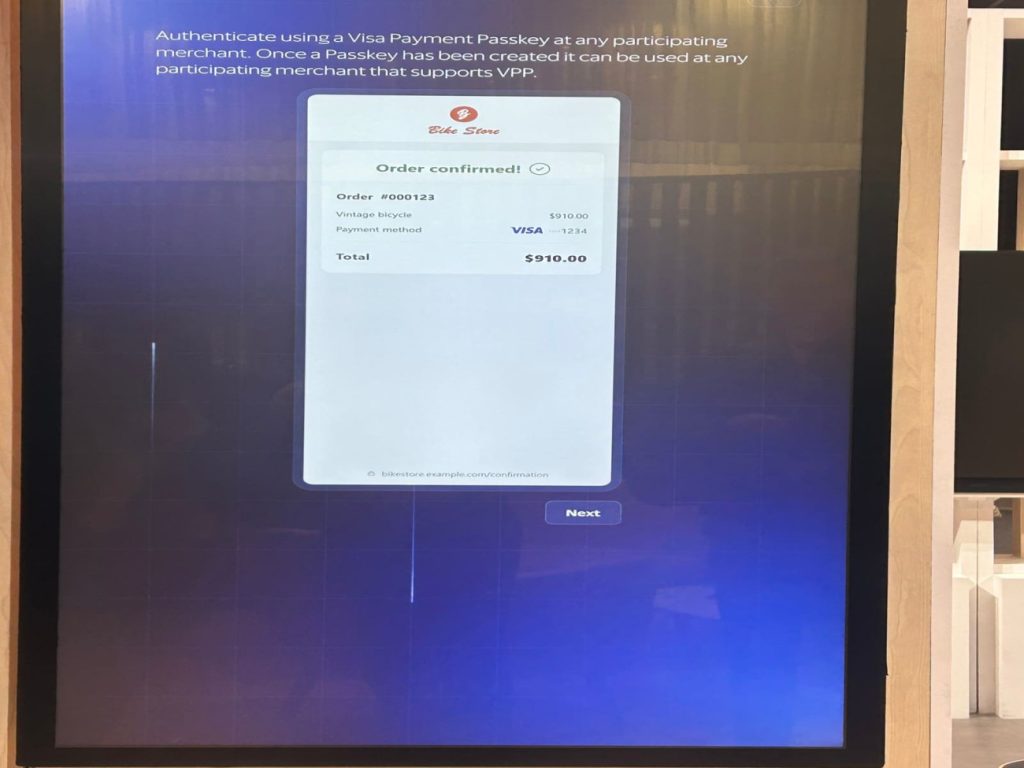
Visa introduced Visa Payment Passkeys which uses biometric technology and passkeys from the FIDO Alliance to handle automated payments during the checkout process.

“Neither Visa, the issuer, nor the merchant, has access to the person’s biometrics,” explained Habteab.
“That’s why we really support device based biometrics. The second thing is that when that happens, encryption takes place that securely generates data elements that we then pass on to the consumers bank so that they can check and validate.”
The global card network is also leveraging its existing tokenisation infrastructure to replace the consumer’s 16-digit account number for tokenised replacements, which are viewed and stored by a unique AI agent for the sole purpose of the payment.
Habteab outlined to Payment Expert the application of tokenisation as part of the agentic commerce journey, which acts as an invisible layer for consumers, but a necessary implementation for merchants to understand how consumer data is protected and stored.
“There are what we call cloud tokens that are bound to your device,” she said. “So you get the trusted security that comes with your device, bound with a token, which issuers are applying. It’s just an additional feature of what they already support.”
“Then the other really important part of it is some of the risk capabilities. We have additional scores that we provide to clients that enable them to understand what is a secure transaction to get that greater confidence.”
When will agentic commerce be the standard?
While Visa continues expanding its agentic solutions, announcing the first live agentic payments executed with several European merchants, AI agent-led commerce may not be as popular among consumers as it has been touted by the industry.
Visa Group President Jenkyn admitted agents shopping on behalf of the consumer will happen in the “near-to-medium term”, and revealed the three key reasons why it is not here yet.
- Technology: the internet and web was made for humans, not AI agents, so new protocols and standards are needed to adopt them.
- Psychology: humans need to get comfortable and trust AI agents as they adjust to them and become confident in what they can share.
- Business: as businesses begin to adopt agentic protocols, who is liable when an agent makes incorrect judgements?
Who will also lead the charge of GenAI platforms and agentic protocols? While Visa has VIC, Google has its own agentic protocol with the Universal Commerce Protocol, as well as Stripe and OpenAI’s co-issued Agentic Commerce Protocol.
This week, an FCA-issued report, titled ‘The Mills Review’, highlighted how there will be a market share battle for access to GenAI platforms, which are expected to become the dominant source of market power.
Ultimately, when some of the industry’s leading companies are unsure at what point agentic commerce will become the predominant preference for how consumers shop, it paints an unclear timeline.
However, Jenkyn is adamant that agentic commerce “is coming” and will revolutionise commerce and retail payments.
“My main message is this is coming,” said Jenkyn. “It will fundamentally change how consumers interact and engage in commerce, akin to e-commerce and mobile commerce in years past.
“And it’ll be a wonderful, powerful positive impact for all of us if we harness the potential of it and we make the investments now.”