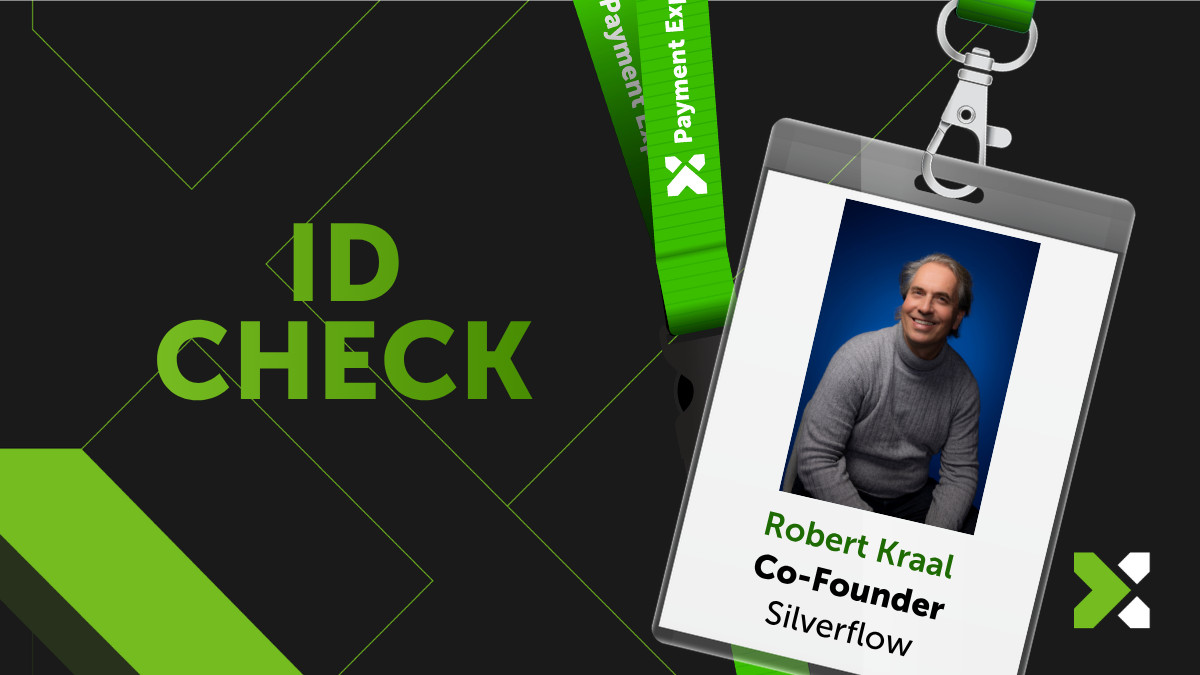
Payment Expert’s ID Check: Payments Professionals offers insight from industry leaders and experts on how they got their start in the financial industry, from their early years in education, to how they have been able to climb the corporate ladder.
This week, Robert Kraal, Co-Founder at Silverflow, explains why the infrastructure underpinning the industry is of vital importance to understand, as well as how a role at Adyen helped him achieve this understanding.
Where did you go to university and what did you study? What impact did this have on your current journey?
I studied Geophysics at Utrecht University, completing a Master’s degree where I specialised in exploration geophysics and seismology. While it may seem like an unusual path into the payments industry, the discipline taught me how to analyse complex systems and large datasets and how to think critically about what’s happening beneath the surface.
That mindset has proven surprisingly relevant in payments. The global payments ecosystem is incredibly complex, with many interconnected components that need to operate reliably at scale. My background trained me to approach problems analytically, understand underlying structures and look for patterns in complex environments – skills that have been invaluable throughout my career in building and modernising payments infrastructure.
What first drew you to the payments industry and why have you stayed?
I entered the industry somewhat by chance when I joined Bibit, one of the first global payment service providers, at a time when e-commerce was still emerging. It was a fascinating moment – the internet was transforming how businesses operated and payments were at the heart of making that transformation possible.
What kept me in the industry is the constant evolution. Payments sit at the intersection of technology, finance, regulation and consumer behaviour. It’s incredibly dynamic and there’s always a new challenge to solve. Even after more than two decades, it still feels like we’re only scratching the surface of what’s possible.
Are there any lessons from your first role in the industry which you still draw on?
One of the biggest lessons from those early days was the importance of reliability and trust. Payments are mission-critical – if they don’t work, businesses can’t operate. That creates a very high bar for infrastructure, operations and customer relationships.
I also learned how important it is to understand the real-world challenges merchants face. Working closely with businesses processing payments at scale gave me a practical understanding of where systems succeed and where they struggle. That insight still informs how I think about building better infrastructure today.
When was your first big break in the industry? Why was this such a significant moment for you?
A defining moment was joining Adyen in 2010 as COO. At the time, the company was still in its early stages but had a bold vision – to build a single global payments platform rather than the fragmented systems that existed across the industry.
Being part of building that platform and scaling it globally was an incredible experience. It showed me what was possible when infrastructure is designed from the ground up with modern technology and a clear vision. That experience ultimately influenced my decision to co-found Silverflow years later.
Was there a moment you faced in the industry which really challenged you? How did you overcome this?
One of the ongoing challenges in payments is modernising deeply entrenched infrastructure. Many systems in the industry were built decades ago and still form the backbone of global commerce.
The challenge isn’t just technical – it’s also about helping the industry understand why change is necessary. Overcoming that requires persistence, collaboration and education. You need to work closely with partners, regulators and clients to demonstrate that modernisation isn’t about disruption for its own sake, but about unlocking efficiency, innovation and resilience for the entire ecosystem.
What are some of the skills you deem essential to starting in your industry and how have yours developed over the years?
Payments is a multidisciplinary industry, so curiosity and adaptability are incredibly important. You need to understand technology, business operations, regulation and customer needs, often all at once.
Over the years I’ve also learned that communication and relationship-building are just as important as technical understanding. Payments operate through a complex network of stakeholders – banks, card schemes, merchants, regulators and fintech companies – and being able to build trust across that ecosystem is essential.
Who was your biggest role model — inside or outside of your industry — who continues to inspire you in your current career?
Rather than a single individual, I’ve been inspired by many of the entrepreneurs and engineers I’ve worked with across the payments industry. Building infrastructure at scale requires a unique combination of vision, pragmatism and resilience.
Working alongside talented teams at companies like Worldpay, Google and Adyen taught me the importance of long-term thinking and focusing on solving meaningful problems rather than chasing short-term trends.
If you didn’t work in the industry, what other career option would you have pursued or would have loved to?
Given my background, I probably would have stayed closer to science or engineering. Geophysics and other scientific fields involve analysing complex systems and uncovering patterns in large amounts of data – something I still find fascinating.
In many ways, payments ended up offering a similar intellectual challenge, just applied to the global economy rather than the natural world.
Lastly, what is some advice you would give to an aspiring person looking to get a start in your respective industry?
My advice would be to focus on understanding the fundamentals of how the payments ecosystem works. It’s a complex industry with many moving parts, but once you understand the foundations, you can see where innovation is possible.
I would also encourage people to stay curious and patient. Payments might not always be the most visible part of technology, but it underpins almost every digital experience today. That means there are enormous opportunities to build, improve and innovate – especially as the industry continues to modernise.