Payment Expert’s ID Check: Payments Professionals offers insight from industry leaders and experts on how they got their start in the financial industry, from their early years in education, to how they have been able to climb the corporate ladder.
The second year of ID Check: Payments Professionals has come to an end and Payment Expert has spoken to a variety of people from a variety of roles and companies, from CEO’s of startups, to specialised roles at high-profile companies.
In part one, we hear from figureheads on where they began their careers, from academia to their first job roles in the industry, and who inspired them as role models along the way.
Where did you go to university and what did you study? What impact did this have on your current journey?
Maëlle Lafont de Sentenac: I attended HEC Paris, where I studied management. The diverse curriculum covering finance, accounting, marketing, supply chain, and strategy provided me with a solid foundation.
This broad knowledge allowed me to communicate effectively with various departments, which is incredibly valuable in my current role and helps me navigate the company more smoothly.
Noel Goddard: I went to the University of London (UCL) and graduated with a Bachelors in Law.
Academia was never my strong suit, as I really couldn’t see how the information I was being given would actually help me deliver the successful, happy and balanced life I knew I wanted.

Due to this, I have often decided not to hire anyone based solely on academic ability during my professional career. Instead, I look for dynamism and street-smart people who have a hunger to succeed but with evidence of the ability to apply analytical thinking to problems.
Patricia Gomez: I studied at the Instituto de Estudios Bursátiles (IEB), a prestigious university in my city, Madrid, where I pursued a double degree in Law and Finance—two fields that are quite distinct, yet highly complementary.
This combination gave me a well-rounded and strategic perspective on the business world. Although I’ve always had a natural inclination toward the humanities, my education in finance equipped me with the analytical skills and numerical understanding that have been key throughout my professional journey.
Interestingly, while I was passionate about law, my career took off in finance and continued to grow in that direction. That experience taught me an important lesson: your academic background is just the starting point. What truly shapes your path is your willingness to adapt—even to unexpected turns that may lead you in directions you hadn’t initially considered.
Were you part of any sports clubs or societies at university and has this influenced your educational and professional development?
Radi El-Haj: Before university, I played football in a professional league for more than a decade. Sport teaches you things no textbook can.

On the pitch, you learn very quickly that talent alone is never enough, you need teamwork, discipline and resilience. Those lessons stayed with me. Whether you are building a platform or launching in a new market, payments is a team sport. You need engineers, banks, regulators, clients and operations people moving in the same direction.
Sport also teaches you how to recover fast. You lose a match, analyse why and come back stronger. In payments, you test, fail, iterate and scale. That rhythm has shaped the way I lead.
Kamran Hedjri: Tennis is my passion. I play every weekend with friends and really value the time I spend playing and having a laugh. What I really value about tennis is the sense of competition. Every time you play, there is a winner and a loser, it is never a draw. Each point stands on its own and needs to be worked for – and there can easily be a very different result every time you play.
It also reminds you that setbacks are part of the game, and that they give you an opportunity to improve and do better next time. At the end of the day, you can be bad at playing tennis and still love the game.
Pratiksha Pathak: Yes, I was part of the badminton club during my time at university. Being involved in the club taught me the importance of discipline, focus, and teamwork – qualities that have translated well into my professional life.
It also helped me to develop resilience and time management skills, balancing academics with regular practice and competitions. These experiences have shaped how I approach challenges and collaborate with teams in a fast-paced work environment.
What was the first job you had in the industry and are there any lessons from this you still draw on?
Peter Theunis: My first job in the industry was at Générale de Banque which merged into Fortis Group in 1999 and became BNP Paribas Fortis following the acquisition by BNP Paribas in 2008. I worked in the IT department specialising in the payments area as a Functional Analyst. The role was my entry point into the financial services sector where I have remained ever since.
One of the most valuable lessons I learned from this experience was the critical nature of reliability and security in financial transactions. Payments are the backbone of commerce and even the smallest technical issue can have widespread consequences. Ultimately, this experience reinforced the need for precision, compliance and innovation in payments, all principles that have guided me well throughout my career.
Nikita Hyett: Before I made my move into fintech and payments, I was a journalist, covering everything from celebrity features to major global events like the 2008 Mumbai terror attacks. I even had the chance to interview leaders like Barack Obama and Tony Blair.
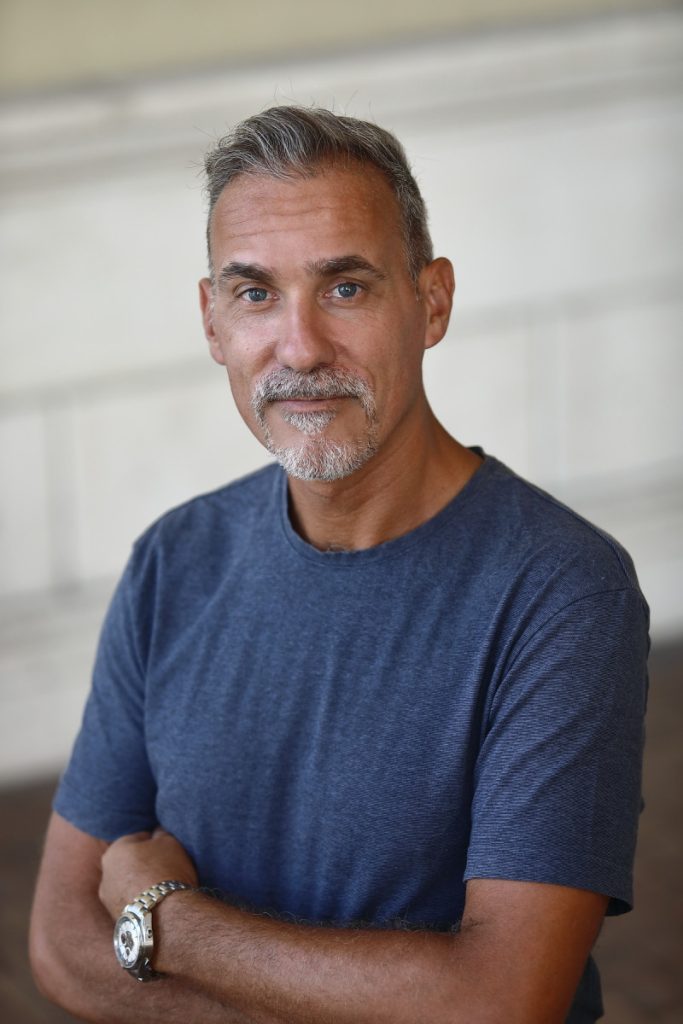
It was an intense, high-pressure environment that taught me how to ask the right questions and communicate clearly, which are skills that have helped me hugely throughout my business career.
While journalism was an incredible experience, returning from maternity leave after having my first child made me realise that my passion for the work had faded. As I began to reassess what I wanted from my career, I became increasingly interested in fintech, particularly after seeing the kind of real-world impact it was having through my husband’s work.
Michele Tucci: I began my journey in the industry as a Project Manager at Capital One, helping launch the Italian business. At that time, Capital One USA considered Italy an emerging market with payments made mostly via debit cards and cash. They thought Italians only spent what they had on their bank accounts and kept cash stashed under the mattress. Fast forward 20 years into my career, now deeply involved in actual emerging markets, I had to laugh.
It was such a misguided view, yet still somehow relevant in today’s world with debit card-based BNPL purchases and a good portion of many populations still preferring debit cards to credit cards. Whilst Capital One’s culture centered on test-and-learn rigor and the famous Information Based Strategy, it also taught me a principle I use even at Credolab today: analysis can become paralysis. In other words, analysis informs the choice, but judgment makes the decision.
Who was your biggest role model – inside or outside of your industry – who continues to inspire you in your current career?
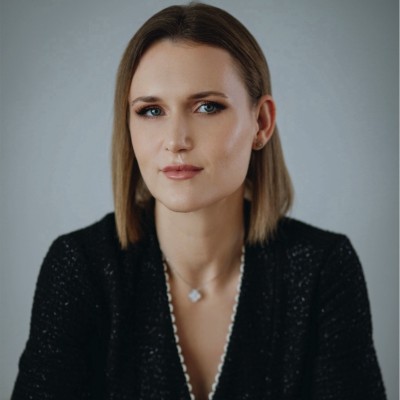
Ugne Buraciene: Influential leaders like Christine Lagarde – President of the European Central Bank – inspire me, particularly her advocacy for gender diversity and equality. Her work demonstrates the transformative impact women can have in any field.
My journey to CEO has also been shaped by the strong women in my family, especially my grandmother, who taught me resilience and leadership.
Martin Hargreaves: One of the most influential people in my career was Jim Wadsworth, who was UK Product Director at Vocalink when I first met him. When I moved into product management at Vocalink, Jim was my boss, and he took the time to mentor me properly. He had this incredible ability to simplify complex problems, communicate ideas clearly, and think commercially.
I learned so much from him, particularly around how to present ideas effectively. I remember working on a presentation for the executive team where we went through 18 different versions, refining it each time. Jim had this way of deconstructing an idea, making it clearer, and ensuring it was bulletproof before putting it in front of stakeholders.
Even now, when faced with a challenge, I often find myself thinking, What would Jim do? A lot of the techniques I use when coaching my own teams come directly from what I learned from him.
Brett Sievwright: My father. He built businesses across diverse sectors in challenging environments. His ability to remain agile, grounded, and purpose-driven has had a lasting impact on me. He showed me that real leadership is about more than just vision – it’s about values, consistency, and having the courage to lead through uncertainty.
My father’s persistence and humility have always stayed with me. Those are principles I try to uphold every day.