Payment Expert’s ID Check: Payments Professionals offers insight from industry leaders and experts on how they got their start in the financial industry, from their early years in education, to how they have been able to climb the corporate ladder.
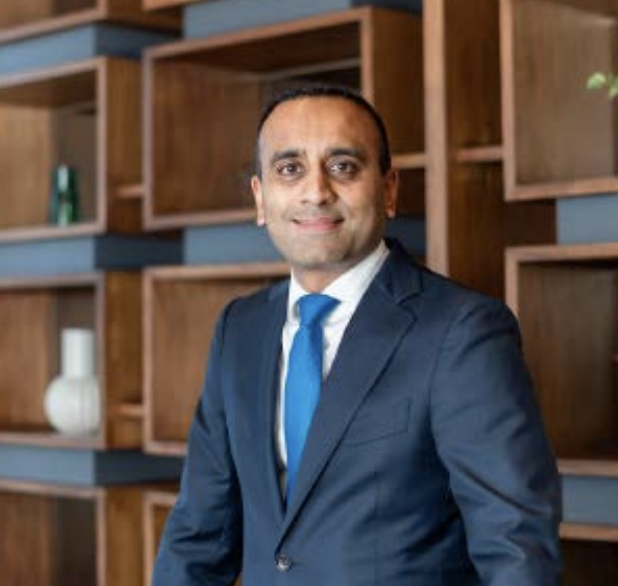
This week, Rishi Patel, Founder and CEO of Interpolitan Money, speaks on his breakthrough at Credit Suisse and how this established a path in finance that ultimately led from a dream to reality by founding Interpolitan Money.
Where did you go to university and what did you study? What impact did this have on your current journey?
I studied Actuarial Science at Bayes Business School (formerly Cass), graduating in 2004. The course was rigorous and analytical, designed to build precision in problem-solving, quantitative reasoning, and risk assessment. While I ultimately moved into entrepreneurship and alternative banking, that foundation was invaluable.
It trained me to think in probabilities, to assess outcomes, and to make decisions grounded in both data and long-term strategy – skills that underpin how I approach leadership and business today.
Were you part of any sports clubs or societies at university and has this influenced your educational and professional development?
At Bayes, I was less focused on formal societies and more on building relationships across diverse groups of people. London itself became my “society” – a global hub where I could interact with ambitious peers from different cultures and backgrounds. That environment shaped my perspective and taught me how to adapt, connect, and build networks, which is a crucial skill in both finance and entrepreneurship.
Sport, however, has always played a role in my mindset. Even outside formal clubs, I’ve drawn from sport’s lessons in discipline, resilience, and the ability to push beyond personal limits. Those same qualities have served me throughout my professional journey.
What was the first job you had in the industry and are there any lessons from this you still draw on?
My very first step into the industry was with Credit Suisse, where I gained early exposure to the world of global finance and the discipline of working in a large, structured institution. It gave me a grounding in professionalism, attention to detail, and the importance of risk management – skills that have stayed with me throughout my career.
However, it was also where I realised that my real drive lay in building and innovating rather than operating within the rigid frameworks of an established bank.
That clarity set the stage for my next role at FairFX (now Equals Group), where I was part of the founding team. The contrast was striking: a start-up environment with limited resources but huge ambition. I was involved in preparing the company for its eventual listing on the London Stock Exchange. The lesson I took away – and still apply daily – is that no role is too small in a growing business. When resources are tight, you wear multiple hats, learn at speed, and develop a resilience that larger organisations rarely instill.
That experience taught me the value of agility, perseverance and creative problem-solving – qualities I’ve carried into building Interpolitan Money.
Who was your biggest role model – inside or outside of your industry – who continues to inspire you in your current career?
Rather than a single figure, I’ve always drawn inspiration from entrepreneurs who built transformative businesses by challenging convention. Individuals like Richard Branson, who showed that brand and vision can redefine entire industries, or innovators in fintech who dared to question the dominance of traditional banks.
Outside of industry, I’ve also been inspired by those who demonstrate resilience and courage in the face of adversity – people who turn setbacks into stepping stones. That mindset of refusing to accept limits has been a guiding principle in my career.
When was your first big break in the industry? Why was this such a significant moment for you?
My first real break was actually at Credit Suisse, where I had the chance to step into the world of global finance at a very young stage in my career. It exposed me to the scale, complexity and precision of international banking, and it gave me the discipline and professional grounding I would later rely on.
But my true breakthrough came at FairFX, where I moved from the structured environment of a global bank into the uncertainty and energy of a start-up. Contributing at such an early stage to a company that went on to list publicly showed me that bold ideas, if executed with discipline, can scale into industry-changing realities.
That journey – first learning rigour at Credit Suisse and then applying it in a high-growth start-up – gave me the confidence to later launch Interpolitan Money, knowing that innovation backed by persistence can truly reshape markets. It wasn’t just about the technical experience; it was about seeing possibility become reality.
Was there a moment you faced in the industry that really challenged you? How did you overcome this?
One of the biggest challenges was in the early days of Interpolitan Money. We were introducing an alternative banking model in a highly regulated environment where trust and compliance are everything. Convincing clients to move away from traditional banks – institutions that had dominated their financial lives for decades – was no easy feat.
The breakthrough came by focusing on credibility and transparency: securing licences, demonstrating regulatory rigour, and delivering exceptional client service. By proving reliability step by step, we built trust in a model that was, at the time, unfamiliar. It was a test of patience and resilience, but ultimately, it shaped the culture of integrity that defines Interpolitan Money today.
What are some of the skills you deem essential to starting in your industry and how have yours developed over the years?
To succeed in fintech and alternative banking, three skills are essential:
- Resilience: The industry is fast-changing, highly regulated, and full of competition. You need to withstand setbacks and keep moving forward.
- Adaptability: Products, client needs, and regulatory frameworks evolve constantly. The ability to pivot quickly is invaluable.
- Strategic vision: You must be able to see beyond immediate challenges and anticipate where markets and client demands are heading.
Over the years, I’ve sharpened these skills through direct experience – navigating regulatory hurdles, scaling across geographies, and balancing innovation with risk management. Leadership has also taught me the importance of empathy and communication, which are just as critical as technical expertise.
Lastly, what is some advice you would give to an aspiring person looking to get a start in your respective industry?
Start by building depth of knowledge, whether through formal education, industry experience, or hands-on roles in start-ups. Be prepared to work hard, wear multiple hats, and embrace uncertainty – because in fintech, the rules are still being written. Surround yourself with mentors, networks, and peers who can challenge your thinking and support your growth.
And most importantly: don’t be afraid to challenge convention. The industry needs people who are willing to question the way things have always been done and who can bring fresh ideas to complex, global problems.
If you can combine innovation with integrity, you’ll find yourself not just in a career, but in a position to help shape the future of finance.