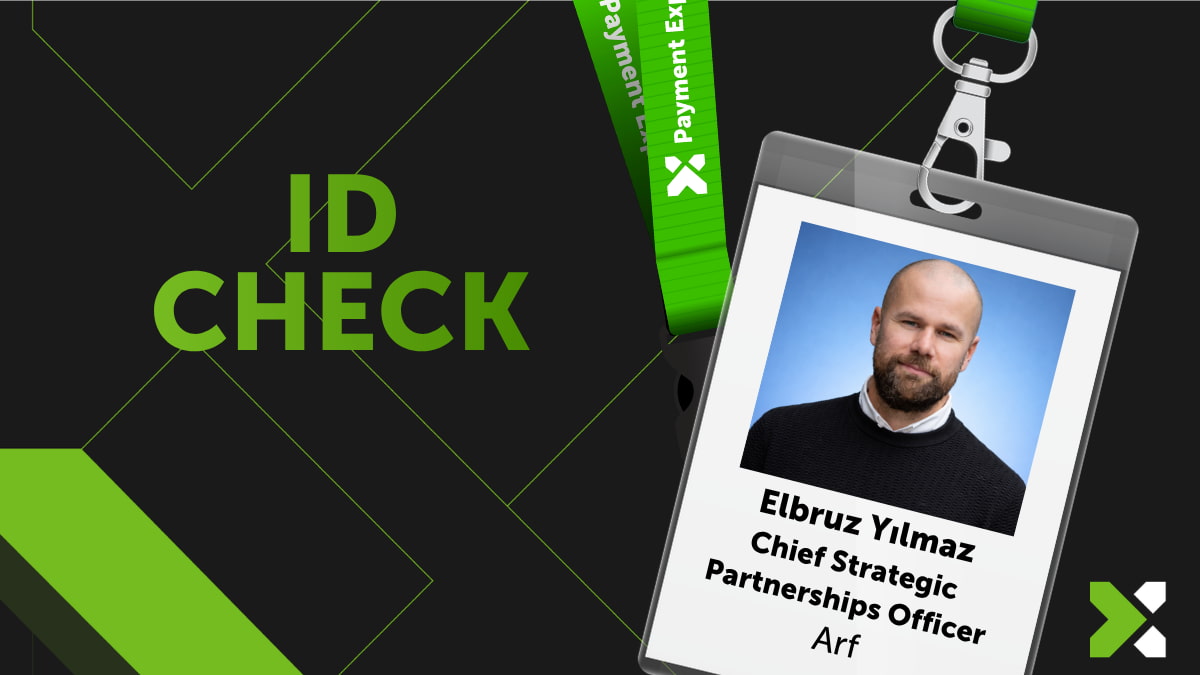
Payment Expert’s ID Check: Payments Professionals offers insight from industry leaders and experts on how they got their start in the financial industry, from their early years in education, to how they have been able to climb the corporate ladder.
This week, Justin Pike, Founder and CEO of Burank, reveals the keys to building a successful payments company; from a multi-billion dollar payment processor, to building a new company by identifying a gap in the market. Both of these companies came with the same mentality… learning to take risks.

Where did you go to university and what did you study? What impact did this have on your current journey?
I studied Computer Science at the University of South Wales. Given the technology I’ve pioneered, my education was foundational to my business’s success. It gave me the tools to translate the ideas for more simplistic payment processes into reality.
Were you part of any sports clubs or societies at university and has this influenced your educational and professional development?
At university I balanced my studies with playing rugby. While not directly tied to my career, this work helped me develop the skills necessary to scale and manage a business with a lot on my plate, and collaborate with people from different backgrounds and perspectives.
What was the first job you had in the industry and are there any lessons from this you still draw on?
My first role in the industry came when we founded eNett, and what started as an idea grew into a multi-billion-dollar business, becoming the world’s largest payment processor for the travel industry and operating across 47 countries.
In 2020, we sold the business to WEX. That time was full of challenges, it was my first time scaling a business and building the right team. At some points, when we have to navigate particularly tricky regulatory environments and the fast-changing market, it would have been easy to give up. But I think that’s what makes a good entrepreneur, perseverance. Staying focused on our long-term vision was difficult, but that mindset still guides me to this day.
Who was your biggest role model – inside or outside of your industry – who continues to inspire you in your current career?
The biggest role model for me has to be Steve Jobs. I’ve always admired his ability to think completely outside the box and challenge conventional ways of thinking – to make a real impact in this industry, you have to emulate this.
Apple’s “To the Crazy Ones” campaign still resonates with me today. It’s a great reminder that innovation comes from seeing things differently.
When was your first big break in the industry? Why was this such a significant moment for you?
My first company, eNett, before it was acquired, handled transactions of just a few thousand dollars. The technology clicked, and eNett’s low-cost payment solutions provided a better experience to help its customers grow in a fast, easy and safe solution. By the time we sold, the company was processing tens of billions of dollars each year and had grown to be the largest payment processor in the travel industry.
For me, this is one of the most significant moments in my career. It showed something we as a team could build that had the potential to change an industry.
Was there a moment you faced in the industry that really challenged you? How did you overcome this?
I’ve faced several challenges across my experience in the industry. With most of my businesses, I’ve heard the word “no” more than I have “yes”, or that the technology we’re working on won’t be a success – I’ve spent my time proving them wrong.
With my second company, MyPinPad, we invented a way to turn retailers’ mobile phones into payment devices – think of the kit shops use today – myself and the team invented this disruptive technology.
The first meeting I had to expand this technology with PCI, the standards body for financial institutions, did not go well. I was told that the technology we had created would never be used because it was only software and couldn’t facilitate bank pin numbers going through devices that weren’t hardware secured with meshing and special encryption chips.
While this moment was a ‘kick in the guts’ for me and the company, it strengthened our resilience, and we persevered for years to develop a standard that allowed us to make our technical dreams a reality.
It was a significant risk for me and the team, being so new to the industry and fundraising. Taking that risk and defying standards was an incredible challenge, and I’m very glad we faced it.
What are some of the skills you deem essential to starting in your industry and how have yours developed over the years?
Risk tolerance is a big one. When starting a business in this industry, risk is an essential part. Without taking risks, I wouldn’t have found the success I did in my previous companies, eNett, MyPinPad and MYHSM, and later with Burbank.
Taking more risks increases your risk appetite, and it’s an essential part of breaking down industry barriers. When the rules don’t allow you to develop or introduce your project, my experience has taught me that you need to make new rules and standards, or bend existing ones if you really believe your product will bring about meaningful industry changes. As long as you believe in what you want to do, you’ll achieve it.
Risks should be calculated, and learning from the challenges of your previous ventures is essential, especially when building something new.
Lastly, what is some advice you would give to an aspiring person looking to get a start in your respective industry?
I’ve built a number of businesses in this industry, but Burbank is different. This is perhaps my biggest venture, but that doesn’t just happen alone.
Burbank and many of my other companies have been rooted in the amazing team I have worked with. Working with the same people for over a decade, we know exactly how to work with one another, we know what makes each other tick, as well as our strengths and weaknesses. I might be locked into project developments for months, so having a great team means they can pick up the slack in areas I, as a founder and CEO, can’t always focus my attention on.
Being with a team for so long, one that’s seen the industry inside out and knows how to make things that scale, is rare. My best piece of advice for someone looking to get a start in the industry is to surround yourself with a team of people who know it as well as you do.
As a bonus, I’d say picking the right investors is critical. Not only do they drive success with capital, but they also offer tried and tested expertise from their own industry experience and connections.