After President Donald Trump agreed to a series of amendments, Senate Democrats delivered a counterproposal on the Digital Asset Market Clarity Act (CLARITY Act) to Republican negotiators overnight, keeping talks alive before the cloture vote (15 September).
The Senate votes at 2:15 p.m. ET (7:15 p.m. BST) on whether to advance the bill. Cloture requires 60 votes. This blog covers developments in the past 24 hours and will be updated.
This blog follows on from: Trump agrees CLARITY Act ethics rules ahead of Senate vote.
16 September: Industry reacts to CLARITY Act failure
The industry reacts after the US Senate blocked the CLARITY Act, in a result that ends crypto market structure legislation in the Senate for 2026.
Eric Barbier, CEO, Triple-A:
“I’m still a firm believer that imperfect regulation is better than no regulation at all.”
“A regulatory framework, such as the CLARITY Act, can have a catalyzing effect of infusing large U.S. enterprises and institutions with genuine confidence to finally participate in the digital assets space with assurance, where before they likely actively avoided this market.”
“We’ve seen a similar scenario play out regarding the passage of the GENIUS Act, as the creation of regulatory guardrails has spurred faster adoption of stablecoin payment options amongst large companies, as well as building consumer trust.”
“Progress across the EU, UK, UAE and Singapore continues to build global momentum toward regulatory harmonization and, ultimately, institutional adoption of digital assets.”
Anil Oncu, CEO, Bitpace:
“The Senate’s failure to advance the CLARITY Act is a disappointing setback for digital asset regulation in the US.”
“The industry has spent too long operating under a patchwork framework, where overlapping regulators, unclear asset classification and enforcement-led oversight have made it harder for businesses to plan with confidence.”
“Stablecoins are increasingly being understood not simply as crypto products, but as practical financial infrastructure that can reduce friction and improve visibility in the movement of money.”
“Adoption will continue to develop globally where regulatory frameworks are clearer and businesses have the confidence to build.”
Arthur Firstov, Chief Business Officer, Mercuryo:
“The real win from the Clarity Act will be making onchain finance invisible, almost like a dull utility.”
“The real milestone will be when a bank moving tokenized assets or settling in stablecoins is no more unusual than a financial institution today using an automated clearing house or Fedwire.”
“Holding assets in your own wallet or using non-custodial software is very different from handing those assets to an intermediary that controls customer funds. The Clarity Act does recognise this distinction.”
“Stablecoins represent the future of payments.”
15 September ~15:10 ET (20:10 BST): CLARITY Act over?
The bill’s prospects for 2026 appear over, with the final vote ending 50 votes in favour and 50 against. Senator Cynthia Lummis, one of its leading supporters, said after the vote that “it’s over”, with the compressed legislative calendar ahead of the November midterm elections leaving little room for another attempt.
Lawmakers could theoretically revisit the legislation in a future session, but any renewed push would require negotiations and another effort to build bipartisan support.
15 September ~15:00 ET (20:00 BST): Slotkin explains no vote
Senator Elissa Slotkin has explained why she voted against advancing the CLARITY Act, noting concerns around ethics, national security and regulatory readiness.
In a post on X, Slotkin said the bill’s ethics provisions were “simply too thin” and argued that stronger safeguards are needed around public officials holding or profiting from crypto assets.
She also raised concerns about money laundering and the use of digital assets to fund hostile states and terrorist organisations, saying agencies need stronger tools to address those risks.
Slotkin added that regulators, including the CFTC, currently lack the staffing and oversight capacity needed to implement the legislation.
However, she left the door open to future negotiations, saying there are “strong, bipartisan provisions” in the bill that could form the basis of another attempt.
“I believe that the US should lead the world in cryptocurrency innovation, but we need to get it right,” she wrote.
15 September ~14:50 ET (19:50 BST): CLARITY Act vote tied at 47-47
The unofficial Senate tally has moved to 47 votes in favour and 47 against on the CLARITY Act cloture motion.
With only six senators left to be recorded, the motion can no longer reach the 60 votes needed to pass. Even if all six remaining senators vote in favour, the highest possible total would be 53.
The effort to advance the bill has failed unless any senators change their recorded vote before the result is finalised.
15 September ~14:40 ET (19:40 BST): CLARITY Act vote count shows 41-40
An unofficial count has the CLARITY Act cloture vote at 41 senators in favour and 40 against.
The tally is short of the 60 votes needed to advance the bill, with voting continuing and the final result yet to be confirmed.
The early count suggests the legislation still needs support from a significant number of senators if it is to clear cloture and move forward to debate.
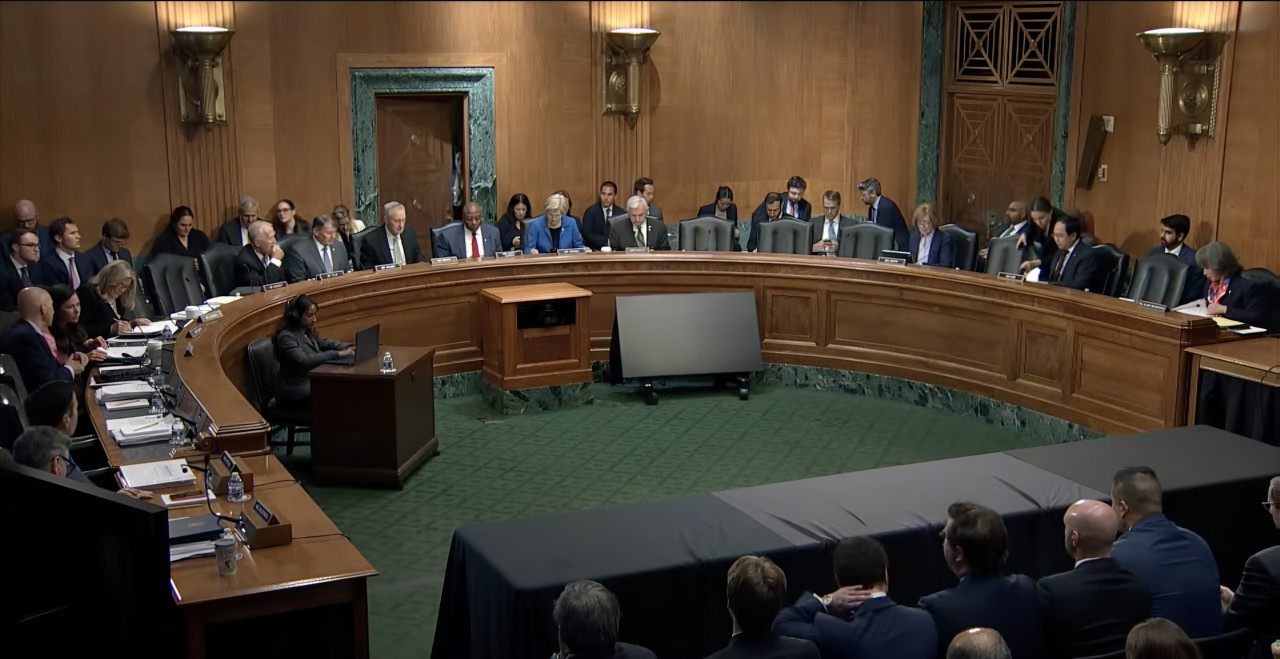
15 September 14:15 ET (19:15 BST): Senate vote begins on CLARITY Act
The Senate has begun voting on whether to advance the CLARITY Act.
The cloture motion needs 60 votes to pass. If it clears the threshold, the Senate can move forward with debate and Republicans are expected to substitute in their revised text.
If it fails, the bill would face another major setback and its chances of passing before the midterm elections would narrow considerably.
15 September ~06:15 ET (11:15 BST): Democrats send counterproposal
Senate Democrats sent Republican negotiators a counterproposal on the CLARITY Act, keeping negotiations open hours before the cloture vote.
The response followed the revised Republican draft that sponsors described as their “last, best, and final” offer, released on 13 September.
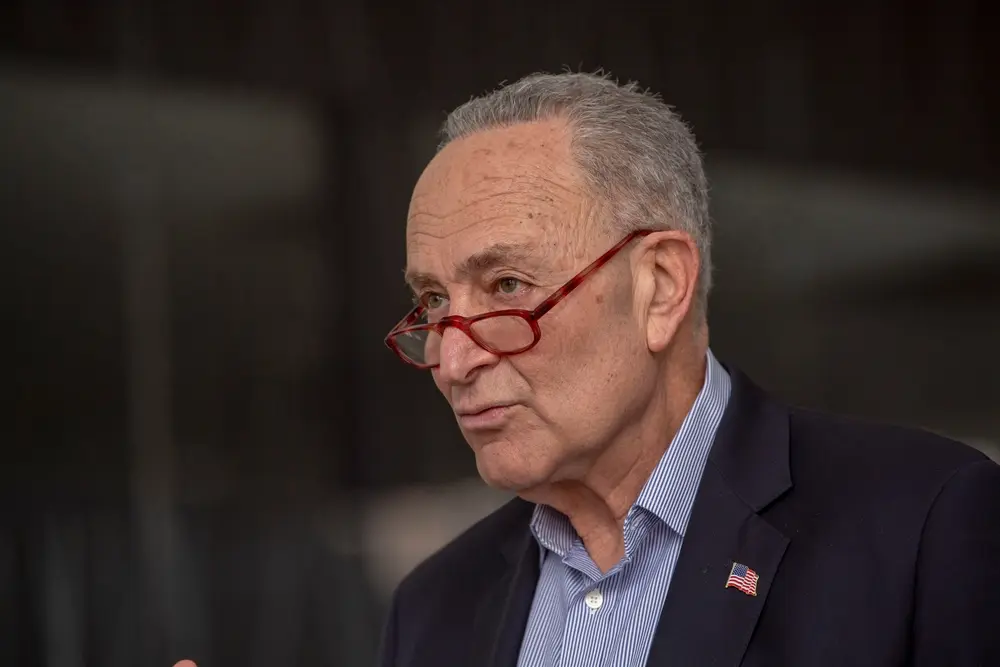
Democratic negotiators met earlier at the office of Minority Leader Chuck Schumer. Senator Mark Warner said as he left the meeting that “the Democrats who’ve been working on this in good faith are sending a counterproposal,” per Politico.
Ethics enforcement on federal officials’ crypto holdings remained the central dispute. The counterproposal’s full contents were not public as of early Tuesday, so the specific requested changes are unconfirmed.
If cloture clears, Republicans plan to offer the Senate text as an amendment in the nature of a substitute, according to sponsors. If it fails, market-structure legislation stalls before the midterm elections.

15 September: ~06:00 ET (11:00 BST): Bitcoin holds near $77,400 before the vote
Bitcoin traded at roughly $77,400, unchanged over 24 hours but down about 3% from the $79,530 it touched overnight and lower by more than 1% on the week.
XRP rose more than 2% to $1.41. Zcash gained nearly 3% to about $1,149. Ether, BNB, Tron, HYPE and Dogecoin each slipped less than 1%, and Solana was flat just above $101. Over seven days, Dogecoin was down 7%, HYPE 5% and BNB 3%.
15 September, morning: Polymarket puts 2026 passage at 18%
Polymarket priced the odds of the CLARITY Act being signed into law in 2026 at 18%, down from a peak near 30% on Monday, after reports that several Democrats had concerns about the revised ethics text. Galaxy Research put the probability at about 10% earlier in September.
Kalshi priced the odds of passage at 44% after the revised text’s release on 13 September, up from 18% earlier, on a separate contract measuring a different question.
14 September: Eight banking groups and 18 attorneys general push back
Eight banking associations wrote to Majority Leader John Thune and Minority Leader Chuck Schumer on 14 September, asking for tighter limits on rewards paid to stablecoin holders. The groups said interest-like incentives could pull deposits from banks and reduce lending.

“Deposits are the foundation of the banking system,” they wrote. Their request centres on Section 10404, covering payments and incentives tied to payment stablecoins.
A bipartisan coalition of 18 attorneys general – 17 states and the District of Columbia – led by New York’s Letitia James, urged the Senate to revise or reject the bill over federal preemption of state enforcement. James said the bill “would embolden scammers” and could strip state attorneys general of authority to protect investors.
The coalition cited more than 330 state anti-fraud actions involving crypto since 2017. It cited $11.4bn in FBI-recorded cryptocurrency losses in 2025, up 22% year on year, and $1.78bn reported by the Federal Trade Commission, up 25.6%.
14 September: Treasury backs the revised text
Treasury Secretary Scott Bessent supported the revised draft, saying it gives his office authority to protect community banks from stablecoin-related risks. Bessent said the bill is “essential to ensuring America wins the global race for new technology”.
The revised text lets the Treasury Secretary impose an 18-month circuit breaker on stablecoin rewards if payment stablecoins cause substantial deposit outflows from community banks.