The SEC and CFTC are writing crypto market rules under existing authority after the CLARITY Act failed a 49-50 Senate vote on 15 September.
The Securities and Exchange Commission (SEC) and the Commodity Futures Trading Commission (CFTC) are moving ahead with their own crypto rulemaking after the Senate rejected the Digital Asset Market Clarity Act (CLARITY Act) on 15 September.
The Senate voted 49-50 against cloture, 11 votes short of the 60 needed to open floor debate. Every Democrat present voted no, citing unresolved ethics provisions covering presidential crypto profits.
The vote followed the bill’s passage through the House in July 2025 by 294-134 and its advance out of the Senate Banking Committee in May 2026 by 15-9.
The CLARITY Act would have divided oversight of digital assets between the two agencies, assigning spot digital-commodity markets to the CFTC and securities and investment contracts to the SEC.
The jurisdictional boundary has driven most major US crypto legal disputes since 2017. The House first passed the measure as part of the 2025 “Crypto Week” package, but with the bill now stalled, both agencies are writing rules under existing authority.
SEC proposes Regulation Crypto Assets
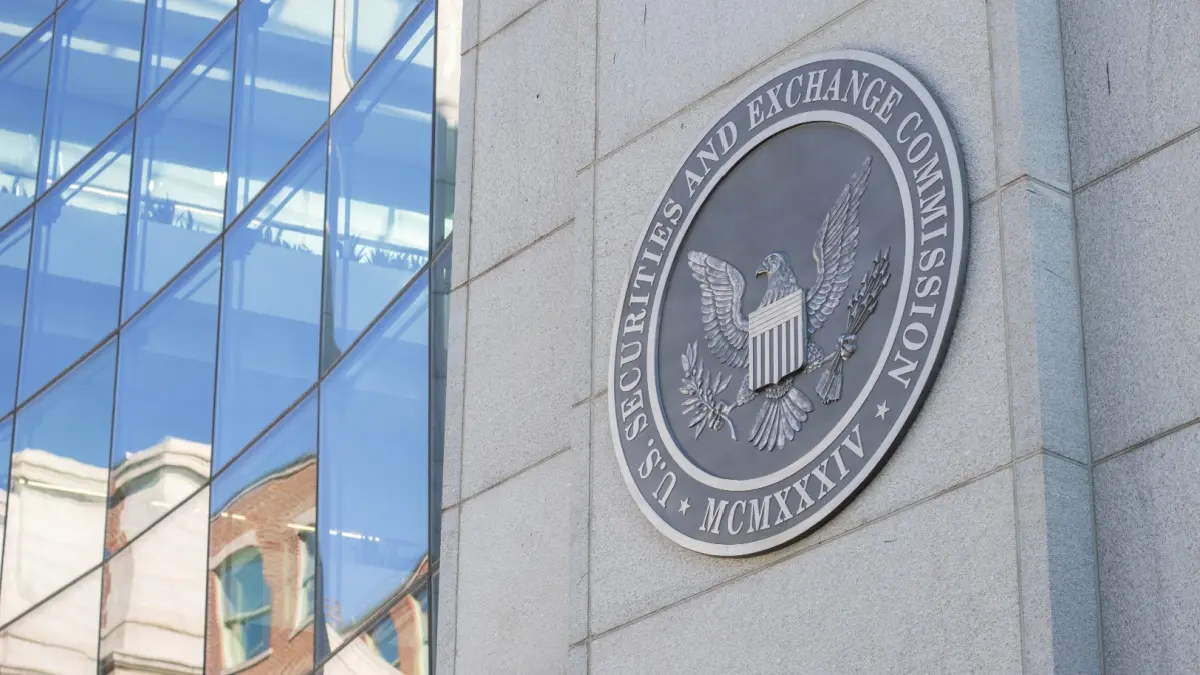
The SEC proposed Regulation Crypto Assets on 18 August 2026, a framework for token offerings which includes two registration exemptions and a conditional safe harbour. The safe harbour would let a crypto asset fall outside the definition of an investment contract once an issuer has completed or stopped the managerial efforts promised to investors.
The rules would also pre-empt certain state registration requirements for qualifying offerings and secondary-market transactions.
SEC Chairman Paul Atkins said the framework is intended to give crypto entrepreneurs “clear pathways to raise capital under the federal securities laws”, and the proposal carries a 60-day public comment period from the date of its publication in the Federal Register, according to the SEC.
CFTC files rulemaking with the White House
The CFTC submitted its own crypto rulemaking to the White House Office of Information and Regulatory Affairs on 17 September, just two days after the Senate vote to block the CLARITY Act. However, its contents remain confidential during White House review.
The rulemaking sits at the prerule stage, meaning the CFTC has told the White House it intends to draft a proposed rule but has not published it for comment. The filing invokes the agency’s authority under the Dodd-Frank Act, the 2010 statute governing leveraged, margined and derivatives-style trading.
CFTC Chairman Michael Selig said on the day of the Senate vote the agency was “locked in and ready to ship rules”.
Selig added if Congress did not pass the CLARITY Act, the CFTC would use its existing authorities to establish a crypto market regime. The agency approved the first US Bitcoin perpetual futures earlier in 2026.
Agency rules carry less durability
Agency rulemaking can be reversed by a future administration or challenged in court, a constraint the CLARITY Act was written to remove. JPMorgan analysts said CFTC rules are less durable than legislation because any future commission or court can revise or overturn them.
The CFTC filing also cannot grant the agency full authority over the spot market for digital commodities, which was central to the CLARITY Act and would require an act of Congress.