Another senior policy lead within the US’ digital assets sector adds to further doubt over a resolution to the ongoing CLARITY Act that fails to pass the Senate.
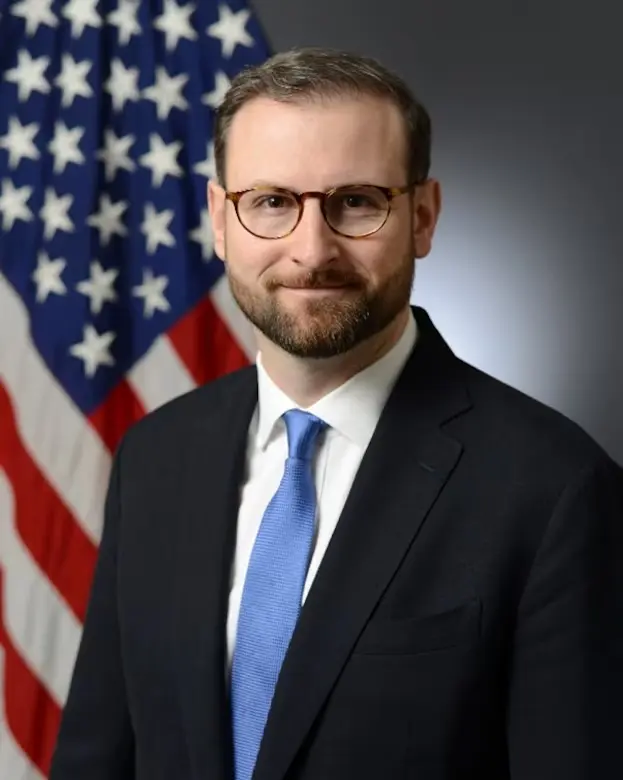
Patrick Witt has left his role as the digital asset policy lead to the White House after his temporary assignment had expired.
Witt confirmed his departure from the role via a post on his X account as the Executive Director of the White House Crypto Council.
He had originally planned to leave in July to take on mandatory army training at the Georgia Army National Guard, but was postponed due to the CLARITY Act failing to pass a Senate vote in the same month, despite White House efforts.
Despite the CLARITY Act failing a crucial September Senate vote in September, he thanked several policymakers who helped advance both the CLARITY Act and GENIUS Act over the past year.
“First and foremost, I want to thank (President Trump) for the opportunity to serve the American people again in your second term,” said Witt in his post on X. “Your clear-eyed vision to ensure the United States remains the undisputed global superpower at this time of unprecedented technological change and geopolitical strife is critical to our nation’s future prosperity.
“Regarding next steps, I’ll have more to share soon. For now, I’ll say this: I am extremely bullish on America as we embark upon a new golden age of technological advancement across multiple frontiers. I’m grateful to have done my part to unleash American innovation while in government, and I look forward to advancing that same mission in the private sector.”
Witt’s role in seeking CLARITY
Witt proved to be a key figure in advancing the CLARITY Act to the Senate floor handling disputes between the banking and crypto industries.
He was called upon by the White House to hold several meetings between the two sectors as they could not come to a compromise on proposals to ban stablecoin yield within the Senate Banking Committee’s draft of the CLARITY Act.
The White House meetings appeared to clear the air between bankers and crypto officials, agreeing to a ban on stablecoin yield in the Banking Committee’s markup which was passed in May 2026.
Witt continued to work with Senators and regulators, such as the Securities and Exchange Commission (SEC) and the Commodity Futures Trading Commission (CFTC), to iron out rules for the bill.
He also had input on legislative language surrounding regulatory jurisdictional boundaries between the SEC and CFTC, as well as a signed ethics provision from President Trump which ultimately proved to be the CLARITY Act’s downfall for Democrats.
Every Democrat Senator voted to oppose the passing of the bill in September and now leaves the bill waiting to be picked up as late as early-to-mid 2027.
Witt the latest crypto policy leader to leave
Witt becomes the latest US digital asset policy leader to have left their role this year as the market bill remains in legislative purgatory.
David Sacks, who was hired to be the White House’s Crypto and AI Czar, left this role in March 2026 after reaching his 130-day statute limit. He led the administration’s digital asset agenda and served as a conduit to the President.
Deputy Director to Witt at the White House Crypto Council, Harry Jung, left his position in July 2026. He worked with Witt on council operations, coordination and advice on legislative language.
One of the longest-serving policy leaders in the US crypto and digital sphere, Hester Peirce also known as ‘Crypto Mom’ left her role at the SEC Crypto Task Force most recently in October 2026.