Person-to-person transfers and merchant payments up to ₹2,000 stay free, with the charge capped at ₹300 on transactions of ₹75,000 and above.
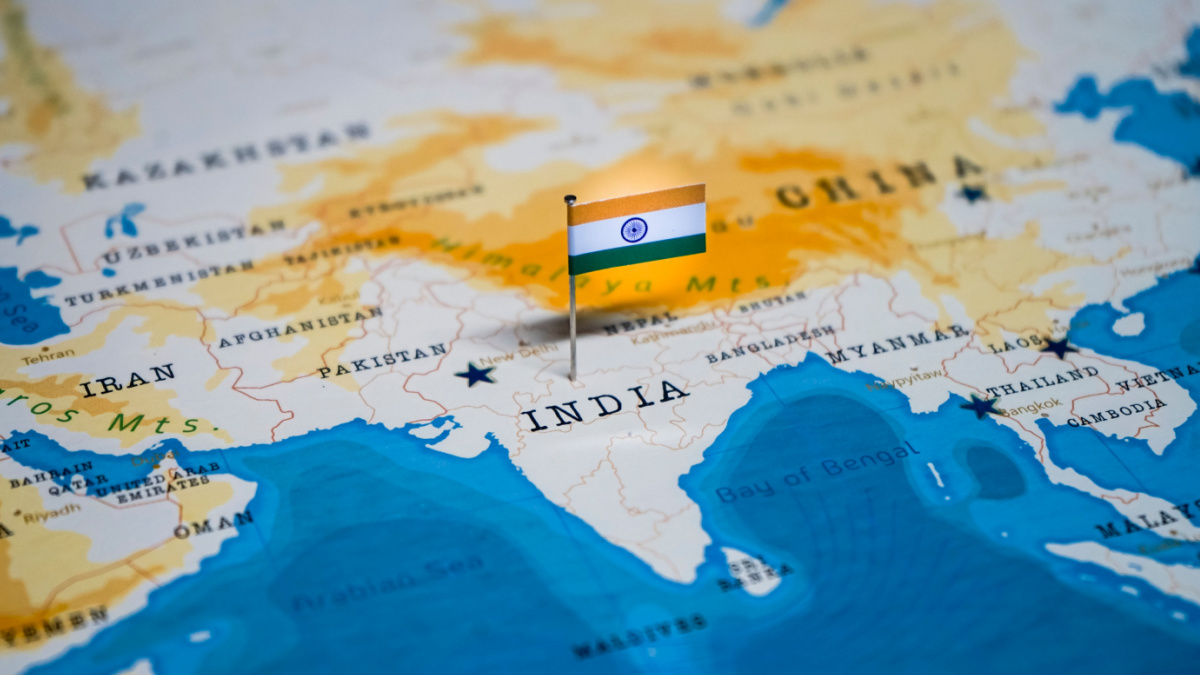
India’s government introduced a 0.4% merchant discount rate on Unified Payments Interface (UPI) payments to merchants above ₹2,000 ($20.85) on 15 September, ending more than six years of fee-free processing on the country’s main digital payment rail.
The charge takes effect on 15 October 2026. “The MDR policy ensures that UPI remains free and accessible for all citizens across India,” the National Payments Corporation of India (NPCI), which operates UPI, said in its statement.
Person-to-person transfers stay free regardless of value, NPCI said, as do person-to-merchant payments of ₹2,000 or less. Small vendors classified as P2PM, those receiving up to ₹1 lakh a month through UPI, are also exempt. UPI recorded 19.46 billion transactions worth ₹25.08trn in July 2025, according to NPCI data.
What merchants in India will pay
The 0.4% rate applies to eligible merchant payments above ₹2,000 and is capped at ₹300 for transactions of ₹75,000 and above. A ₹3,000 payment carries a fee of ₹12, and a ₹50,000 payment carries ₹200. The merchant discount rate (MDR) is paid by the business accepting the payment, not the customer sending it. Jefferies estimates payments above ₹2,000 make up about 4% of person-to-merchant volumes but around 67% of their value, Business Today reported.
Railways, telecom, fuel, insurance and utility payments above ₹2,000 attract a flat ₹5 fee per transaction instead of the 0.4% rate. Capital-market payments, covering mutual funds, securities and stockbroker transactions, carry a 0.02% rate.
Automated recurring payments are exempt: NPCI said UPI Mandates and AutoPay instructions do not carry a prescribed MDR. NPCI said the MDR is not a tax and is not collected by the government; the proceeds are shared among the banks, payment service providers and apps that carry each transaction.
The framework rests on an amendment to the Payment and Settlement Systems Act, 2007, and NPCI heads the committee that will set how the fees are divided.
Vishwas Patel, chairman of the Payments Council of India, said the charge would fund the network rather than generate profit. “The MDR is expected to further sustain the growth of UPI and not necessarily create profit pools for companies,” Patel told Business Standard. He said the revenue would support cybersecurity and technology infrastructure.
A split verdict
UPI has run without merchant fees since its launch, funded by government subsidies to banks and payment firms. Paytm Founder and CEO Vijay Shekhar Sharma said the change ended that reliance. “Until now, UPI has, in a way, operated on a grant-based system… Now, UPI has become self-sustaining,” Sharma told DD News. He added the network could now expand adoption on its own revenue.
Merchants are less convinced. A LocalCircles survey of more than 32,000 merchants across 242 districts found 17% willing to bear the 0.4% charge on payments above ₹2,000. Retailers on thin margins may pass the cost to customers or move larger payments off UPI, Business Today reported.
Pine Labs CEO Amrish Rau said the fee gave fintech firms a clearer route to earning money. “The introduction of MDR on UPI would materially change the narrative around fintechs,” Rau said in a post on X.
The introduction of MDR on UPI would materially change the narrative around fintechs. The sector has long been viewed as one where scale has been built without a clear path to monetisation. A sustainable revenue model for UPI would alter that perception, improve investor…
— Amrish Rau (@amrishrau) September 15, 2026
PhonePe and Google Pay together handle about 78% of UPI transactions, Inc42 reported. NPCI said app providers will be barred from charging customers any platform fee on UPI transactions, and that more than 95% of merchant transactions will stay free under the new structure.