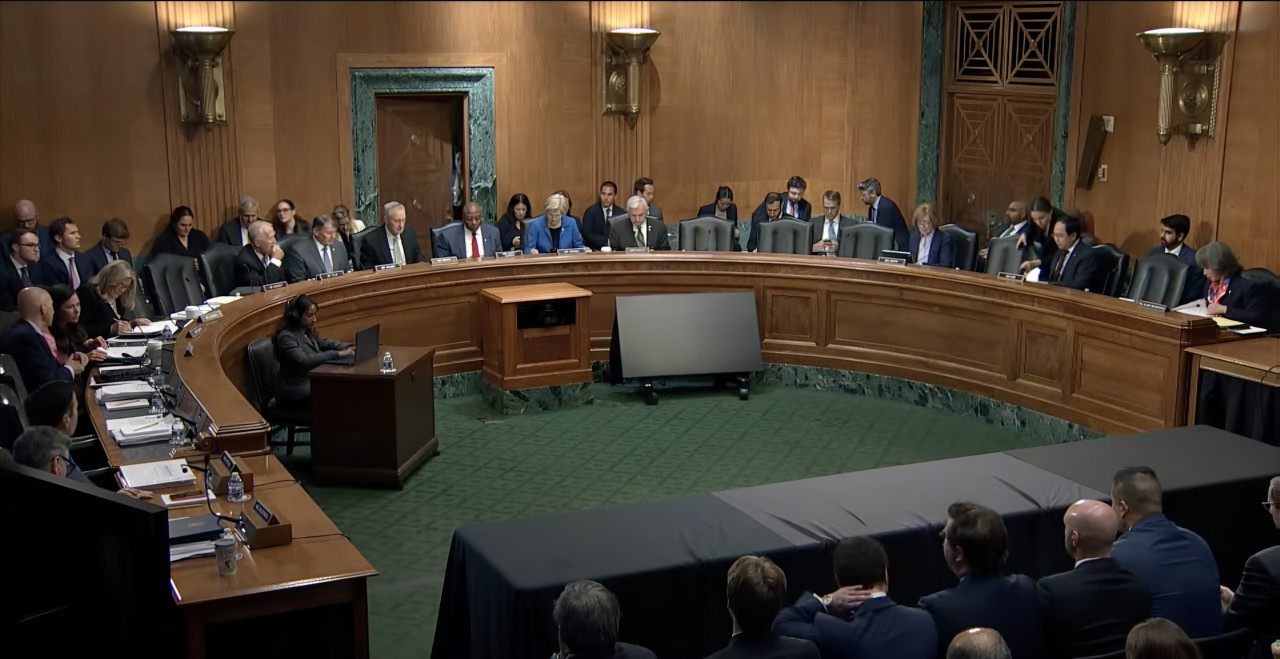
The US Senate Banking Committee voted 15-9 to advance the Digital Asset Market Clarity Act, sending the landmark crypto market structure bill to the Senate floor
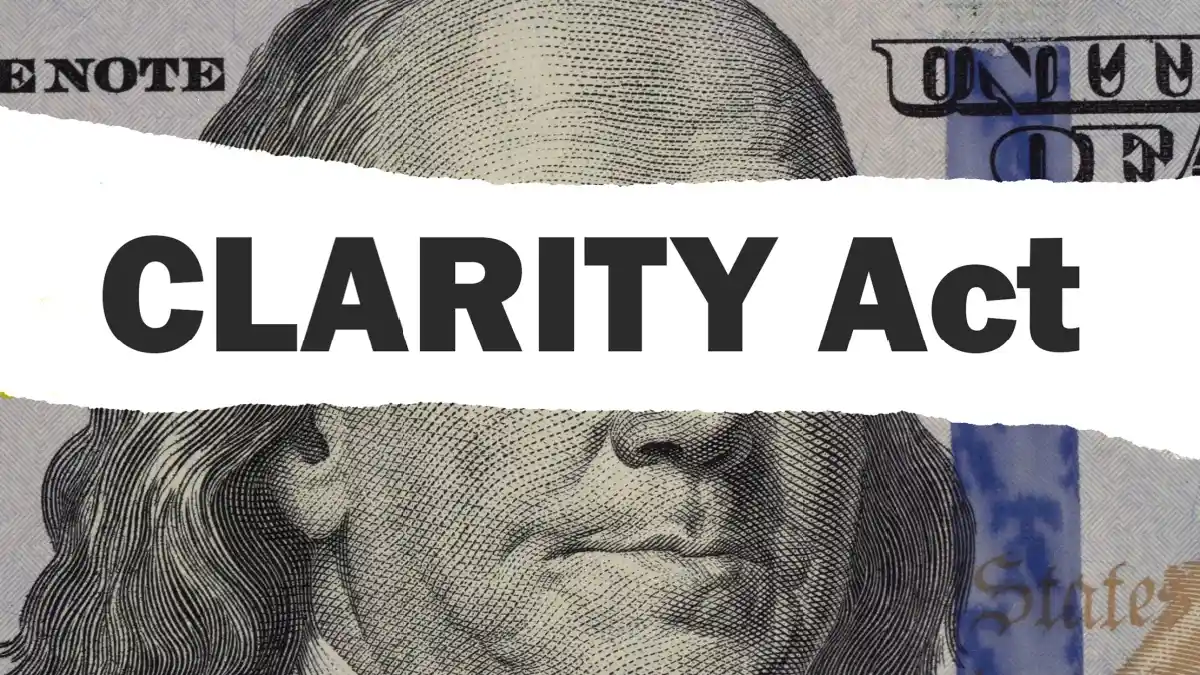
The US Senate Banking Committee has passed the Digital Asset Market Clarity Act (CLARITY Act) out of committee in a 15-9 vote, delivering the most significant advance for US crypto market structure legislation to date – though the session that produced it laid bare just how much work remains before the bill can become law.
The 309-page bill will establish a regulatory framework for digital assets, dividing oversight between the Securities and Exchange Commission (SEC) for security-like tokens and the Commodity Futures Trading Commission (CFTC) for digital commodities including Bitcoin. The bill will now progress to the Senate.
It introduces consumer disclosure requirements, insolvency protections, updated anti-money laundering tools, and new rules governing bank permissibility for digital asset activities.
All Republican committee members voted in favour under the chairmanship of Tim Scott, the Republican senator for South Carolina, who led the bill through committee. Two Democrats – Angela Alsobrooks of Maryland and Ruben Gallego of Arizona – crossed the aisle to provide the bill its bipartisan margin, while the remaining nine Democrats voted against.
The partisan character of the session ran deeper than the final tally suggests: every Democratic-sponsored amendment put to a vote failed on a strict 11-13 party-line split, with Republicans holding together as a bloc throughout. The two Democratic crossover votes on the final bill were the exception.
Alsobrooks, who led bipartisan negotiations on deposit flight protections across nine months at the table, said her support of the bill was conditional on continued “good faith” relations between the two US parties. “It does not mean that I’ll be voting for the passage of the Clarity Act on the floor,” she said.
She identified three outstanding areas: law enforcement’s concerns about financial crimes, an ethics agreement covering all elected officials including the president and vice president, and further work with the Senate Agriculture Committee on their parallel provisions.
The bill will need 60 votes on the Senate floor to pass – a threshold which requires crossing the filibuster and building a broader Democratic coalition than the two votes the committee produced. With Republicans unified, the entire question of whether the bill becomes law rests on whether Democrats can be given sufficient reason to vote yes.
Industry figures and bipartisan negotiators have said a floor vote needs to happen before August.
The CLARITY Act: A room divided
The markup crystallised the central argument around the bill. Senator Cynthia Lummis, the Republican from Wyoming who has served as the bill’s chief architect, argued that the risks critics cited were a direct consequence of the regulatory vacuum the bill seeks to fill.
“The risks of which she spoke [in reference to Senator Warren’s remarks] exist now, right now, because there is no regulatory framework,” she told the committee.
“We can return this industry to the United States because the majority of it has already left for overseas because this legislation wasn’t ready until today.”
Ranking member Elizabeth Warren, the Massachusetts Democrat opposed to Lummis throughout the session, said the bill was “written by the crypto industry for the crypto industry” and warned it would weaken securities law protections dating back to 1929, gut state-level consumer fraud enforcement, and enable the kind of excessive leverage that contributed to the 2008 financial crash.
On Republican amendments offered to address her concerns, she remained in opposition, describing a technical amendment to the bill’s tokenisation provisions as giving “the idea of a fig leaf a bad name” and another on insider trading protections as “a wine cork to plug a school bus-sized hole”.
Senator Thom Tillis, Republican of North Carolina, responding to Warren’s opening statement, said he felt he had “teleported into a parallel universe where we were talking about a different bill,” pointing to law enforcement endorsements as evidence of the bill’s anti-illicit finance credentials.
The session also surfaced the ethics question which has shadowed the entire legislative process. Several Democratic amendments sought to prohibit elected officials from issuing or profiting from digital assets while in office – a provision that falls outside the Banking Committee’s jurisdiction and is therefore absent from the current bill text entirely.

Warren claimed the Trump family had amassed $1.4bn in crypto gains since taking office. Republicans rejected the characterisation, with Senator Bernie Moreno of Ohio arguing the allegations amounted to ad hominem attacks against a man entitled to the presumption of innocence.
What happens next?
The session’s most precarious moment came when Scott moved to admit several previously ruled-out Lummis amendments after Democrats requested them as a condition of their support, drawing a sharp procedural objection from Warren.
The manoeuvre worked – the final batch of amendments passed with notably broader cross-aisle margins of 18-6 and 19-5, reflecting genuine bipartisan agreement on specific provisions even as the wider partisan divide held – but the episode highlighted how the bill may not be as truly bipartisan as many ranking members have previously claimed.
The bill now needs to be reconciled with parallel provisions from the Senate Agriculture Committee before it reaches the floor. The ethics provision must also be resolved.
White House crypto adviser Patrick Witt has indicated the administration will not accept language targeting the president specifically, while Democrats have been equally clear they will not support a bill without enforceable guardrails covering all elected officials.
With Republicans unwilling to move on the ethics question and Democrats unwilling to move without it, the provision represents the single greatest obstacle between the committee vote and the 60 needed on the floor.
Senator Mark Warner, the Virginia Democrat who spent months negotiating DeFi language and withdrew his own amendment on the day rather than force a vote, described his experience of getting the bill to markup: “I’ve been in crypto hell the last couple of months. I hope to get to crypto heaven. I guess I’m right now in crypto purgatory, but I’m looking forward to getting all the way there.”
Lummis, who described the bill as the hardest piece of legislation she had worked on across nearly four decades in public service, was slightly more resolute in her ambitions to get the CLARITY Act over the line. “We’re like the dogs that caught the tire,” she said. “It kept spinning and our heads kept beating against the pavement, but we can’t let go… because we caught the tire.”
Industry reacts
Outside the committee room, the industry reacted quickly, with Coinbase CEO Brian Armstrong calling the vote “a historic day for crypto and for the future of digital assets in America,” citing improvements on rewards, tokenisation, DeFi, and CFTC authority compared to earlier versions of the bill.
Elsewhere, Ripple’s Chief Legal Officer Stuart Alderoty described the 15-9 result as “a monumental outcome and a clear signal that Washington gets it.” Lummis, posting on social media after the vote, called it “one small step for the Clarity Act and one giant leap for digital assets.”
Bitcoin also rose sharply to $82,000 on the day.
A coalition of financial trade associations including the American Bankers Association, the Bank Policy Institute, and the Independent Community Bankers of America welcomed the committee vote as an important step but continued to press for the bill to close a loophole that would allow digital asset exchanges to pay stablecoin yield in circumvention of the GENIUS Act‘s prohibition.