Payment Expert’s ID Check: Payments Professionals offers insights from industry leaders and experts on how they got their start in the financial industry, from their early years in education to how they have climbed the corporate ladder.
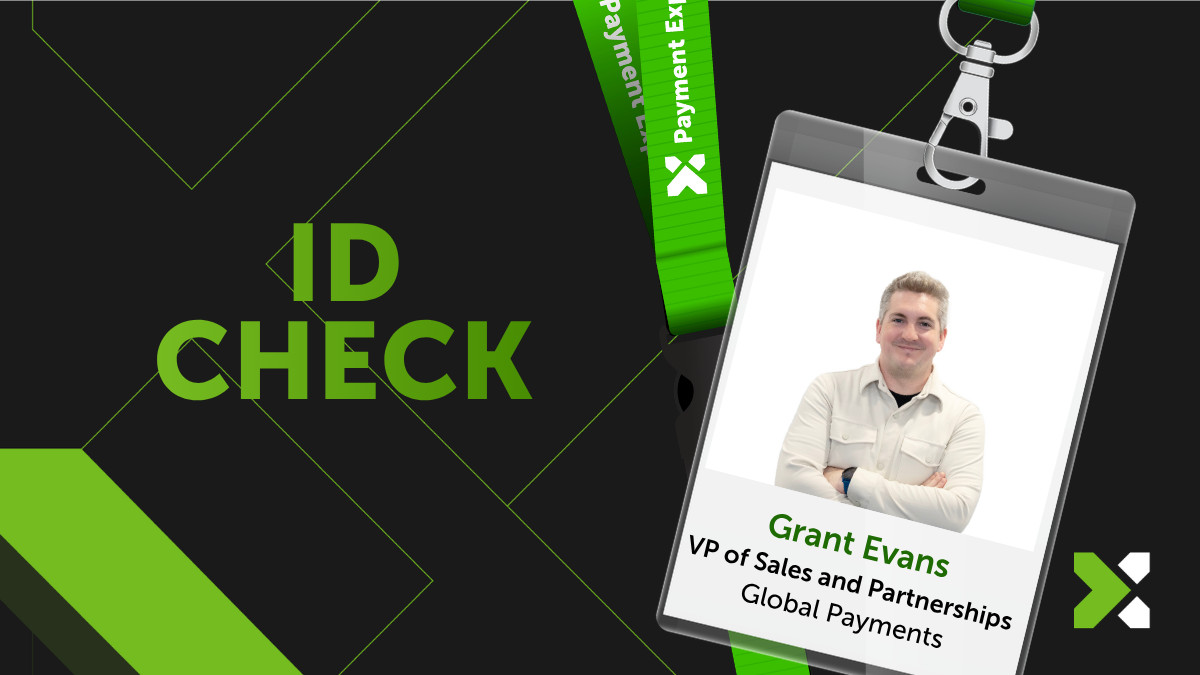
This week, Grant Evans, VP of Sales and Partnerships at Global Payments, goes underneath the payment stack to reveal why the industry is changing from embedded payments to AI automation and why his brother has been a trusted advisor coming from the same industry.
Where did you go to university and what did you study? What impact did this have on your current journey?
I went to the University of Plymouth where I studied a BA in Building Surveying and the Environment.
Ironically, it actually led me into the world of sales in a weird and wonderful way, by making it clear that a career in construction was the furthest thing from what I wanted to do! I do still have a soft spot for property and home renovations though.
What first drew you to the payments industry and why have you stayed?
I was introduced to the payments space by my brother at 20 years old and quickly saw the growth potential. While I started in direct sales, I often found myself generating new opportunities through partner channels. It was only a matter of time before this transitioned into a full-time partnership role.
I’ve stayed because the industry keeps evolving, and the value of payments has shifted from being a background utility to being a strategic lever — especially for Software-as-a-Service (SaaS) platforms embedding payments. As embedded payments become standard, differentiation increasingly comes down to how well those payments perform and I’m excited by the work required to improve approval rates, reduce declines and protect conversion at scale.
Are there any lessons from your first role in the industry which you still draw on?
I started out at one of the original independent sales organisations (ISO) in payments which had a true multi-acquirer and multi-payment service provider (PSP) partner setup.
This gave me a great deal of knowledge on the nuances between different acquirers and PSPs, from risk appetite to technical capabilities. I’ve kept that interest in broad market understanding throughout my career, which I think has helped me in the commercial roles I have been in.
Knowing your product inside out is paramount, but having a good understanding of the competitive landscape is what will really help you create the best value for customers.
When was your first big break in the industry? Why was this such a significant moment for you?
My time at Realex Payments (later acquired by Global Payments in 2015) was a pivotal time in my career. It was my first purely e-commerce focused enterprise sales role at a time when the UK and European online payments industry was going through a huge period of change.
We had the breakout of orchestrated alternative payment methods, buy-now-pay-later launching in the market and standalone fraud platforms taking transaction monitoring to another level. Realex also prided itself on having a highly technical sales team, and my product knowledge was taken to another level during my four years in that role.
I also had the opportunity to deal with merchants in a broader array of sectors and in more markets than I had previously been exposed to.
Was there a moment you faced in the industry which really challenged you? How did you overcome this?
One of the biggest challenges I see – and one I think the industry can underestimate – is assuming that embedding payments (or adding AI) automatically guarantees a better outcome.
In reality, without authorisation optimisation, embedded payments can quickly become a source of friction through avoidable declines that damage conversion and consumer trust.
The way I approach overcoming that is to treat payment performance as strategy: focus on the drivers of acceptance rates, reduce friction points like unnecessary declines or broken handoffs, and use data-driven decisioning to keep the customer experience smooth – whether transactions are initiated by people or increasingly, by AI agents.
What are some of the skills you deem essential to starting in your industry and how have yours developed over the years?
To do well in payments, you need commercial instincts, strong relationship and ecosystem skills, and the ability to translate complexity into outcomes – because payments success isn’t just “can you process it?”, it’s “does it convert reliably at scale?”
Over time, my skill set has evolved from direct sales into building and scaling partner channels, and today, it’s increasingly focused on helping platforms optimise performance – using authorisation optimisation and data insight to reduce declines, protect conversion and safeguard customer experience.
Who was your biggest role model – inside or outside of your industry – who continues to inspire you in your current career?
My oldest brother has always been an inspiration. He had a phenomenal career in financial services as an Independent Financial Adviser and his determination to continue developing and growing in his career certainly rubbed off on me. He is my go-to sound board for career advice and it’s nice to get an opinion from someone outside of payments who has a slightly different perspective on things.
Within the payments industry, I have also had a number of mentors during my career who have helped me along the way, but I always credit Richard West at acceptcards for taking me under his wing during the earliest part of my career, giving me a really strong foundational knowledge of the payments industry that started me on my journey in sales.
If you didn’t work in the industry, what other career option would you have pursued?
I have a real passion for food and drink, so I would likely have had a career in hospitality in some way, shape or form. Probably as a chef, as my mum is a phenomenal cook and my brothers and I have always enjoyed cooking for and entertaining friends and family.
Lastly, what is some advice you would give to an aspiring person looking to get a start in your respective industry
If you’re starting out, don’t treat payments as a background feature – treat it as a key provider of merchant performance and consumer trust. As embedded payments becomes standard, the differentiator is whether payments succeed consistently.
This requires a strategic approach to authorisation optimisation and a commitment to leveraging data insights to improve approval rates, reduce declines, and protect the customer experience at the point of purchase.
If you’d like to be featured within Payment Expert’s ID Check series, please reach out to Callum Williams ([email protected]).