Banking giants including HSBC, JPMorgan Chase and Standard Chartered accused of unwittingly processes payments as part of Iranian money laundering scheme
Five of the world’s leading banks – HSBC, Standard Chartered, JPMorgan Chase, Citibank and Bank of New York Mellon (BNY) – are allegedly embroiled in a multimillion-pound scheme to launder money on behalf of Iran.
According to reports from The Telegraph, payments have been processed for the Iranian regime as part of a plot to evade sanctions, which, unbeknownst to the financial institutions mentioned, has led to payments being processed which should be sanctioned.
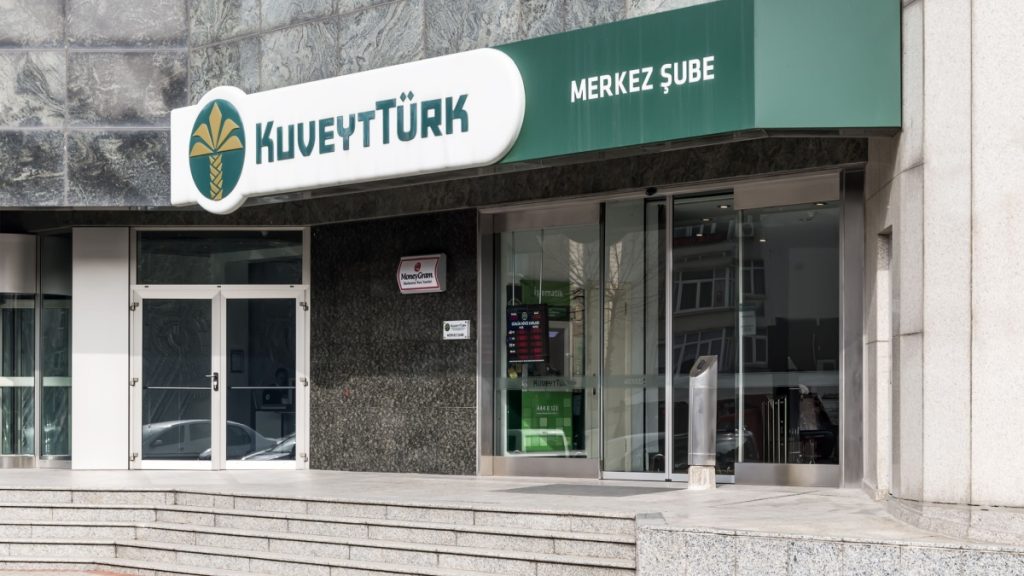
The case centres on Kuveyt Turk, the Turkish subsidiary of Kuwait Finance House (KFH), which is alleged to have used front companies to disguise underlying connections to Iran and routed dollar-denominated transactions through the five banks acting as correspondent banks.
US court filings reveal a specific transaction of $5.7m involving the National Iranian Oil Company, a sanctioned entity under US, EU and UK regulations.
The alleged scheme goes further, with court documents submitted by ENEXD to the Federal Court for the Southern District of New York alleging recent euro-denominated payments for equipment (potentially related to nuclear weapons and ballistic missiles) were processed through Kuveyt Turk for two US-sanctioned entities: Khatam Al-Anbiya Construction and Arvand Petrochemical Company.
Both are affiliated with Iran’s Islamic Revolutionary Guard Corps (IRGC). Equipment referenced in the filings includes fan blades and a large axial fan used in underground ballistic missile silos.
The allegations emerged from a civil dispute brought by Delaram Zavarei, an Iranian businesswoman who claims to have been the target of a politically motivated campaign by the Iranian state, which allegedly conspired with KFH entities to strip her oil and gas company of millions of dollars’ worth of equipment.
Her legal team is also preparing a separate claim in the High Court in London.
A familiar problem for familiar names
For HSBC and Standard Chartered in particular, the allegations will reopen uncomfortable chapters in their compliance histories. HSBC was fined $1.9bn in 2012 for violating anti-money laundering laws, with US investigators concluding the bank had allowed Mexican and Colombian drug cartels to move money through its accounts without adequate scrutiny. It was also fined in 2021 over historic AML shortcomings.
Standard Chartered has faced repeated censure on similar grounds, when it was forced to pay $330m for sanctions-related dealings with Iran – also in 2012.
Standard Chartered reached a £1.5bn ($2.02bn) settlement in late 2025 over claims that it misled shareholders about historical sanctions breaches, meaning any suggestion that comparable issues have persisted will carry significant legal and reputational risk.
In March 2026, US Treasury’s Financial Crimes Enforcement Network (FinCEN) reminded financial institutions of their obligations regarding Iran, reaffirming the country’s status as a high-risk jurisdiction following an updated Financial Action Task Force (FATF) review.
The timing of the revelations is sensitive because the US Treasury recently warned it was “moving aggressively” on Iran, stating that financial institutions should be “on notice” that it is “prepared to deploy secondary sanctions against foreign financial institutions that continue to support Iran’s activities.” That threat is explicitly aimed at non-US banks – which includes both HSBC and Standard Chartered.
Although it remains unclear how the US administration will react to the news, JPMorgan Chase, Citibank and BNY have become involved in the illicit transfer of funds on Iran’s behalf.
For the banks involved, whether regulators and courts conclude that compliance systems were circumvented despite best efforts, or that warning signs went unheeded, will determine the consequences.
Court documents cast doubt on banks’ involvement
However, Payment Expert understands in court documents filed to the Southern District of New York, Citibank noted that none of the five banks had located the transactions at issue in their records, despite producing thousands of pages of documents in compliance with the court’s original order.
On April 13 2026, Judge Arun Subramanian denied ENEXD’s subsequent motion to compel further disclosure, ruling that the application had overstepped the scope of the court’s prior order and was based on what the filing described as an “unsubstantiated” narrative involving entirely different entities.
Crucially, the banks named in the case are not defendants facing sanctions evasion claims — they were served as third parties in a discovery process aimed at gathering evidence for a forthcoming UK proceeding. For now, the allegations against the banks remain unproven, and the documentary record produced so far does not indict the banks involved.
Standard Chartered, Citibank, HSBC and JPMorgan Chase all declined to comment when approached by Payment Expert.