While many capital markets have become enamoured with the near-instant real-time settlement potential of stablecoins, China’s 2021 ban of cryptocurrencies has now expanded to stablecoins and tokenisation.
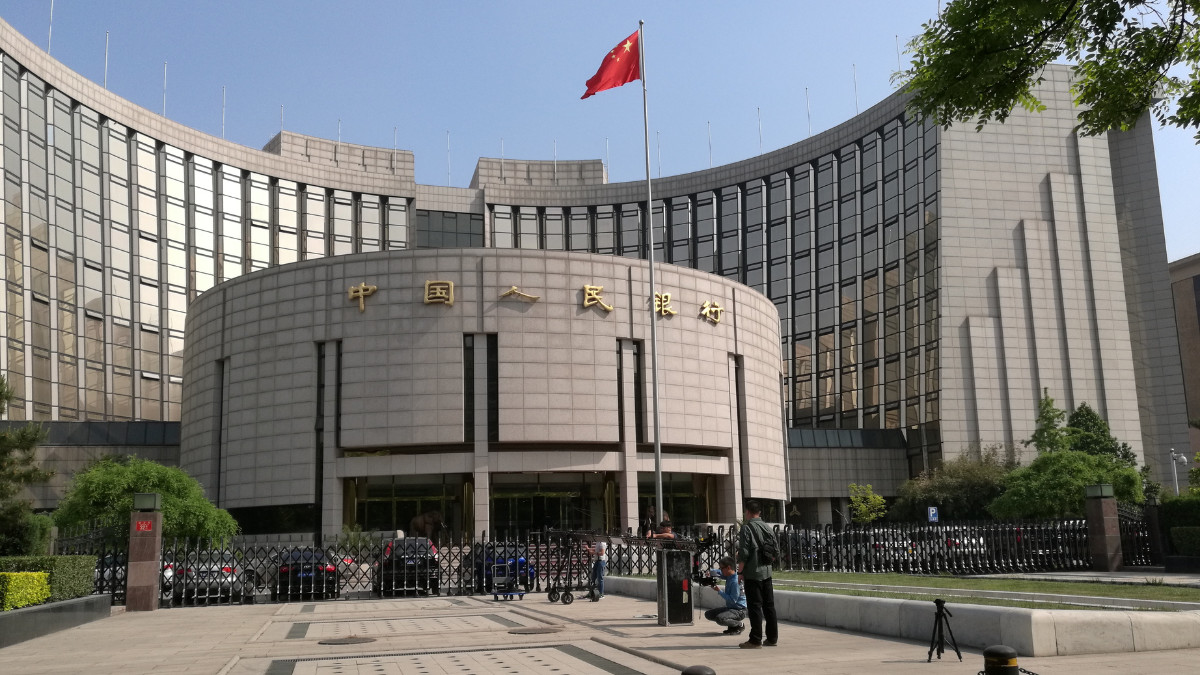
The People’s Bank of China (PBoC) has reaffirmed its opposition to the use of unlicensed yuan-backed stablecoins in financial services and has expanded its crackdown on decentralised finance (DeFi) to include the tokenisation of real-world assets.
The PBoC issued a notice on February 6 alongside other authorities, including the General Administration of Financial Supervision, on the “further prevention and disposal of virtual currency and other related risks”.
Having already placed a ban on the usage of private cryptocurrencies as a currency for payments, the notice extended this to stablecoins and tokenisation of real-world assets, viewing them as a “new risk situation”.
The PBoC defines cryptocurrencies and stablecoins as “virtual currencies” and are classified as commodities as opposed to currencies.
“The Notice on Further Preventing and Disposing of Speculation Risks in Virtual Currency Transactions issued in 2021 further clarifies that stablecoins such as Bitcoin, Ethereum, and Tether do not have the same legal status as legal currency,” said the PBoC notice.
“Carrying out virtual currency-related business activities in China is illegal financial activities. It is strictly prohibited.”
In regards to the tokenisation of real-world assets, the notice it defines this process as the use of encryption technology and distributed ledger to” convert the ownership, income rights, etc. of assets into tokens (tokens) or other rights and interests, bond vouchers with token (token) characteristics, and to carry out issuance and trading activities”.
China has now deployed a ban of tokenisation of real-world assets as an illegal financial activity in connection with providing intermediaries, suspected illegal selling of token tickets and the public offering of unauthorised public securities.
China’s stablecoin U-turn?
In August 2025, reports linked China with developing a roadmap for the potential introduction of Yuan-denominated stablecoins.
Media reports revealed at the time that the State Council was reviewing the roadmap for Yuan stablecoin to be used in global markets. Chinese administrative officials were also wary of the dominance of US dollar-backed stablecoins, such as USDT and USDC, over the stablecoin market.
However, only several months later in November 2025, the PBoC published a notice referring to a “coordination mechanism for combating virtual currency trading speculation” in relation to the stablecoins.
China for the first time acknowledged stablecoins as a “form of virtual currency”. This is the same classification for cryptocurrencies, thus, making them prone to potential bans.
Virtual currencies are banned as a form of currency and for financial services due to not meeting the PBoC’s requirements for customer identification and money laundering, posing a fraud threat to domestic and international transactions.
China opts for CBDCs
While stablecoins are now placed under the same crypto restrictions, this has not deterred China from developing its own digital currency.
China’s central bank digital currency (CBDC), the digital yuan (e-CNY), has become the largest in the world after processing more than 3.4 billion transactions in the last five years.
The PBoC announced on January 1 it will update the payment rails for the E-CNY to enable digital bank deposit interest. Commercial banks and payment service providers will be able to earn interest which has been enabled for stablecoin issuers in certain countries.
The central bank also announced a new roadmap which highlights plans to increase the adoption of e-CNY while also developing practices to improve the efficiency and security of the CBDC.
e-CNY cross-border transactions have accounted for 95% of all CBDC payments ($55bn) via the mBridge project – a BIS innovation Hub-led project alongside central banks from China, United Arab Emirates (UAE), Thailand and Hong Kong.