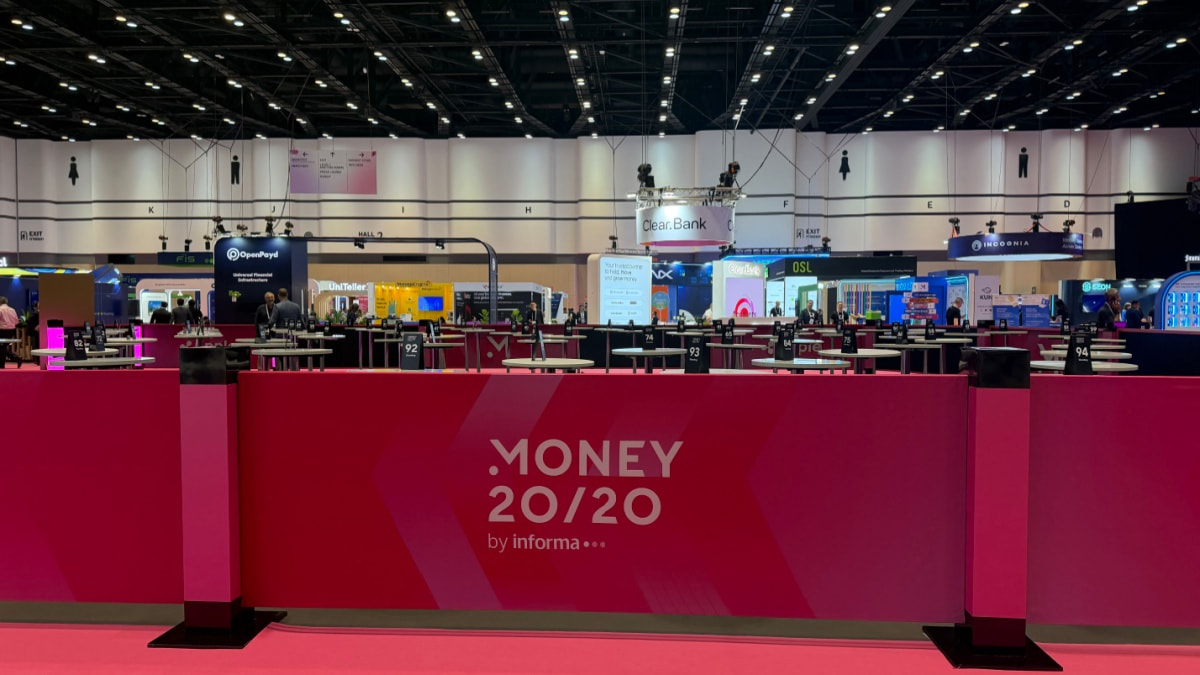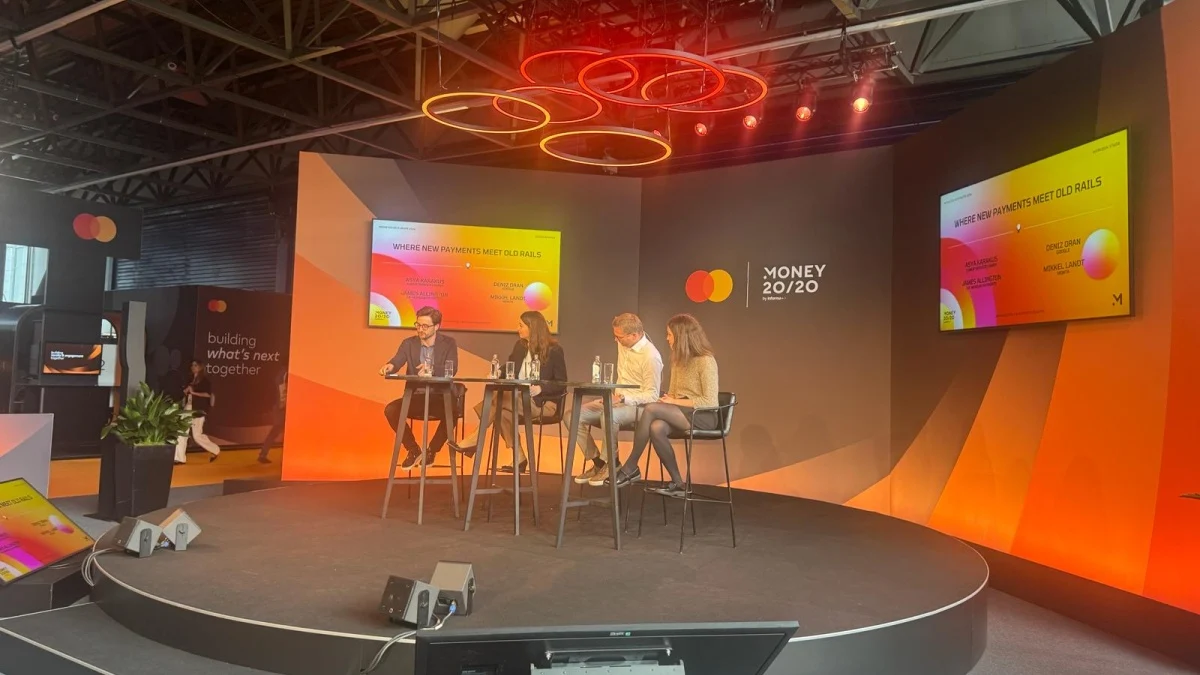
Payment Expert is on the ground at Money20/20 Europe. Expect real-time insights from leading industry leaders engaging in conversations about fintech, payments, banking, digital currencies, and much more.
To read what happened on Day 1, click HERE.
To read what happened on Day 2, click HERE.
16:00 – That brings an end to Day 3, and to Money20/20 Europe 2026
As the lights go down on the RAI Amsterdam for the final time this week, that’s a wrap on Money20/20 Europe 2026.
It’s been a brilliant three days – packed sessions, strong announcements, and no shortage of candid conversations from people who clearly had things to say.
The Payment Expert team has been on the floor for all of it, and the full coverage from the week is live across the site.
We’ll be back with more in the days ahead. Thanks for following along – see you at the next one.
14:50 – Local payments are faster than ever – so why does money still stop at the border?
A new report launched this week from Thunes and Juniper Research analyses how domestic payment systems have never been more advanced, yet cross-border interoperability remains largely unsolved. Over a billion people still wait days for international transfers, even as speed ranks as the top priority for recipients globally.
The inaugural Thunes Cross-Border Payments Interoperability Index benchmarks 50 countries and finds Europe leading – largely on the strength of SEPA – but that efficiency remains largely self-contained within the Eurozone. Elsewhere, even the most advanced domestic systems hit a wall at the border.
The problem, the report concludes, is not a lack of infrastructure. It is a failure to connect what already exists.
14:45 – Tokenised payments are coming – but the infrastructure isn’t there yet
Stablecoins, tokenised deposits and CBDCs are all being built simultaneously, all carry genuine promise, and none are ready to operate at the scale the industry is discussing. That was the candid assessment from OpenPayd, Swift and Mambu at Money20/20 Europe in Amsterdam.
The stablecoin case for cross-border payments is probably furthest along, particularly in emerging market corridors where legacy infrastructure is absent. But for the longer-term opportunity, tokenised deposits kept drawing the panel back — properly regulated and interoperable, they could unlock liquidity currently trapped in the settlement cycle in a way stablecoins cannot replicate.
The institutions that succeed will be those that treat all three as different instruments for different purposes and build the orchestration capability to route across them dynamically. The next two years are about laying the foundations. The scaling comes after.
Full write-up here.

14:30 – TrueLayer’s Bank on File is live – and it could change UK recurring payments
TrueLayer launched Bank on File this week, bringing recurring Pay by Bank payments to the UK for the first time.
Trading 212, IG Group, InvestEngine and East Lothian Housing Association are among the first businesses live on the new payment method, which allows customers to authorise recurring payments directly from their bank account without a card.
Failed card payments cost subscription businesses an estimated 9% of annual revenue, and 5.5 million UK consumers have missed a payment in the last six months. Bank on File removes the underlying problem – no card to expire, no number to be stolen.
The launch is made possible by the UK Payments Initiative (UKPI), a new scheme developed through collaboration between the FCA and over 30 banks and fintechs. Use cases at launch span investments, housing and utilities, with subscriptions and everyday commerce to follow.
14:15 – Final panel takes the Orbital Stage
The Orbital Stage has hosted everything this week, from the opening session with Kraken to DJ Yoda at last night’s party. Now it’s being used for the final time, with a panel on how AI is reshaping customer experience.
Sharing the stage are Helen Bierton of Lloyds Banking Group, Mandy Lamb of Visa and Mette Gade of Lunar.
Lamb opened by asking how each organisation is modernising its infrastructure to keep pace with expectations.
Gade noted that Lunar’s advantage is having no legacy stack. For a neobank, she said, “it always has to work” because that’s the only path to invisible banking.
Bierton offered the perspective of a 200‑year‑old institution. Lloyds is modernising its tech stack, she said, which will unlock new opportunities across its broad suite of products. Connecting systems means connected data, and embedding that data responsibly is what will help build customer trust.
13:20 – Breaking: Triple‑A unveils new stablecoin‑powered multi‑currency accounts
Kailash Madan, Chief Commercial Officer at Triple‑A, has announced the launch of multi‑currency accounts with direct access to stablecoin rails.
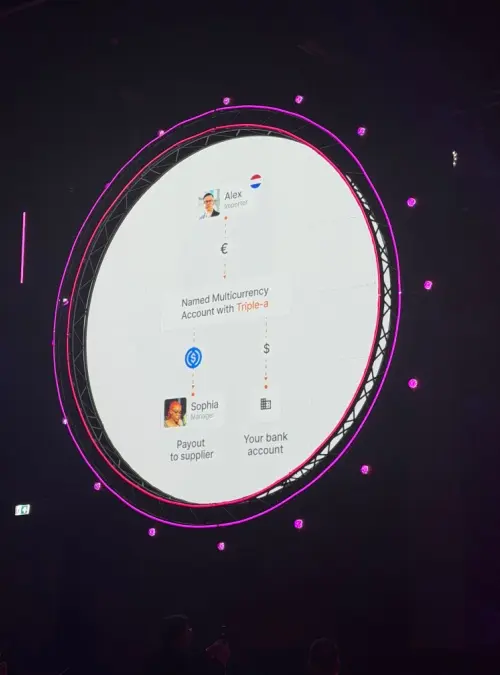
Triple‑A, a licensed Singapore‑headquartered fintech enabling businesses to send, receive and process stablecoin payments, says it has been rethinking how stablecoins should actually help fix cross‑border friction.
How does it work?
Businesses get a multi‑currency account, for example, to collect EUR. Triple‑A receives the funds and can pay out in stablecoins or USD directly to a bank account. The result is faster settlement, fewer delays and no need for local entities.
Madan says the solution is relevant for any business needing EUR collections and global payouts, especially PSPs and EMIs that struggle to access local euro rails without setting up their own infrastructure.
12:00 – Sneak peek: Who owns the agent, and what happens when it goes wrong?
The debate at Money20/20 Europe this year isn’t whether agentic commerce is coming – it’s what breaks if the industry gets the foundations wrong.
We caught up with Reshmi Suresh, Head of Agentic Commerce at Global Payments, who’s not losing sleep over interoperability, noting contactless payments started the same way – fragmented, incompatible, eventually sorted. “It’s only been nine or ten months since the first protocol came out,” she said. Give it time.
Agentic identity, and who owns it is a more difficult question to answer. Fraud models were built to block all bots – now the industry has to selectively let good ones through, which is a different problem entirely. Reshmi’s belief is to treat agent identity like a passport. Different issuers, consistent structure, and crucially – publicly accessible.
“What we want to avoid is 200 different registries,” she said. “Make it public.”
Her parting advice to merchants sitting on the sidelines: open Gemini, search your own brand, see what comes back. The technology is already there.
11:15 – There’s a fraud epidemic, but nobody seems to care
Paul Weathersby, Chief Product Officer for Identity & Fraud at Experian, warned that the UK is facing a surge in highly coordinated fraud attacks and the industry response isn’t keeping pace.
“Attacks that used to happen once or twice a month now happen every day,” he told the audience, noting the falling cost of fraud and the increased sophistication of criminals.
The panel, including David Birch of Consult Hyperion, highlighted how AI‑driven fraudsters can now spin up near‑perfect fake websites in minutes, even deliberately downgrading them to avoid triggering trust signals.
Despite escalating threat levels, regulatory friction for legitimate firms and criminals accelerating faster than defences, the panel questioned why nobody seems to care.
10:40 – Google Wallet adds EU digital IDs and new age checks
Google has confirmed that Google Wallet will support digital IDs from select EU states this summer.
The update also introduces a new age‑verification system built with Sparkasse Bank, allowing users to prove they’re over a certain age without sharing personal details such as name or address.
Google is also improving checkout in the EU, with Google Pay direct checkout available to merchants, and biometric‑only authentication will now replace one‑time passcodes for many online payments.

10:00 – Marqeta: credit products haven’t kept up with how people actually use credit
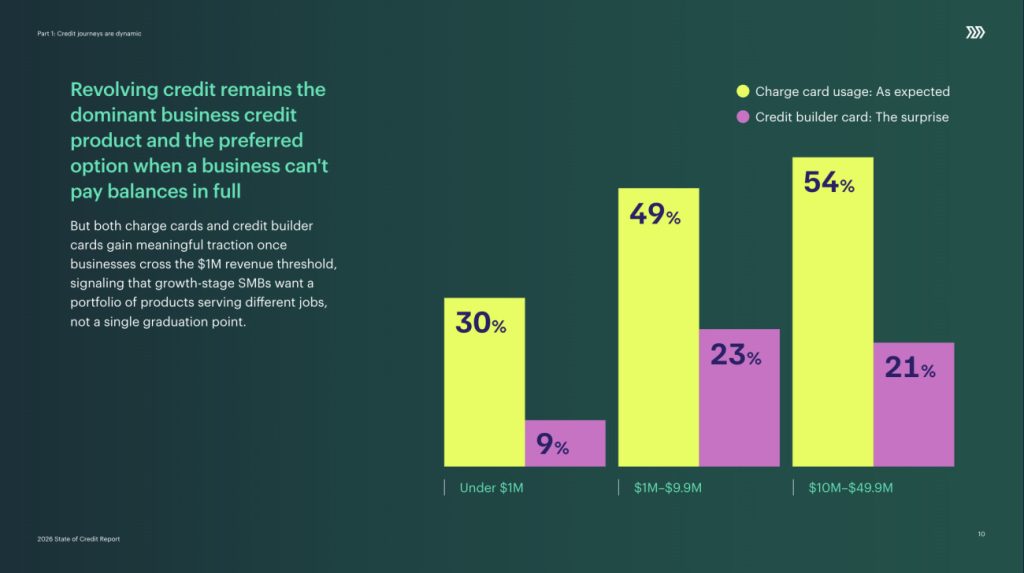
Marqeta used Money20/20 Europe to publish its 2026 State of Credit report, drawing on surveys of 5,000 consumers and SMBs across the US and UK.
The headline finding won’t surprise anyone working in payments: customers are already managing credit themselves, juggling cards, BNPL apps and bank accounts across multiple providers, because no single product covers all of their needs.
The report found 79% of BNPL users keep using BNPL even when they have credit card access. 66% of SMBs work with more than one financial services provider. 96% say they are intentional about which payment method they use for a given transaction, switching between them up to ten times a month.
The report frames this as a design issue where customers move between credit products at predictable moments – a credit score improves, a business crosses a revenue threshold, a life stage shifts – and most providers aren’t built to serve those transitions.
09:30 – The final day at Money20/20 Europe
A later start to the final day of Money20/20 Europe, but there’s still plenty on the agenda as conversations continue around the future of finance.
Today’s sessions will dig into how digital IDs could help tackle Europe’s escalating fraud problem, whether Revolut can become a customer’s main bank and what the next wave of cross‑border payments modernisation looks like.
The Payment Expert team will also be bringing more news announcements, new multimedia content , including follow‑ups to yesterday’s voxpop with Moorwand CEO Luc Gueriane.