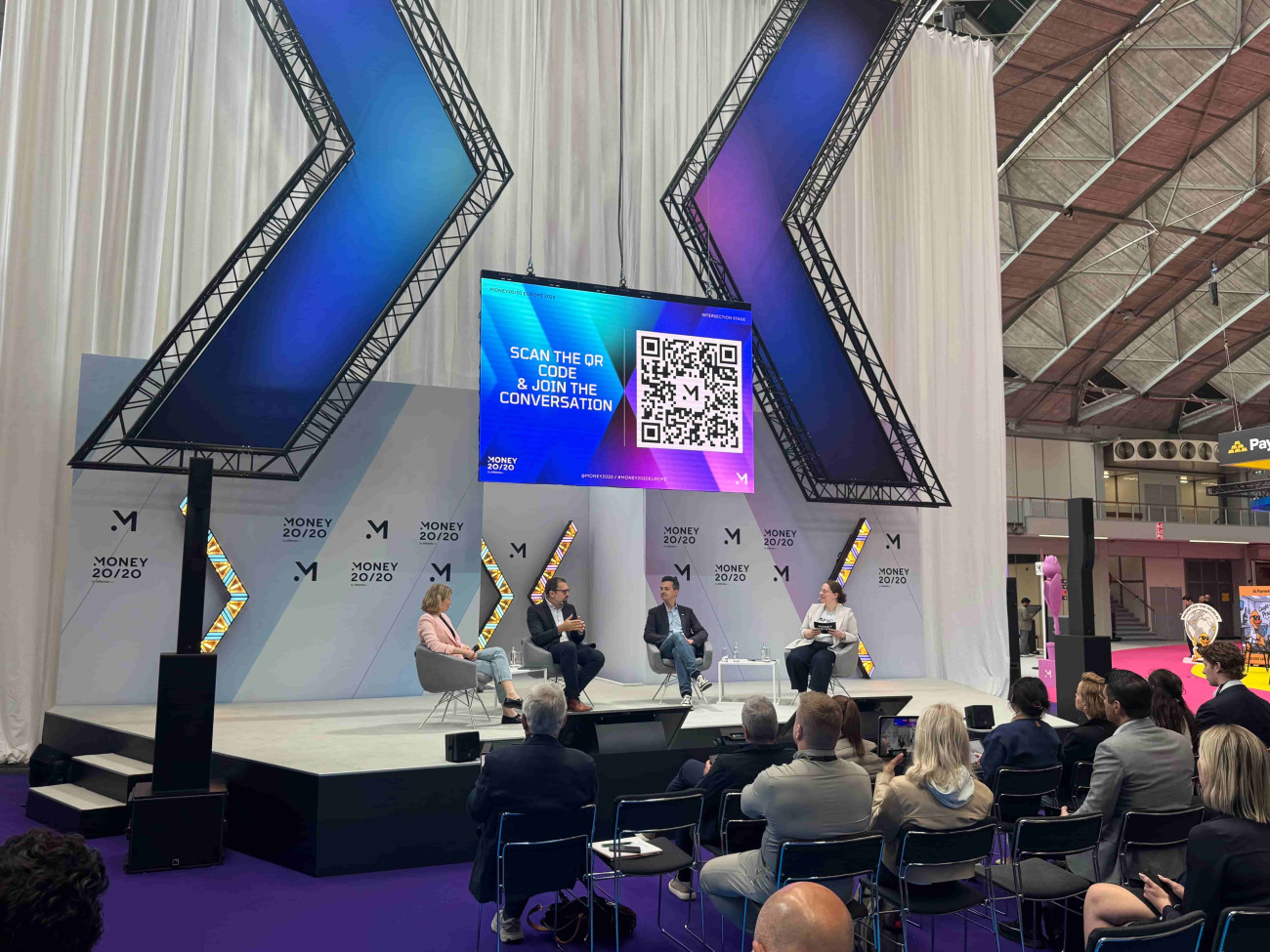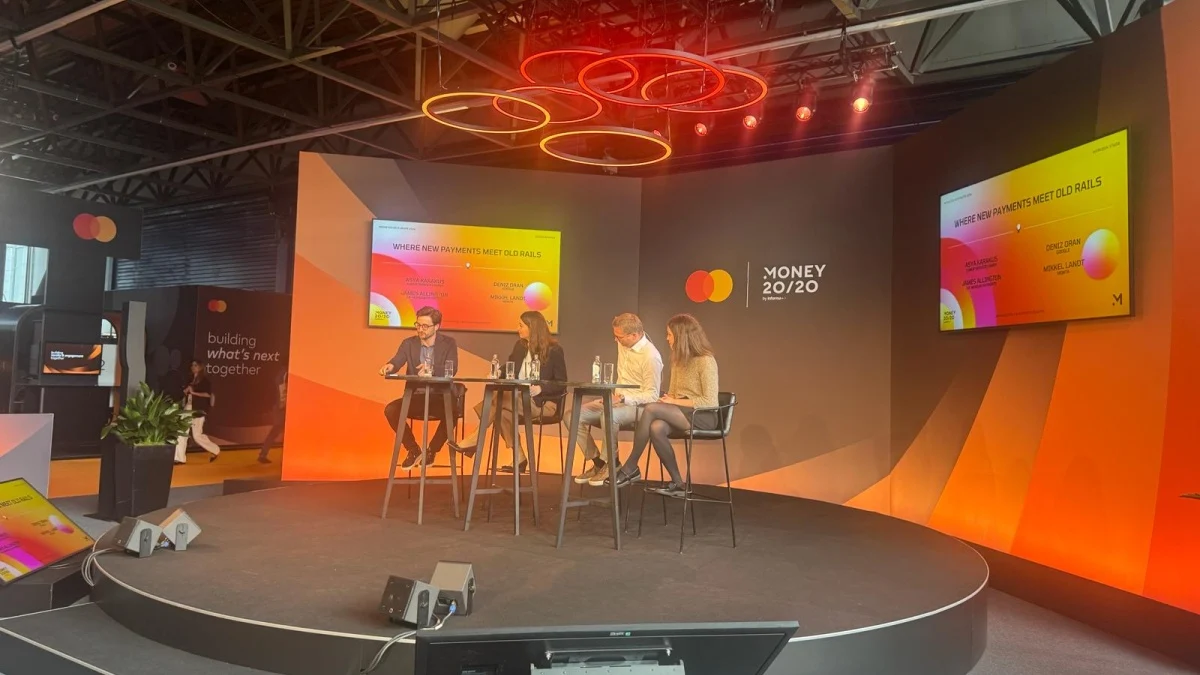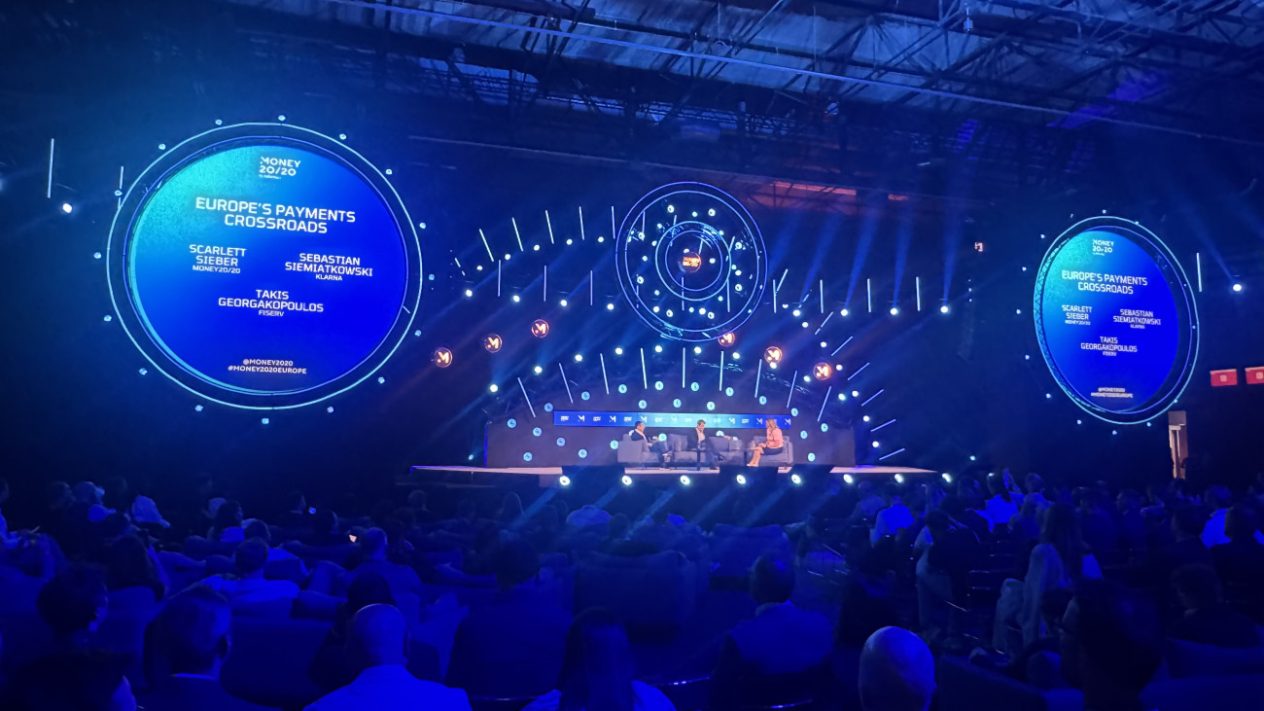
Klarna CEO Sebastian Siemiatkowski and Fiserv COO Takis Georgakopoulos squared off on Europe’s payments future in the day’s standout panel at Money20/20 Europe in Amsterdam
Europe has the talent, the infrastructure and the innovation track record – but without the capital and ambition to match, it risks ceding the next generation of payments to the US and China.
This was at the heart of discussion on ‘Europe’s Payments Crossroads’ at Money20/20, where Sebastian Siematkowski, CEO of Klarna, and Fiserv’s Chief Operating Officer Takis Georgakopoulos, dissected what Europe gets right in payments, what it gets wrong, and where the next decade of competition will be won or lost.
Built on Brussels, constrained by it too
Klarna only exists, Siemiatkowski reminded the audience, because of a piece of EU legislation passed two decades ago that allowed bank licences to be passported across member states – without it, there would be no Klarna.
The regulatory foresight which birthed Klarna has produced something else the early architects in Brussels were hoping for: a genuine pan-European financial services market, with neobanks now operating on single platforms across multiple countries and starting to put real competitive pressure on incumbent institutions.

However, there are two respects in which Europe’s payments industry remains structurally disadvantaged against the US and China: the absence of a truly homogeneous home market, and a frugality in Europe vs US when it comes to the capital available to scale companies.
Whereas American companies are backed by deep private equity and venture capital markets, and Chinese firms benefit from municipal and state investment, European startups have had to make do with considerably less.
The consequence, Georgakopoulos argued, is that when the next wave of innovation arrives – whether in AI, infrastructure or something else entirely – Europe risks being unable to fund the companies that could lead it.
Interchange differences, which are capped at 20-40 basis points in the EU against roughly 200 in the US, have directly constrained the revenue base of European payments businesses.
Siemiatkowski said the nature of Europe working on smaller revenues: “Perhaps I agree with the political objective of making payments cost less for consumers,” Siemiatkowski said, “but it also had consequences for the size of the industry.”
The counterargument, which Georgakopoulos made and Siemiatkowski accepted, is that low margins forced a different kind of innovation – SEPA Instant and account-to-account infrastructure have flourished in Europe because there was no lucrative card ecosystem worth protecting, whereas in the US, no such incentive exists – the card networks dominate because they are so lucrative in the US.
European companies trained to operate at thin margins may find well-trained fiscal discipline a genuine competitive advantage when they move into higher-margin markets abroad, Siemiatkowski argued: frugality, as he put it, drives innovation.
European Sovereignty is not a strategy
Both speakers agreed pushing European businesses to use European providers, or building the continent’s technology future around separation from the US and China, is not the right path to global competitiveness. European companies have to earn their position by being better and more competitive, not by being mandated into relevance.
Georgakopoulos said countries that frame their technology policy as a choice between sovereignty and innovation are already losing the argument. “At the end of the day, people choose based on where they see value, and if you’re just trying to protect your borders, you’re going to lose.”

He pointed to the number of successful US fintechs founded by Europeans as evidence that the issue is not talent or ideas, but the environment in which they are backed and scaled.
Siemiatkowski reserved particular frustration for cookie consent rules, estimating that Europeans collectively waste 60 full lifetimes every day clicking accept – with no meaningful improvement in actual privacy to show for it.
Europe’s regulatory instinct is often well-intentioned, he suggested, but the execution has too often produced friction without protection and stifled commercial activity in the process, though he added there are signs Brussels is beginning to recognise as much.
What next for Europe in the next five years?
Looking ahead over the next five years, Simeiatkowski said the biggest change in Europe will be structural, rather than trying to match the figures seen in the US.
Specifically, falling switching costs and narrowing information asymmetries will make financial services more competitive in the continent, he says, and for businesses with strong brands and real customer orientation, it should be seen as increased opportunity rather than increased threat.
His frame of reference, characteristically, was not other banks but retailers: IKEA and Walmart, businesses that reached scale and used it to drive costs down rather than margins up. “Businesses that are truly customer oriented and have a strong brand are going to take market share,” he said. “And I think that is just the beginning.”